METAL ROLL FORMING MACHINE
Zhongtuo roll forming Systems is a "one-stop shop" for all your roll forming needs,enabling our customers to save time and money when buying roll forming machines,to help customers grow.

Zhongtuo roll forming Systems is a "one-stop shop" for all your roll forming needs,enabling our customers to save time and money when buying roll forming machines,to help customers grow.
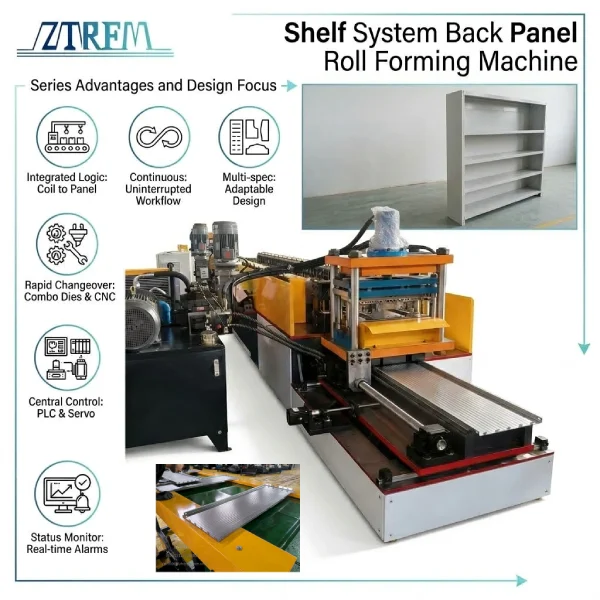
‹ › A shelf system back panel is a key part of a storage rack. Its width, thickness, hole pattern, and material vary with the rack design. The shelf system back panel roll forming machine series matches each product spec with a suitable configuration. What a Shelf System Back Panel Is In a storage rack, the back…
Contact: Elliot liu
Email: [email protected]
WhatsApp: 008615127728988
Detailed Content
A shelf system back panel is a key part of a storage rack. Its width, thickness, hole pattern, and material vary with the rack design. The shelf system back panel roll forming machine series matches each product spec with a suitable configuration.
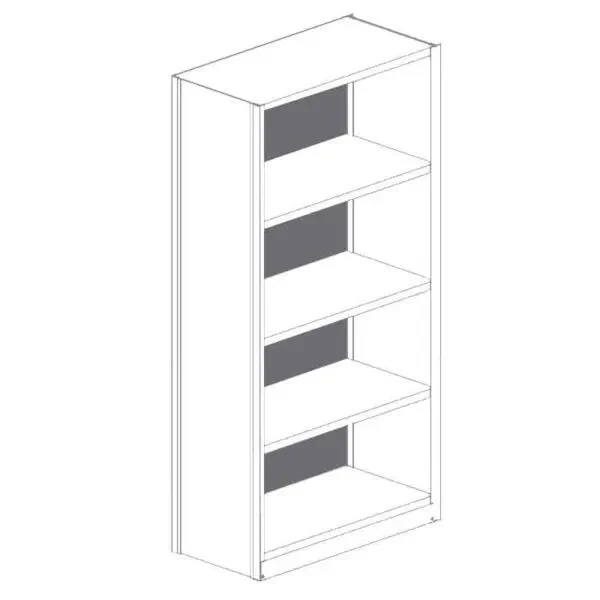
In a storage rack, the back panel is the metal sheet mounted on the rear side. It has three main jobs: rear support, shelf height adjustment, and structural reinforcement.
The panel usually works with uprights and shelves. Uprights give vertical support. Shelves carry the load. The panel connects between uprights. It closes the rear and gives mounting points at different heights through punched holes.
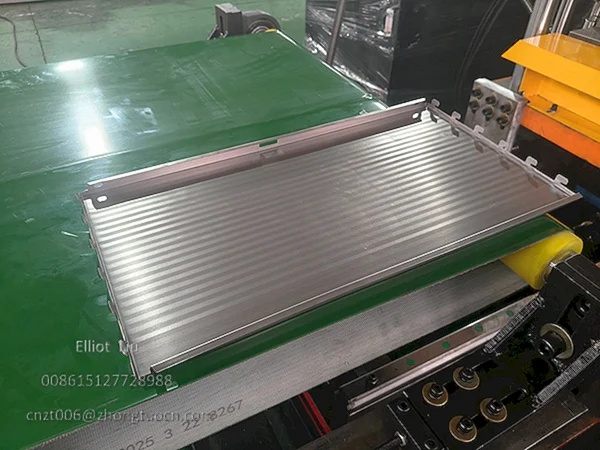
Common panel types include flat, punched, and reinforced styles. Punched panels are the most common. The hole pattern depends on the rack design. A butterfly hole is a common pattern used to adjust shelf height. Common materials include Q235 carbon structural steel.
The above is general industry knowledge. For a specific rack system, the panel width, thickness, hole pattern, and material depend on that system's design and load rating.
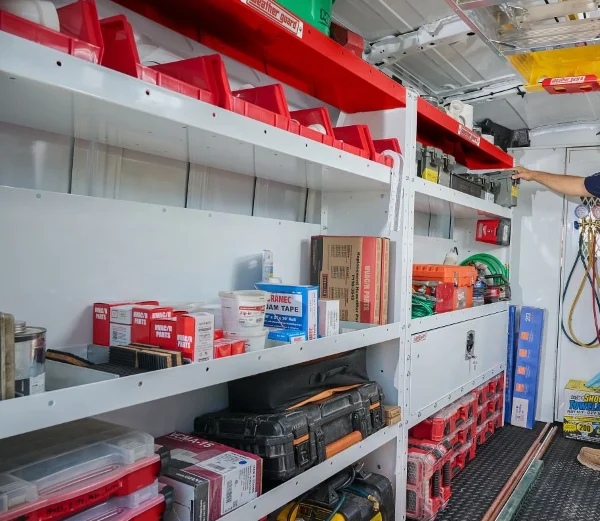
Back panels are used around storage and display racks, mainly in:
Storage racks: light, medium, and heavy duty racks for warehouses, logistics centers, and factories. A storage shelf roll forming machine often produces panels for this market.
Supermarket shelving: display and storage in supermarkets and convenience stores. A supermarket shelf making machine often serves this market.
Mezzanine racks: mezzanine systems that use vertical warehouse space.
Automated storage: rack structures in automated warehouses.
These are the main application areas. Different uses set different demands on panel width, thickness, hole pattern, and load capacity. Those demands directly affect the equipment setup.
Product needs drive production needs, and those needs shape the final machine setup. Knowing this logic helps buyers see what information they need to provide.
Product width
Panel width often affects the forming roller width and decoiler width. A wider product raises demands on rollers and the decoiler, so the setup needs review against the actual product.
Product thickness
Panel thickness often affects roller pressure, motor power, and the cutting method. A thicker sheet needs more force to form and cut, so the setup changes with it.
Material
The panel material, such as Q235 or other carbon structural steel, often affects roller material and heat treatment. Different materials have different strength and elongation, so roller needs differ too.
Hole pattern and hole position
The hole pattern, hole size, and hole layout often affect the number and type of punching dies. A different pattern may need a different die plan. A different layout may need a different feed and punch setup.
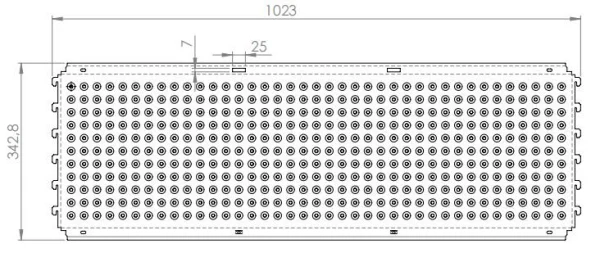
Profile shape
The profile, such as ribs or bent edges, often affects the number of forming stations and roller arrangement. A more complex profile may need more stations.
Output volume
The output target often affects speed, automation level, and configuration grade. A higher target raises demands on continuous running and stability.
How often the spec changes
If a customer switches between panel widths or hole patterns often, the changeover frequency often affects the die change method, such as combo dies or full dies.
Based on this, customers usually provide: product drawing, hole pattern drawing, profile drawing, material, thickness, width, output target, and changeover needs. The maker then reviews decoiling, leveling, feeding, punching, forming, cutting, and control setups, and gives a matched machine solution.
This is matching logic, not a fixed formula. Width, thickness, and hole pattern usually influence the setup, and each case needs review against the actual product. The final setup depends on product design, output needs, and production conditions.
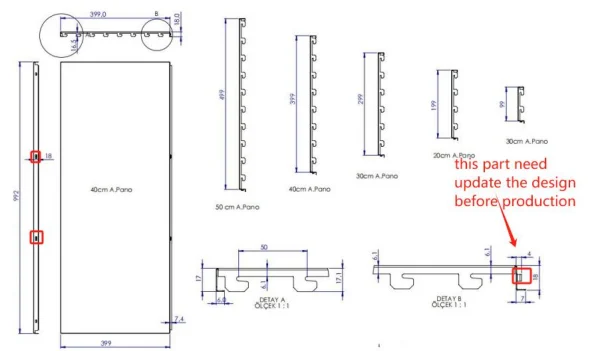
A back panel roll forming line usually includes the following core modules. These are common modules, not the same in every solution. A specific solution may add, remove, or adjust modules based on product needs.
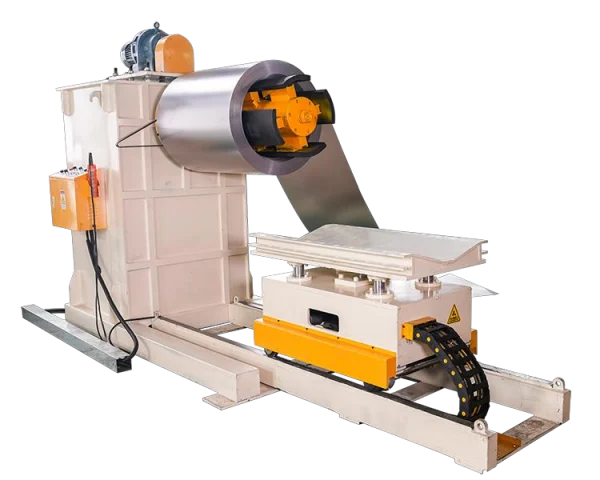
Decoiling module
A hydraulic expansion decoiler holds and opens the steel coil. Its setup usually relates to coil weight, inner diameter, and width.
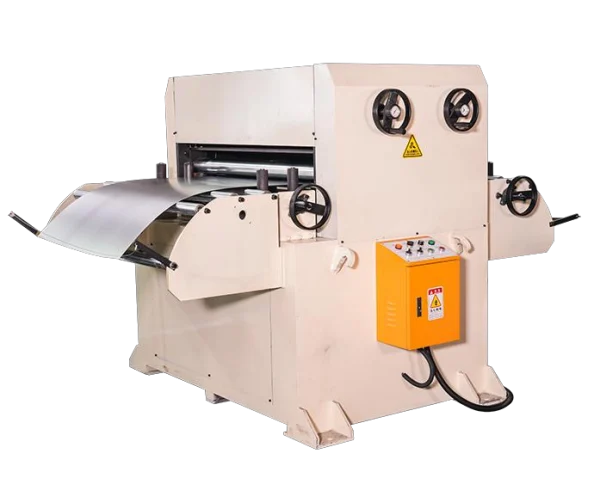
Leveling module
A multi roll leveler uses upper and lower rollers to remove bending and internal stress, keeping the sheet flat before forming.
Feeding module
A servo feeder sends the sheet into the punching and forming stations at a set length and pace. Feed accuracy affects hole position and cut length.
Punching module
Punching dies are set per the panel hole pattern. Different patterns need different die counts and types. Some solutions use combo dies for easier changeover.
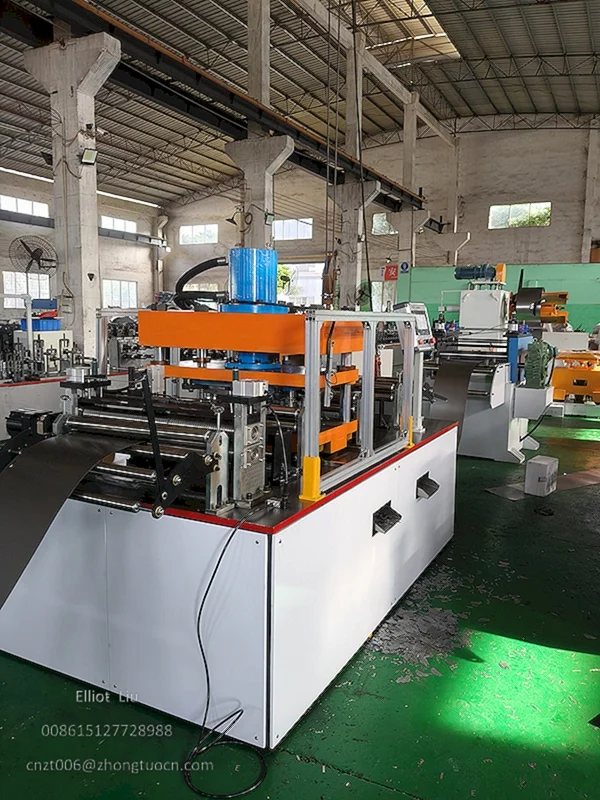
Forming module
The roller set is the core of the machine. The sheet passes through multiple roller stations and gradually takes the needed profile. Station count and roller layout depend on profile complexity.
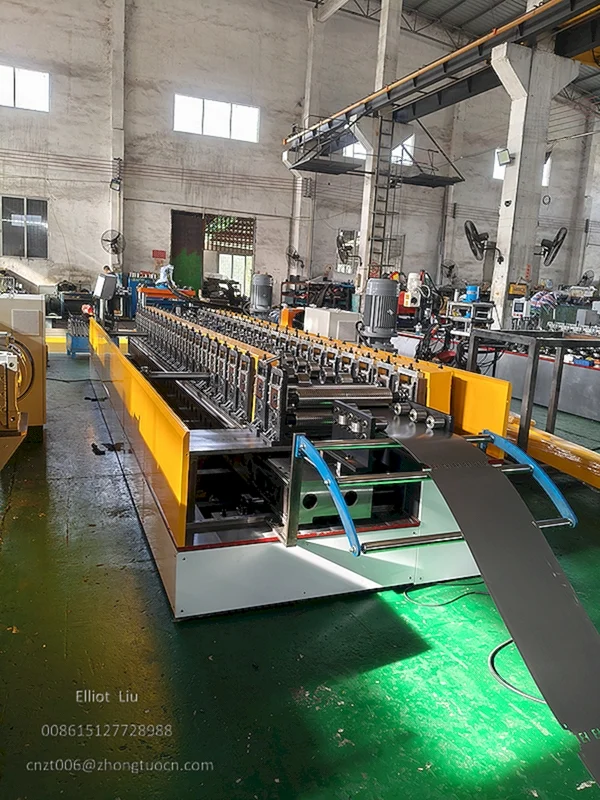
Cutting module
Cutting is usually hydraulic or mechanical. The job is to cut the formed sheet to length with a clean edge.
Control module
A PLC works with a frequency converter and servo system to control the whole line. The control system usually has fault alarms for material shortage, jams, emergency stop, and counting.
From a series view, the features and design thinking can be summed up as follows. Each point uses a machine feature and its meaning for production design.
Integrated production logic
Decoiling, leveling, feeding, punching, roll forming, and cutting sit in one continuous line. This cuts handling and waiting between steps, taking the panel from coil to finished product.
Continuous production
The equipment feeds, forms, and cuts without stopping. This suits long runs of the same panel spec and holds size consistency in continuous work.
Multi spec adaptation
The series can match different machine setups to different panel widths, thicknesses, hole patterns, and profiles. This fits multi product needs, not just one spec.
Changeover and adjustment
For customers who switch specs often, combo dies or CNC adjustment can be used. This simplifies changeover and lowers reliance on skilled workers.
Central control
A PLC with a frequency converter and servo system controls the whole line. Operators can monitor status and adjust settings from the control system.
Production status monitoring
The control system has fault alarms for material shortage, jams, emergency stop, and counting. This helps operators spot and handle issues in time.
Custom build to product needs
Dies and rollers can be custom made from the customer's product drawing, hole pattern drawing, and profile drawing. The machine then fits the actual product, instead of forcing the product to fit a fixed machine.
The above covers series level features and design thinking. For a specific solution, the setup is set by the product needs.
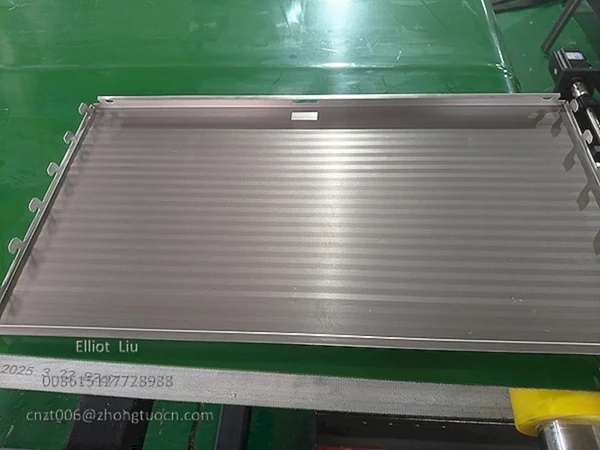
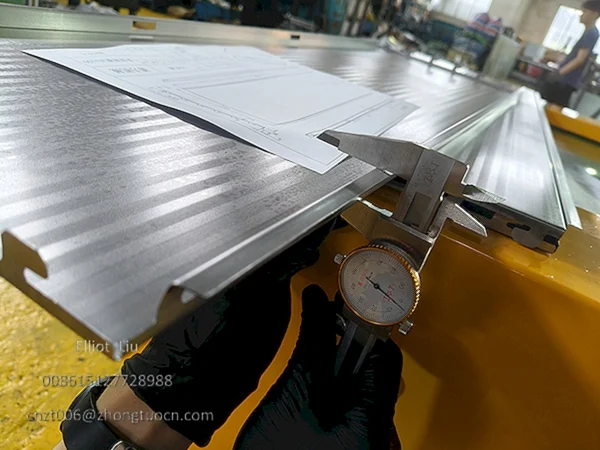
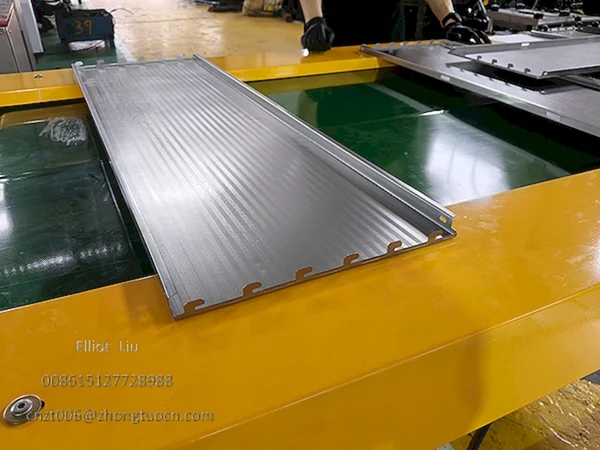
The following is an actual configuration example. It can be matched to the customer's product needs. It does not stand for a fixed standard for the whole series.
| Item | Specification |
|---|---|
| Raw material | Q235 steel coil |
| Material thickness | 0.4 to 0.8 mm |
| Coil inner diameter | 450 to 550 mm |
| Coil outer diameter | ≤1200 mm |
| Coil weight | 5 tons |
| Forming speed | 0 to 80 m/min (continuous run, cutting stop time not included) |
| Forming width | 99 to 499 mm |
| Punching | 3 sets of front punching dies and 8 sets of rear punching dies |
| Forming stations | 12 roller stations |
| Cutting | Hydraulic cutting |
| Total power | 30 KW |
| Main motor | About 15 KW |
| Control system | Mitsubishi PLC + Yaskawa or Inovance frequency converter |
| Fault alarms | Material shortage, jams, emergency stop, counting, etc. |
This solution fits one panel product with a specific spec. If the panel width, thickness, hole pattern, or output differs, the setup changes as well.
Why does the maker need my product drawing?
The product drawing is the base for reviewing a machine solution. Panel width, thickness, hole pattern, hole position, and profile shape decide how decoiling, leveling, feeding, punching, forming, cutting, and control are set. Without the drawing, the maker cannot judge process feasibility or give a matched solution.
Why may different hole patterns need different punching solutions?
The punching solution is set by hole pattern, hole size, and hole layout. Different patterns need different punching dies. A different layout also affects how feeding and punching work together. So a different pattern usually needs a fresh review and setup.
Why do different product specs need different machine setups?
Panel width, thickness, material, and profile shape affect the forming rollers, decoiler, motor power, and cutting method. The same setup does not fit every spec. So the machine setup needs to match the actual product needs.
What does each process module do in an actual solution?
Take the decoiler: it holds and opens the steel coil. The leveler removes coil stress. The feeder controls feed accuracy. The punching module makes the holes. The forming module rolls out the profile. The cutting module cuts to length. The control module handles central control and fault alarms. Each module does a different job and works with the others to take the coil to a finished product.
Can the series be set up for different back panel specs?
Yes. The core logic of this series is to match a machine setup to the customer's product specs and output needs. Different panel widths, thicknesses, hole patterns, materials, and output levels call for different decoiling, leveling, feeding, punching, forming, cutting, and control setups.
Can you custom make dies from my hole pattern drawing?
Yes. We can custom make punching dies from the customer's hole pattern drawing. Send us your drawing and we will review it for you.
The shelf system back panel roll forming machine series gives rack makers an automated line from coil to finished panel. The core logic is simple: match the machine setup to the customer's product specs and output needs.
If you are planning a back panel line, send us your product drawing, hole pattern drawing, profile drawing, and spec needs. We will match a line solution to your actual needs.
Contact: Elliot liu
Email: [email protected]
WhatsApp: 008615127728988
Contact Us For More Roll Forming Machine Detailed Information
You can contact us either through phone number 0086-15127728988 within our working hours, or send an email to [email protected], or send an inquiry form to us using "Inquiry Now" option. Our customer representatives will respond as soon as possible.