METAL ROLL FORMING MACHINE
Zhongtuo roll forming Systems is a "one-stop shop" for all your roll forming needs,enabling our customers to save time and money when buying roll forming machines,to help customers grow.

Zhongtuo roll forming Systems is a "one-stop shop" for all your roll forming needs,enabling our customers to save time and money when buying roll forming machines,to help customers grow.
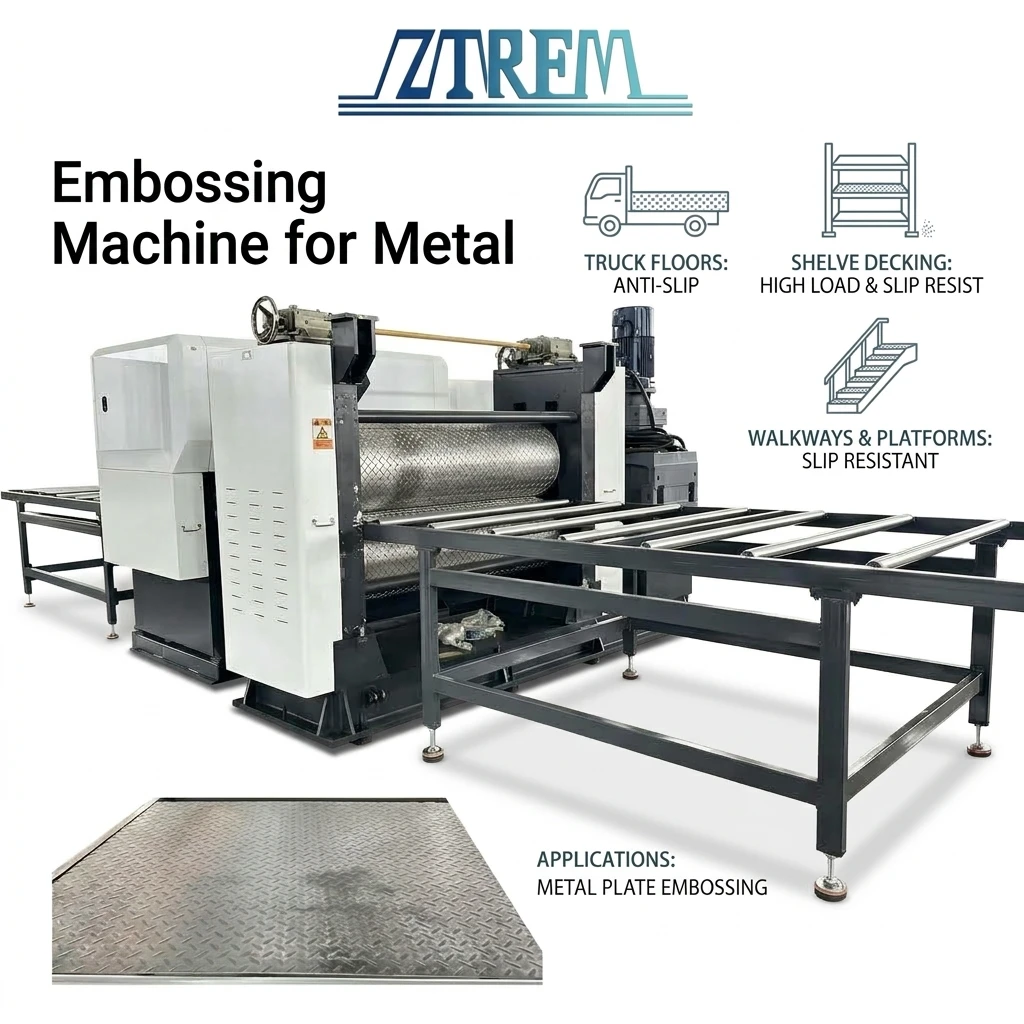
‹ › You have a batch of metal sheets. Your customer wants a regular pattern on the surface, maybe for truck floors that need slip resistance, or shelving decking that needs load capacity. An embossing machine for metal turns those sheets into patterned products. For a few pieces, hand tools or a simple die can get the…
Contact: Elliot liu
Email: [email protected]
WhatsApp: 008615127728988
Detailed Content
You have a batch of metal sheets. Your customer wants a regular pattern on the surface, maybe for truck floors that need slip resistance, or shelving decking that needs load capacity. An embossing machine for metal turns those sheets into patterned products. For a few pieces, hand tools or a simple die can get the job done. But once order volume picks up, a problem shows up. Pattern depth, spacing, and position vary from sheet to sheet. Customers reject the shipment.
So how does metal embossing actually work? Here is the breakdown, from the basic principle to continuous production.
The principle is simple. Metal sheets deform plastically under pressure, forming raised and recessed patterns that match the roller surface.
Material is deformed rather than removed. The sheet goes in flat and comes out with a pattern. Thickness and weight stay largely unchanged. The pattern is pressed in, not carved out.
As the sheet passes through the patterned roller, pressure makes the surface metal flow. The raised areas on the roller push into the sheet surface. Metal flows into the recessed areas, creating a permanent deformation.
The process runs continuously. Sheets enter at one end and exit with patterns at the other. No heating is needed. It is a cold process. An embossing machine for metal handles this deformation in a single pass.
Pattern depth, spacing, and shape come from the roller surface. Pattern transfer and sheet deformation happen at the same time. Pattern design directly affects processing parameters.
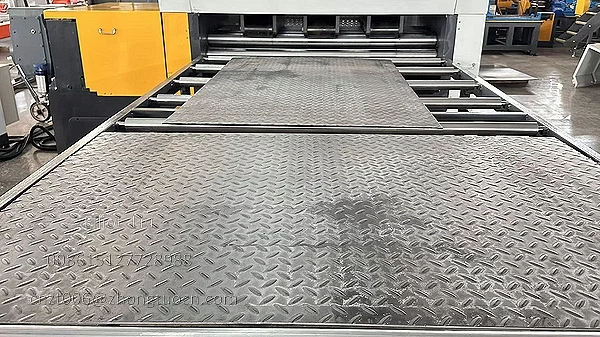
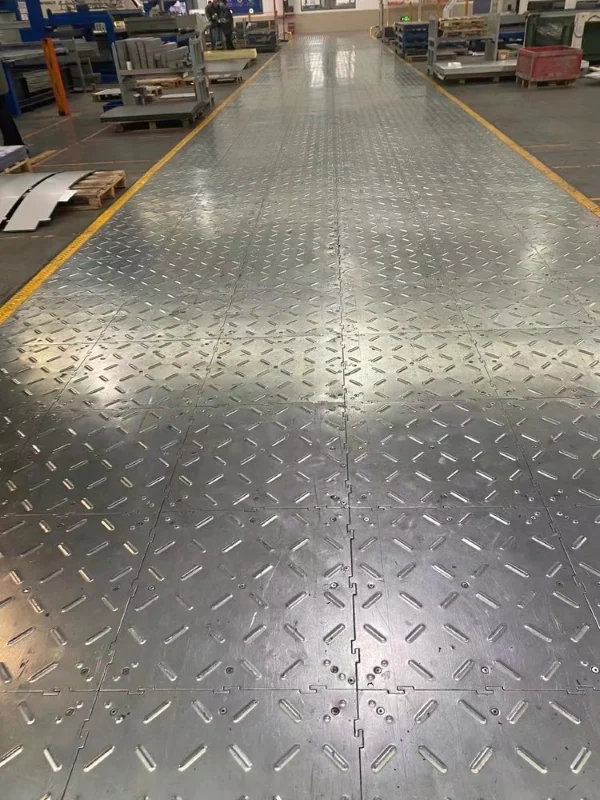
This machine produces embossed sheets for several applications:
Truck floors. Embossing adds surface texture that can improve grip so cargo does not slide during transport.
Shelving decking. Embossing gives the decking a textured surface with slip resistance.
Industrial walkways and maintenance platforms. Embossed sheets go on stair treads, equipment platforms, and machine access areas.
Equipment tread plates and stair treads. These applications need slip resistant surfaces.
These products all need a sheet with surface texture and slip resistance. A metal sheet embossing machine is what makes them.
| Parameter | Value |
|---|---|
| Processable material | Carbon steel |
| Material thickness range | 1.2 - 5 mm |
| Maximum width capacity | ≤1520mm |
| Cutting length | Adjustable |
| Working speed | 5m/min |
| Input coil supporting table | 1 set, Length 5m |
| Embossing machine | 1 set |
| Leveling machine | 1 set |
| Receiving table | 1 set, Length 5m |
There are two ways to run embossing: small batch and continuous production. The difference is not just output. The process logic is different too.
Small batch work is usually manual or semi automatic. Each sheet gets loaded and embossed on its own. It is flexible and works well for small orders or samples.
But as order volume grows, manual methods struggle to keep pattern depth, spacing, and position consistent. Delivery times become a problem too. An embossing machine for metal solves this by running at a steady pace.
Batch production requires consistent pattern depth, spacing, and position across every run. Manual work struggles to deliver that. Sheets pass through the embossing rollers at a steady speed, and pressure stays constant. That is how the pattern stays uniform from the first sheet to the last.
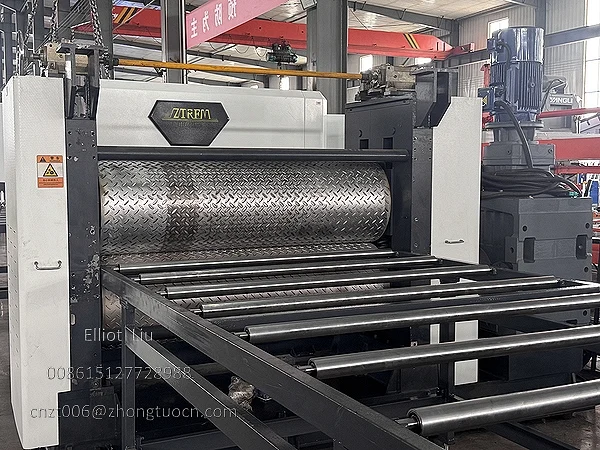
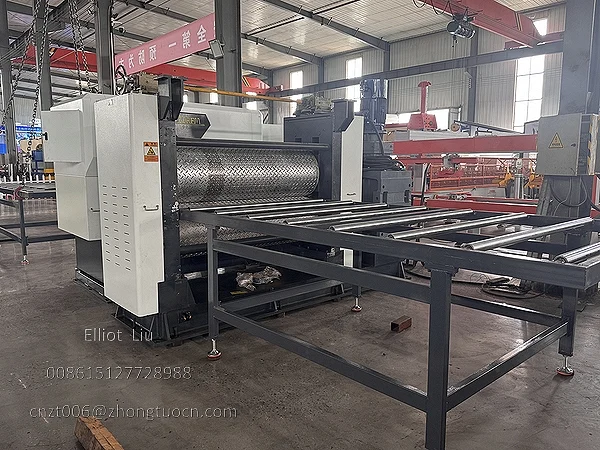
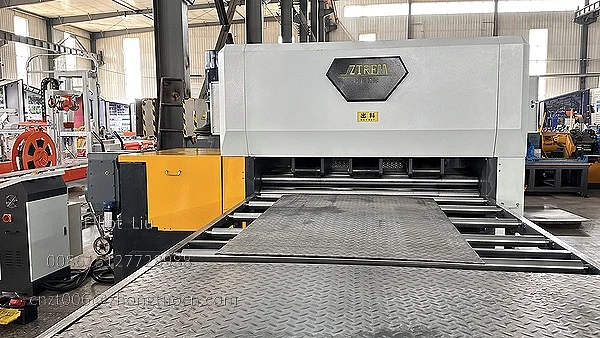
In continuous production, an embossing machine for metal runs as part of a complete line.
Sheets enter from the input coil supporting table and go through the leveling machine first. The leveler sits before the embossing machine and prepares the sheet surface. This step helps achieve more uniform pattern depth.
Then the sheets enter the embossing machine. The rollers apply steady pressure, and patterns form continuously. Sheets pass through at a uniform speed, so the pattern stays consistent. The receiving table collects finished sheets at the end.
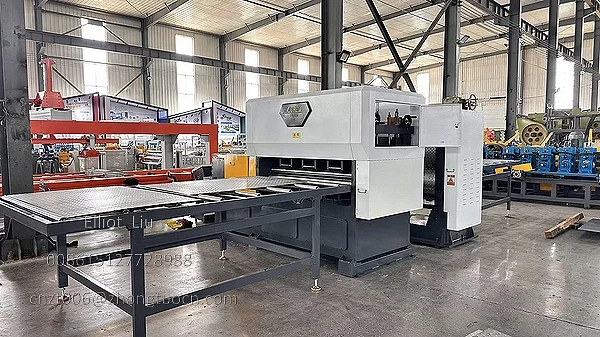
A metal plate emboss machine does three things in continuous production:
Maintains steady pressure. Roller gap and pressure stay constant during operation.
Keeps processing consistent. The machine avoids the random fluctuations of manual work.
Integrates the production steps. Feeding, leveling, embossing, and collection run together.
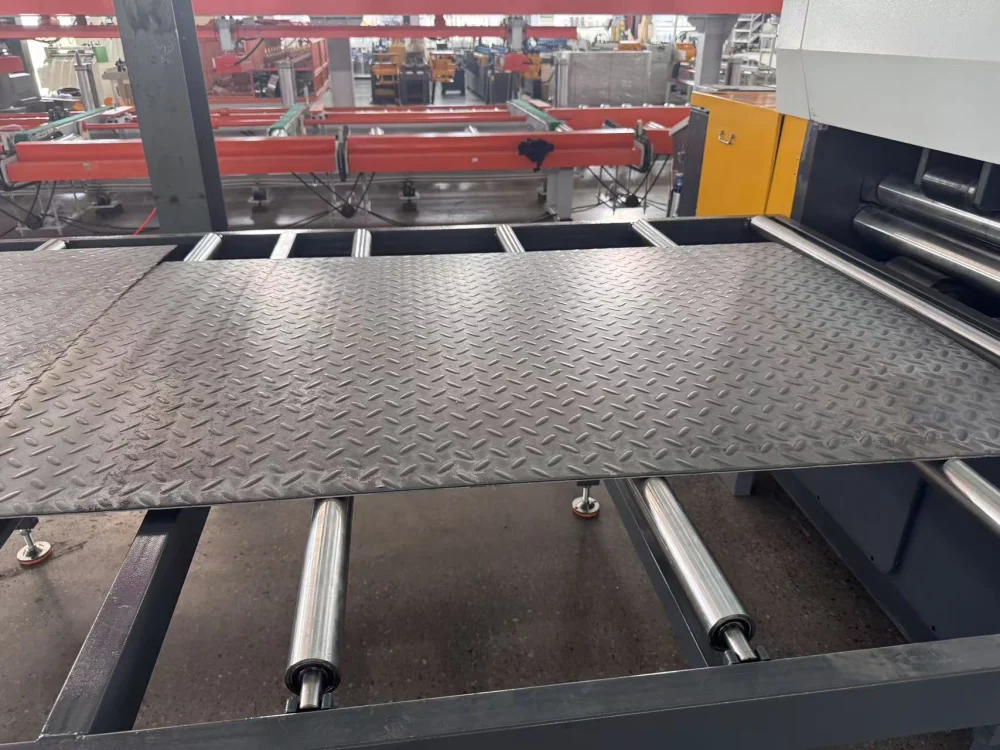
Three factors affect the embossing result: material, thickness, and pattern design.
Carbon steel is the confirmed material for this equipment. Other materials are not confirmed in the quote.
Thickness affects the result. Thin sheets form clear patterns more easily. Thick sheets need more pressure, and they carry more internal stress, so leveling becomes more important. An embossing machine for metal handles both ends of this range.
Different patterns suit different applications. Pattern depth and shape affect processing parameters.
Metal embossing uses pressure to create plastic deformation on the surface, and the pattern forms in one pass. Small batch work can be done by hand. Batch production needs stable, repeatable mechanical processing.
That is how metal embossing gets done: pressure, patterned rollers, and continuous operation. When production moves from a few sheets to continuous batch output, the focus shifts from "can we make it" to "can we make each sheet consistent." An embossing machine for metal makes that process controllable and repeatable.
Contact: Elliot liu
Email: [email protected]
WhatsApp: 008615127728988
Contact Us For More Roll Forming Machine Detailed Information
You can contact us either through phone number 0086-15127728988 within our working hours, or send an email to [email protected], or send an inquiry form to us using "Inquiry Now" option. Our customer representatives will respond as soon as possible.