METAL ROLL FORMING MACHINE
Zhongtuo roll forming Systems is a "one-stop shop" for all your roll forming needs,enabling our customers to save time and money when buying roll forming machines,to help customers grow.

Zhongtuo roll forming Systems is a "one-stop shop" for all your roll forming needs,enabling our customers to save time and money when buying roll forming machines,to help customers grow.
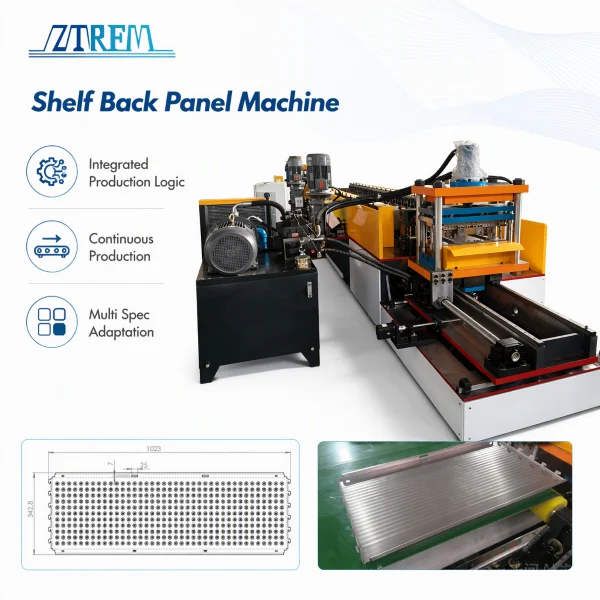
‹ › A shelf back panel machine turns steel coil into rack back panels and cuts them to length. On this line, hydraulic cutting and servo feeding are two key actions. Their coordination helps maintain a stable production flow. This page starts with panel applications, then moves into hydraulic cutting, hydraulic station and servo coordination, and actual…
Contact: Elliot liu
Email: [email protected]
WhatsApp: 008615127728988
Detailed Content
A shelf back panel machine turns steel coil into rack back panels and cuts them to length. On this line, hydraulic cutting and servo feeding are two key actions. Their coordination helps maintain a stable production flow. This page starts with panel applications, then moves into hydraulic cutting, hydraulic station and servo coordination, and actual specs.
Back panels are continuously formed products in rack systems. A shelf rollforming machine handles this kind of continuous production. Before we talk about hydraulic cutting and servo coordination, let's see where back panels are used and what different applications need.
Back panels sit on the rear side of the rack. They provide rear support, shelf height adjustment, and structural reinforcement. They work with uprights and shelves through punched holes. Common types include flat, punched, and reinforced styles. Butterfly holes are a common pattern for height adjustment.
Different applications need different panel specs. All panels are continuously formed and need long batch production. The coil goes through decoiler, leveling, feeding, punching, roll forming, and cutting. Cutting must coordinate with forming and feeding. This leads to hydraulic cutting and servo coordination.
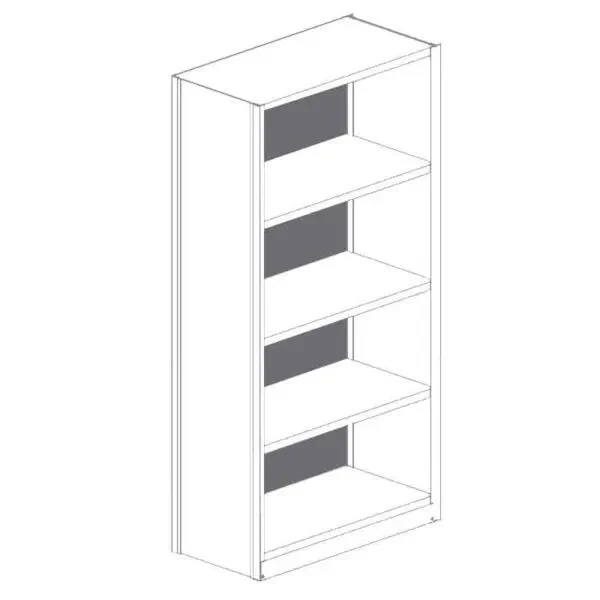
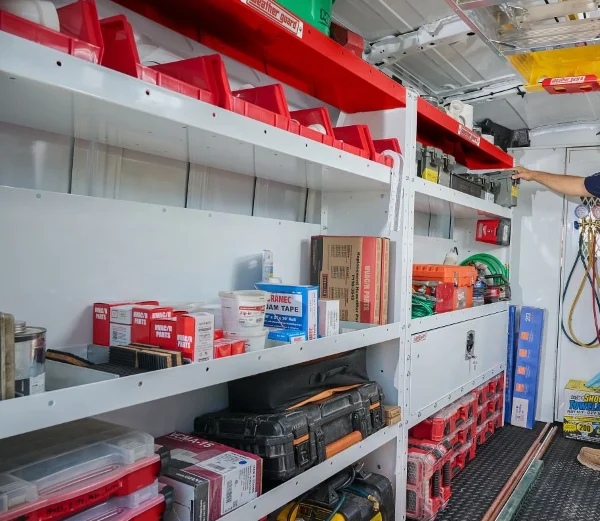
Storage racks: light, medium, and heavy duty racks for warehouses, logistics centers, and factories
Supermarket shelving: display and storage in supermarkets and convenience stores
Mezzanine racks: mezzanine systems that use vertical warehouse space
Automated storage: rack structures in automated warehouses
A steel coil opens into a continuous sheet. After forming, it is still continuous. To get fixed length panels, the line must cut at the end. A shelf back panel machine must cut the continuous sheet into fixed lengths.
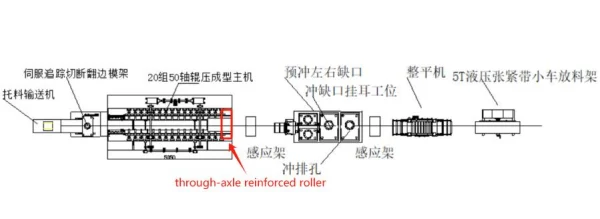
Cutting sits after forming and before output. Its upstream is roll forming. Its downstream is finished output. The cutting action needs to coordinate with forming speed and feeding pace. Any mismatch between cutting and forming speed can affect production continuity. The control system manages the cutting action.
A shelf back panel machine brings value through action coordination and stable output in continuous production.
Coordinated Production Flow Reduces Handling
Feeding, forming, and cutting work together in one line. This reduces handling and waiting between steps.
Cut to Length Works with Feeding
The line cuts to set length. The servo feeder handles feed positioning. Feed accuracy can affect cut length.
Automated Operation Reduces Manual Work
The control system manages the line. Operators monitor production status through the control system. The electrical system has fault alarms for material shortage, jams, emergency stop, and counting. These help find issues fast.
Flexible Setup for Different Panel Specs
The series can be configured for different panel widths, thicknesses, hole patterns, and profiles. The actual setup depends on the specific product.
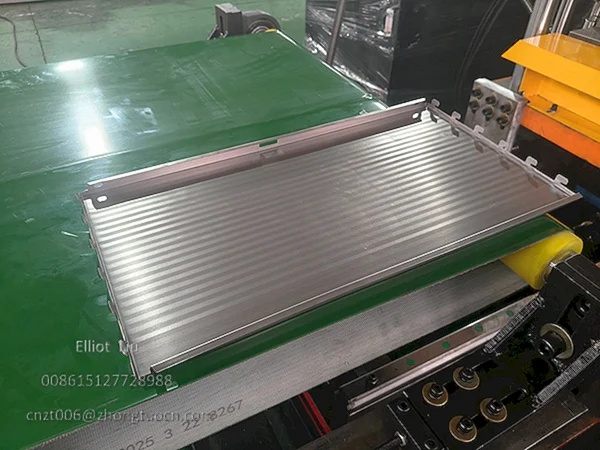
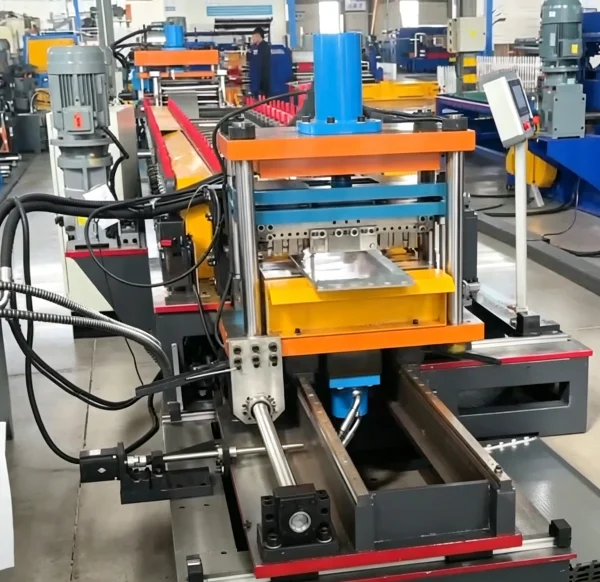
Hydraulic cutting uses a hydraulic station to provide power and drive the cutting action. Mechanical cutting uses a mechanical structure. The choice depends on product and machine requirements.
Action response: hydraulic systems pass pressure through oil; mechanical systems pass force through a structure.
Line pace coordination: hydraulic cutting timing is managed by the control system; mechanical cutting timing is set by the mechanical structure.
Control system needs: hydraulic cutting focuses on coordinating action timing; mechanical cutting logic differs.
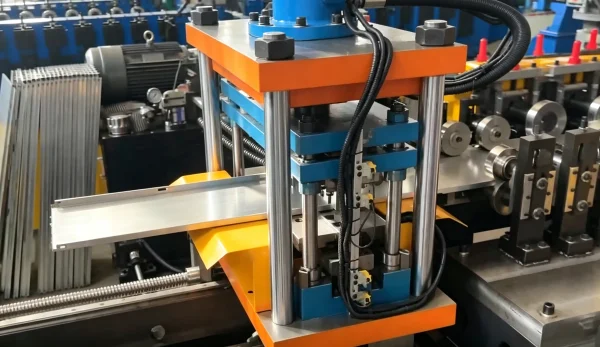
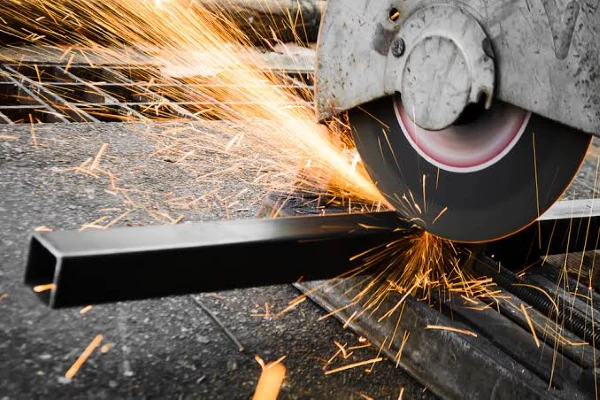
In continuous production, a shelf forming machine uses both a hydraulic station and a servo system. Each does a different job and they work together through the control logic.
The servo feeder handles feed positioning and sends the sheet into the punching and forming stations.
The hydraulic station powers the cutting action. The hydraulic cutting system cuts to length. The machine uses a hydraulic cutting system with a servo controlled circuit for cutting.
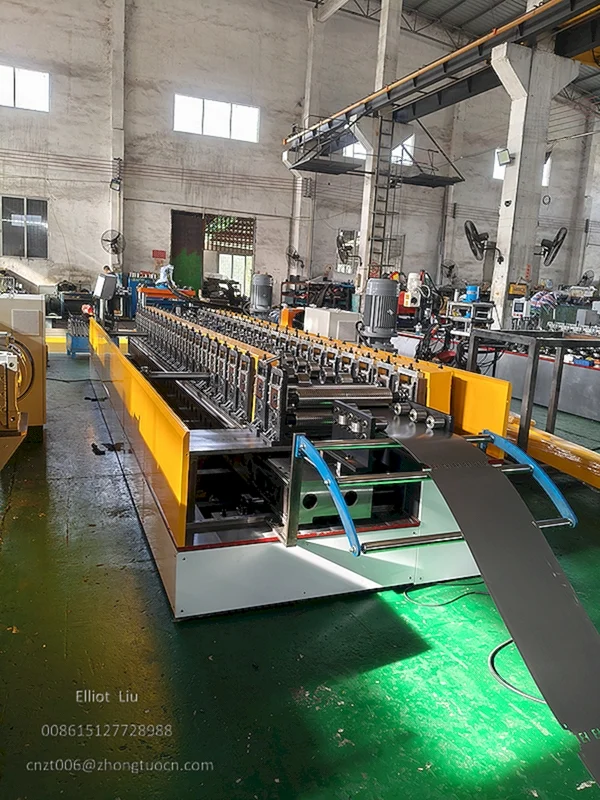
The servo system handles motion control. The hydraulic system handles cutting. They work together. The servo system controls feed position and speed. The hydraulic system cuts after the sheet reaches the set length.
In production, the servo feeder feeds the sheet, and the hydraulic cutting system cuts the formed panel to length. A Mitsubishi PLC provides central line control and manages the sequence. Fault alarms include material shortage, jams, emergency stop, and counting.
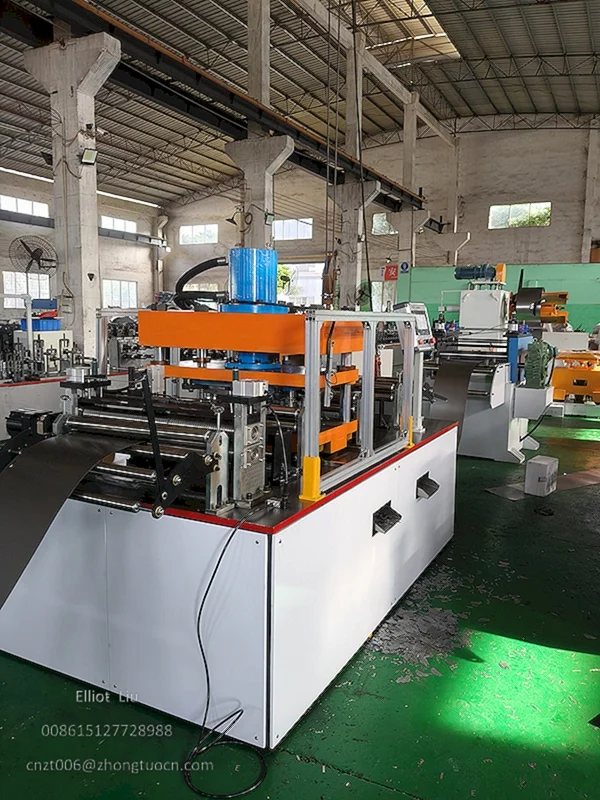
A shelf back panel machine can be configured for different production needs. The parameters below come from the current setup. They relate to hydraulic cutting, servo coordination, and back panel production.
| Item | Specification |
|---|---|
| Raw material | Q235 steel coil |
| Material thickness | 0.4 to 0.8 mm |
| Coil inner diameter | 450 to 550 mm |
| Coil outer diameter | up to 1200 mm |
| Coil weight | 5 tons |
| Forming speed | 0 to 80 m/min (continuous run, cutting stop time not included) |
| Forming width | 99 to 499 mm |
| Punching | 3 sets of front punching dies and 8 sets of rear punching dies |
| Cutting | Hydraulic cutting |
| Total power | 30 KW |
| Main motor | About 15 KW |
| Servo feeder | Huichuan servo motor 1.3 KW, feed speed 15 to 30 m/min |
| Control system | Mitsubishi PLC + Yaskawa or Inovance frequency converter |
| Fault alarms | Material shortage, jams, emergency stop, counting, etc. |
A shelf back panel machine follows one core logic: match the machine setup to the customer's product specs and output needs. Continuous panel production needs cut to length. Hydraulic cutting and the servo system work together to complete production actions.
If you are planning a panel production line, send us your panel drawing, size, hole pattern, material, and production needs. We will confirm the hydraulic cutting and servo control solution for your actual needs.
Contact: Elliot liu
Email: [email protected]
WhatsApp: 008615127728988
Contact Us For More Roll Forming Machine Detailed Information
You can contact us either through phone number 0086-15127728988 within our working hours, or send an email to [email protected], or send an inquiry form to us using "Inquiry Now" option. Our customer representatives will respond as soon as possible.