Zhongtuo roll forming Systems is a "one-stop shop" for all your roll forming needs,enabling our customers to save time and money when buying roll forming machines,to help customers grow.

Hydraulic Purlin Machine 90mm Shaft for Reliable Thick Plate Forming

‹ › In purlin production, when material thickness and profile section change, forming stability often becomes a headache. Thick plate forming is not solved by simply adjusting rollers. Even with the same name, a hydraulic purlin machine can perform very differently on thick plate. When judging machine fit, besides hydraulic function, what else should you look at?…

More >

Contact: Elliot liu
Email: [email protected]
WhatsApp: 008615127728988

Detailed Content

In purlin production, when material thickness and profile section change, forming stability often becomes a headache. Thick plate forming is not solved by simply adjusting rollers. Even with the same name, a hydraulic purlin machine can perform very differently on thick plate. When judging machine fit, besides hydraulic function, what else should you look at? This article covers production objects, parameter range, machine advantages, thick plate forming requirements, key structures, and fit assessment.

What a Hydraulic Purlin Machine Produces

These machines process the following objects and production conditions, based on the confirmed quotation range.

  • Material type: galvanized steel / cold rolled steel

  • Material thickness: 1.2 to 2.7 mm

  • Typical profiles: purlin structural parts, frame profiles

  • Forming method: continuous cold roll forming

These products share common points: the material has a certain thickness, the cross section must stay consistent, and holes need to match downstream installation.
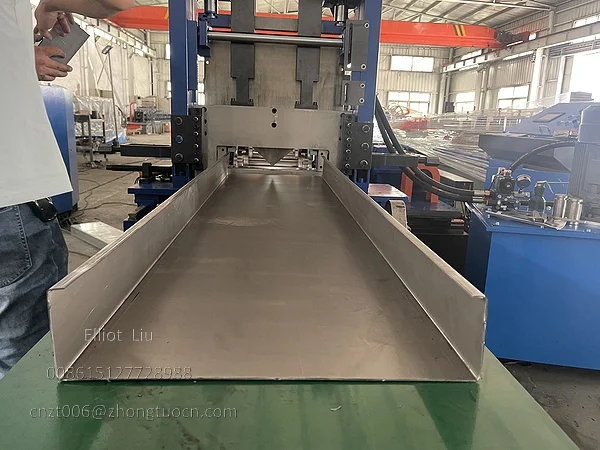
Hydraulic Purlin Machine - Finished Product 1
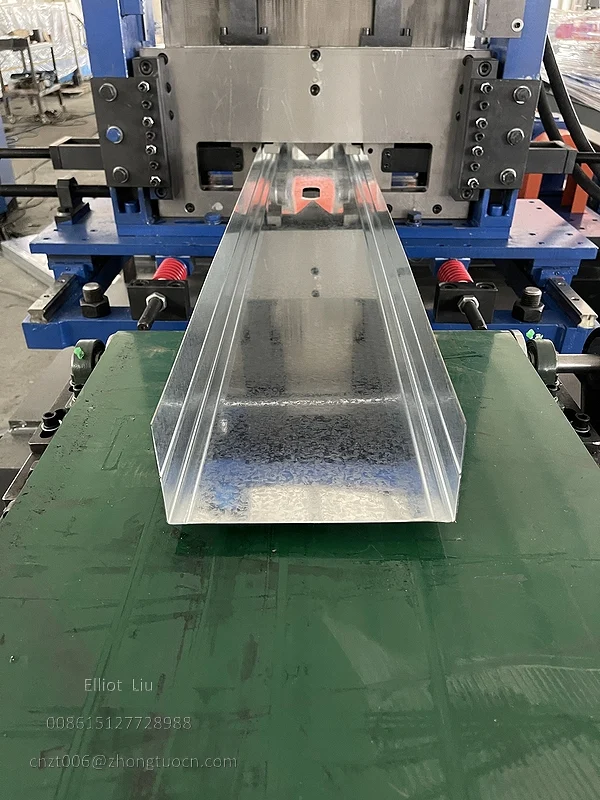
Hydraulic Purlin Machine - Finished Product 2

Key Specifications

Parameter Specification
Machine weight Approx. 13.5 tons
Material thickness 1.2 to 2.7 mm
Material type Galvanized steel / cold rolled steel
Working speed 0 to 25 m/min (depends on hole quantity)
Main motor power 30 kW (40HP)
Forming stations About 20
Shaft diameter ¢90mm
Shaft material 45# steel
Roller material Cr15, quenched, precision machined
Transmission Gear box
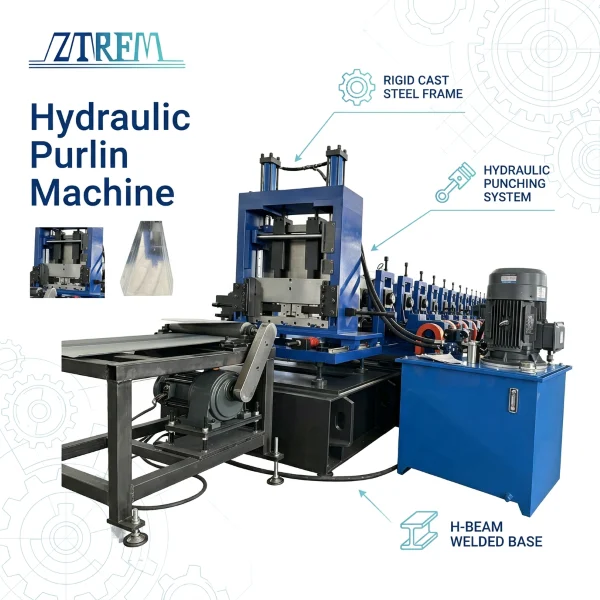
Roller stand Cast steel structure
Machine base H beam welded steel
Table frame 400 U beam
Width adjustment motor 1.5 kW x 3 sets
Punching drive Hydraulic
Hydraulic station power 7.5 kW
Hydraulic oil 46# hydraulic oil
Blade material Cr12mov, quenched
Blade configuration 2 sets (1 installed, 1 spare)
Length measurement Automatic encoder
Length tolerance 3000 mm ± 1.0 mm
Control system PLC + touchscreen
Interface language Chinese / English
Power supply 480V 60Hz 3 phase

These specifications describe the hydraulic purlin machine configuration. The main text does not repeat them.

Machine Advantages for Thick Plate Production

Structural match for thick plate forming

The shaft, frame, rollers, and forming stations of this hydraulic purlin machine together meet the thick plate forming load. A single component cannot independently determine the forming result.

Stability in continuous forming

The cast steel frame and H beam base of this hydraulic purlin machine maintain their working position over long runs, reducing position deviation accumulation during production.

Production coordination between punching and forming

Punching uses hydraulic drive and works on the same machine frame as the forming system. The two run in continuous coordination, reducing stops between steps.

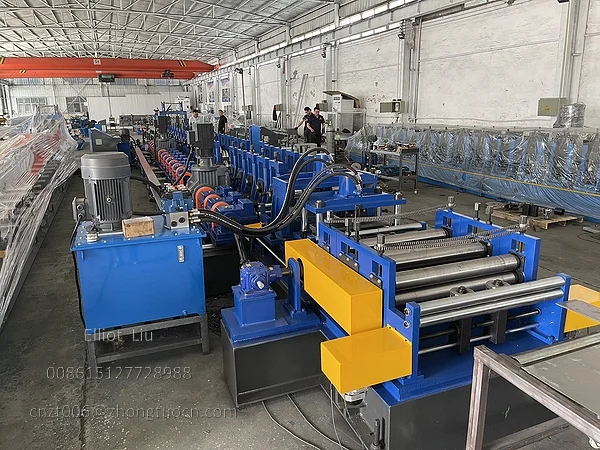
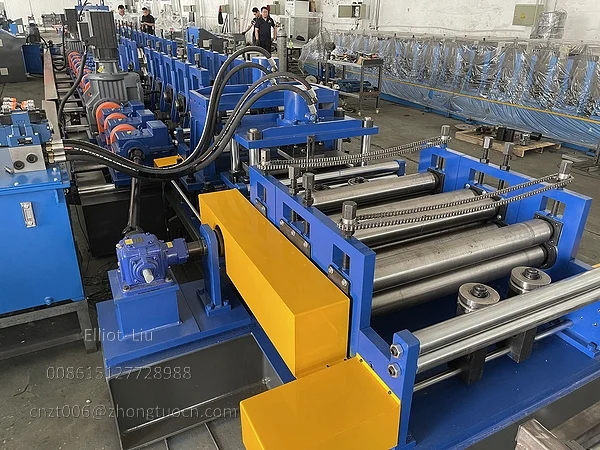
Rollforming Purlin Machine-Leveling
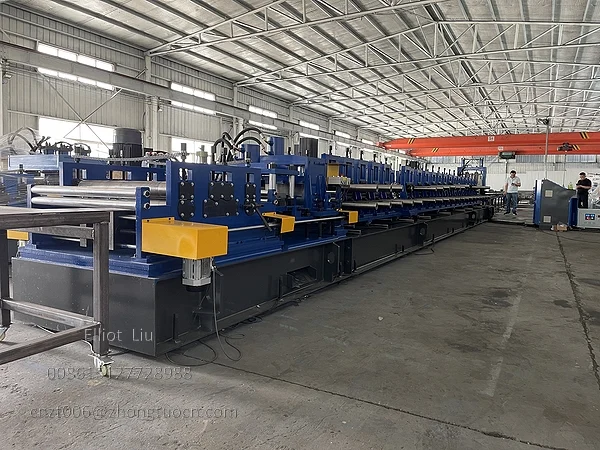
Rollforming Purlin Machine - Frame

How Machine Structures Meet Thick Plate Forming Demands

A hydraulic purlin machine built for 1.2 to 2.7 mm material needs to account for springback. Springback is influenced by material properties, profile section, forming stations, roller design, machine rigidity, forming speed, and other factors. The difficulty of thick plate forming also depends on material strength, section shape, and product design. It cannot be judged by thickness alone.

Shaft Diameter and Roller Support

Why should you pay attention to shaft support capacity in thick plate forming? Because the forming load is ultimately carried by the shaft and frame.

The shaft diameter of this hydraulic purlin machine is ¢90mm, made of 45# steel. Shaft diameter relates to frame load capacity and roller support structure. This configuration is a specific choice for this machine, not an industry standard, and it does not mean every heavy roll forming machine uses this number.

Roller Material and Heat Treatment

Rollers directly contact the material, and their material and heat treatment affect surface wear resistance, dimensional retention, and long term forming contact condition.

This hydraulic purlin machine uses Cr15 rollers with quenching treatment and precision machining. Roller material and heat treatment are factors in judging roller configuration, but they cannot directly equal a guarantee of forming accuracy, nor promise a specific service life.

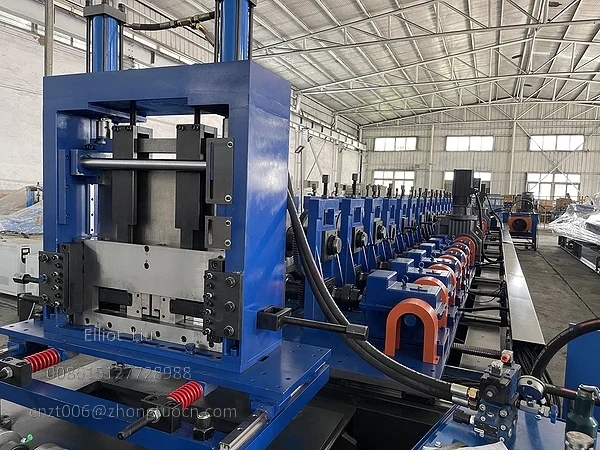
Rollforming Purlin Machine - Forming Section

Shaft Material

The shaft material for this hydraulic purlin machine is 45# steel. This material is the specified shaft material for this machine and works together with shaft diameter and support structure. Its significance should be discussed in the context of the actual machine configuration, not as a universal industry standard claim.

Transmission

This hydraulic purlin machine uses a gear box transmission. The gear box carries power transmission in the machine drive system and relates to overall running stability.

Hydraulic Purlin Machine - Gearbox Transmission

Forming Stations and Roller Design

This hydraulic purlin machine uses about 20 forming stations. Forming stations relate to profile section, material thickness, and the forming process. More stations mean each roller station handles less deformation per step, and the material gradually flows to the target shape.

Station count is not better when higher; it needs to match the target product. Station configuration is one reference for judging whether the machine can cover the target profile.

Hydraulic Purlin Machine - Forming and Cutting Section

Matching the Machine to Your Production

To judge whether a hydraulic purlin machine fits your production, you can follow this order for fit checks:

Product section → material thickness and strength → forming method → key structure configuration → final equipment confirmation.

If your product material thickness and section size fall within the machine design range, the structural configuration deserves priority confirmation. Final fit judgment still needs to combine specific product and process requirements.

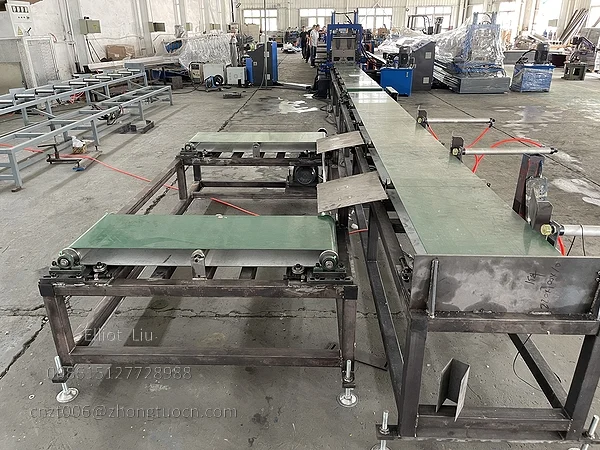
Rollforming Purlin Machine-Receiving Table

For operations that also require PLC adjustment CU channel making machine capability, the same PLC control system supports width and height adjustment. This term applies when the actual machine configuration includes CU channel production and PLC adjustment.

A hydraulic purlin machine with the right structure and control configuration can match specific production needs. Final selection depends on actual product and process requirements.

Contact: Elliot liu
Email: [email protected]
WhatsApp: 008615127728988

Contact Us For More Roll Forming Machine Detailed Information
You can contact us either through phone number 0086-15127728988 within our working hours, or send an email to [email protected], or send an inquiry form to us using "Inquiry Now" option. Our customer representatives will respond as soon as possible.
Elliot liu