We use cookies to ensure that we give you the best experience on our website.
Development vision: become a global one-stop supplier of cold roll forming machines and accessaries.
METAL ROLL FORMING MACHINE
Zhongtuo roll forming Systems is a "one-stop shop" for all your roll forming needs,enabling our customers to save time and money when buying roll forming machines,to help customers grow.
A Cable Tray Forming Machine Payback Calculation Framework for Investment Decisions
‹ › Thinking about buying a cable tray forming machine? The purchase cost is one consideration. How long it takes to recover that investment is the real question for most buyers. This article provides a step by step calculation framework for a cable tray forming machine: estimated annual output, operating cost components, potential cost saving areas, and…
Contact: Elliot liu Email: [email protected] WhatsApp: 008615127728988
Detailed Content
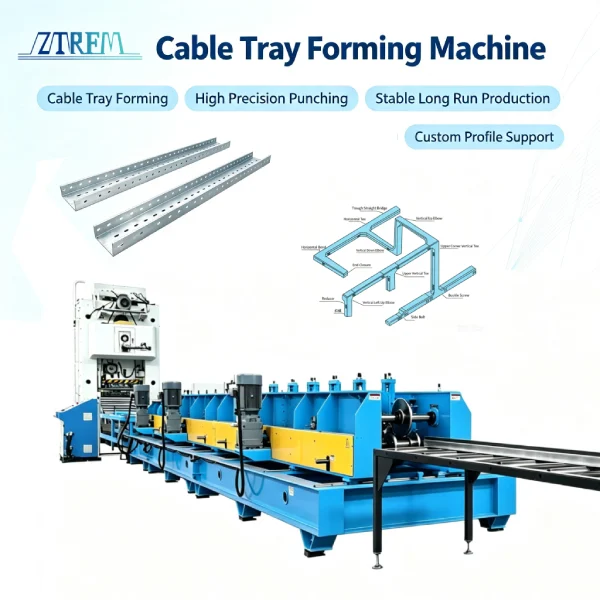
Cable Tray Forming Machine
Thinking about buying a cable tray forming machine? The purchase cost is one consideration. How long it takes to recover that investment is the real question for most buyers.
This article provides a step by step calculation framework for a cable tray forming machine: estimated annual output, operating cost components, potential cost saving areas, and a method for estimating payback period. All technical parameters used in this framework are drawn from the equipment specification sheet.
Applications – What this roll forming machine for cable tray can produce
A cable tray forming machine is an integrated production line for cable trays. It performs uncoiling, leveling, feeding, punching, shearing, and roll forming in one continuous process.
Typical products:
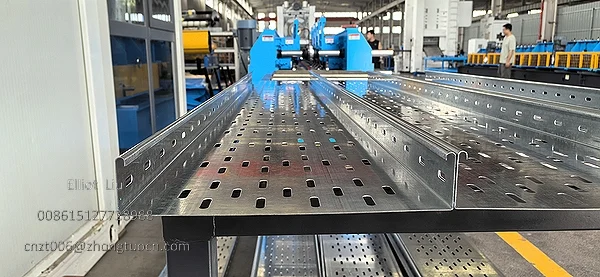
Cable trays, including trough type, ladder type, and perforated type
Profile size range: 100×50mm to 800×100mm
Material types: Q235B cold rolled strip, hot rolled strip, galvanized sheet
Material thickness: 1.0 to 1.2mm
Coil width: 200 to 1050mm
Common application areas:
Cable tray supply for power engineering projects
Cable support manufacturing for communication infrastructure
Electrical installation components for building construction
Cable routing systems for industrial facilities
The 100×50mm to 800×100mm size coverage means one cable tray roll forming machine can handle a broad range of profiles. For manufacturers producing multiple tray sizes, this reduces the need for separate equipment investments.
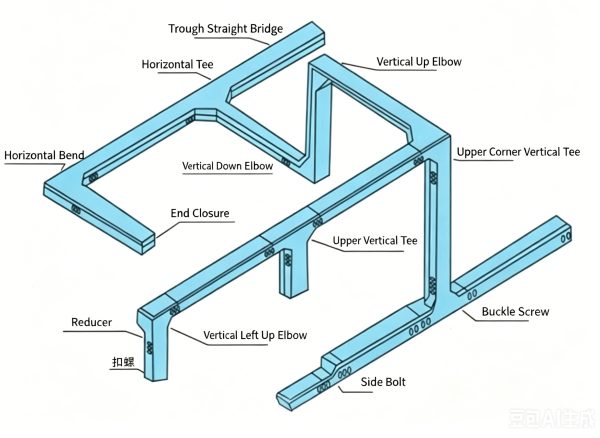
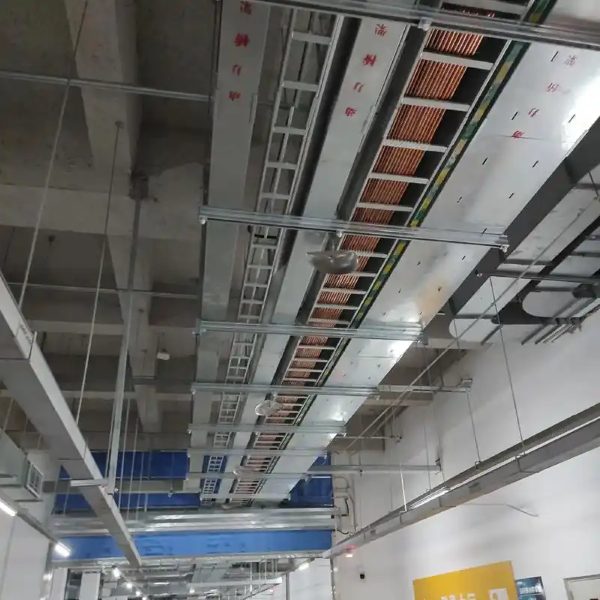
Cable Tray Installation DiagramApplication Areas
Advantages – How this cable tray roll forming machine reduces production costs
Understanding the cable tray forming machine's capabilities is one thing. Understanding why its production method lowers costs is what matters for investment decisions.
1. Continuous production reduces material handling costs
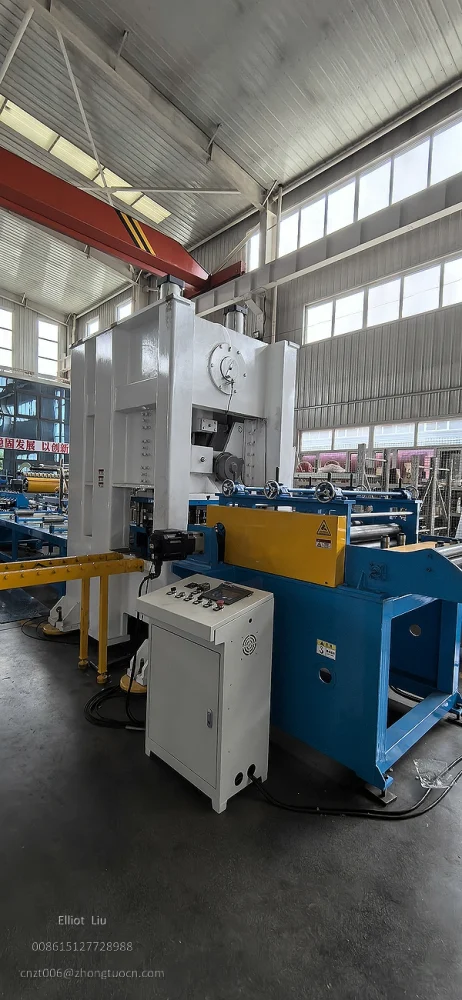
Uncoiling, leveling, feeding, punching, shearing, and forming happen on one integrated line. This eliminates moving materials between separate machines. It also reduces waiting time between operations and floor space occupied by work in process.
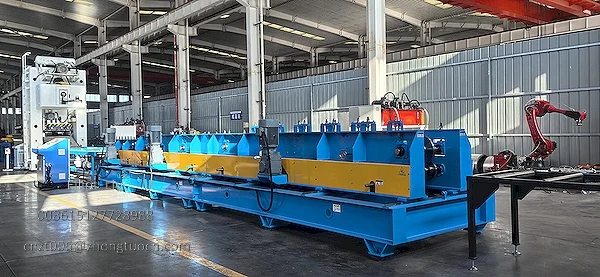
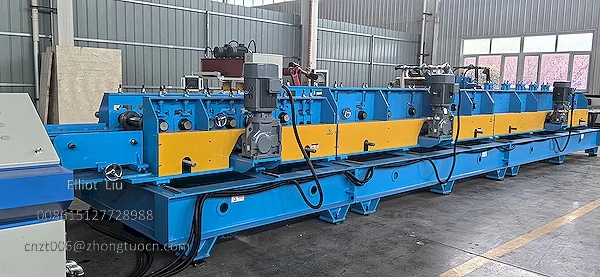
Cable Tray Forming Machine - Side Front View
2. In-line punching and shearing eliminate secondary operations
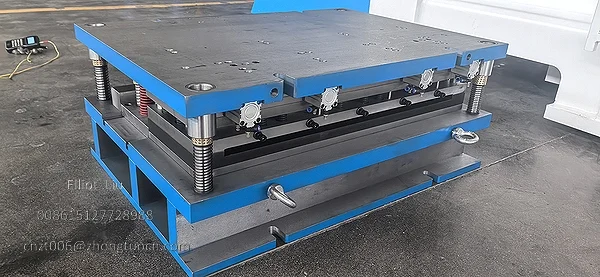
Punching and cutting occur on the same line. Parts exit the line in finished dimensions, requiring no second positioning or setup. The cable tray forming machine uses a combined punching and shearing die set, completing both operations in one pass.
3. Servo feeding reduces material waste
The servo feed system controls material advancement precisely. This reduces scrap at the head and tail of each part and minimizes length errors. Lower material consumption directly lowers the largest variable cost in tray production.
4. Automation reduces labor requirements
The PLC control system enables centralized monitoring of the entire line. The number of operators needed depends on your production organization, but centralized control typically allows for more efficient staffing compared to operating separate machines for each production step.
5. Consistent accuracy reduces rework and scrap
Length and width tolerance: ±1.5mm. Angle tolerance: 90° ±2°. Consistent part dimensions mean fewer rejects and fewer customer returns due to dimension issues. This contributes to overall production stability.
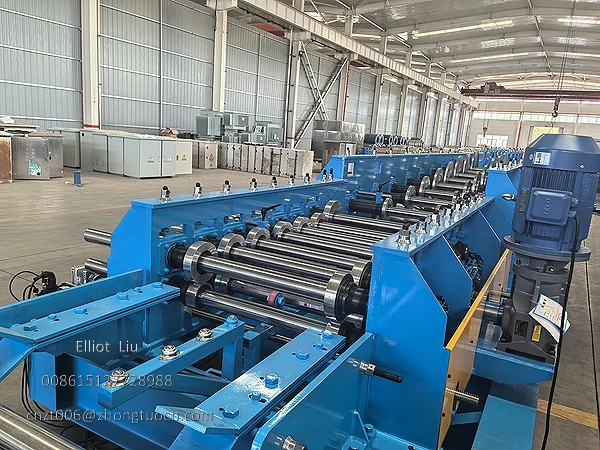
Cable Tray Forming Machine - Side of the forming section
Parameters – Key technical specifications for investment analysis
Parameter
Specification
Thickness range
1.0 to 1.2mm
Coil width range
200 to 1050mm
Profile size range
100×50 to 800×100mm
Production speed
6 to 10 m/min (depends on hole quantity)
Total installed power
Approx. 60KW
Length tolerance
±1.5mm
Width tolerance
±1.5mm
Angle tolerance
90° ±2°
Floor space required
35 × 1.5 × 1.6m (L × W × H)
Voltage
380V, 50Hz, 3 phase
Motor explosion proof rating
ExdICT4
Motor protection rating
IP55
Investment Return Calculation Framework
This section breaks down the investment return calculation into five logical steps. Each step builds on the previous one, so you can work through them in order with your own production data.
Step 1 – What constitutes the total equipment investment
To estimate payback period for a cable tray forming machine, first identify what the investment covers.
Equipment components included:
Component
Description
5 ton hydraulic decoiler
Hydraulic expansion and motor feeding
Leveling machine
11 rollers, roller diameter 100mm
Servo feeding machine
4KW servo motor
Hydraulic punch press and punching die
200 tons, combined punching and shearing die
Conveyor table
3 meters, powered, 1.5KW
Roll forming main machine
65mm shaft diameter, chain transmission
PLC control station
Delta brand
Product collection table
Manual, 3 meters long
Spare parts kit
Travel switches, fuses, relays, tools (one set)
Please refer to the formal quotation for the total equipment price.
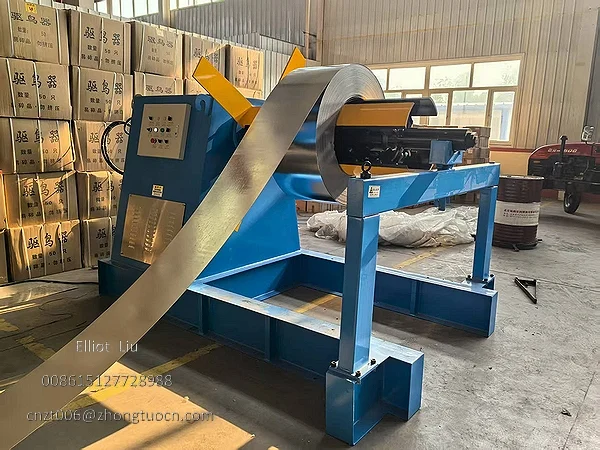
Cable Tray Forming Machine - Unwinding Machine
Additional investment items to consider beyond the cable tray forming machine itself:
Installation and commissioning
Shipping and freight
Site preparation (foundation work, power supply installation)
Step 2 – Estimating annual production output
Output capacity is the basis for revenue calculations.
Calculation formula:
Annual output (meters) = Production speed (m/min) × Operating hours (min/day) × Working days (days/year) × Efficiency factor
Speed reference:
Profiles with fewer holes and simpler geometry: closer to 10 m/min
Profiles with more holes and complex geometry: closer to 6 m/min
Efficiency factor: This variable accounts for actual production conditions including material roll changes, die changes for different profiles, scheduled maintenance, and unscheduled stops. The appropriate factor varies by shop conditions and production planning.
For a cable tray roll machine, output estimation requires several inputs. To estimate annual output for your specific situation, you will need:
Typical hole count for your products
Planned daily operating hours
Planned working days per month
Planned working months per year
Apply your numbers to the formula above.
Step 3 – Operating cost components
Operating costs directly affect net profit.
A. Electricity cost
Total installed power is approximately 60KW. Actual electricity cost = actual power consumption × local electricity rate. Actual consumption depends on operational load and running hours.
B. Labor cost
The PLC control system and servo feeding allow centralized line monitoring. Actual staffing levels depend on your production organization and shift structure. Compared to operating separate machines for each production step, an integrated cable tray production line typically offers more flexibility in staffing arrangements.
Cable Tray Forming Machine - Close-up of the forming section
C. Maintenance and die cost
The cable tray roll forming machine includes a spare parts kit with travel switches, fuses, relays, and a set of tools. The punching die is a consumable component. Its service life depends on total strokes and material thickness. Maintenance costs vary with production volume and operating conditions.
Step 4 – Potential cost saving areas
Compared to traditional multi-machine production setups, this integrated tray forming machine offers potential savings in several areas. The actual savings amount depends on your current production method, production volume, and local cost factors.
Potential saving area 1 – Labor
Traditional multi-machine setups typically require separate operators for uncoiling, leveling and feeding, punching, and forming operations. An integrated cable tray forming machine with centralized control may reduce staffing requirements. The actual saving depends on your current staffing model and local wage rates.
The servo feeding system controls feed length precisely, which can reduce scrap at the head and tail of each part. Actual material savings depend on the difference between your current feed accuracy and the accuracy achieved with servo feeding, as well as your annual output and material cost per unit.
Potential saving area 3 – Rework and scrap
Tolerance of ±1.5mm and angle accuracy of 90° ±2° contribute to part consistency. Consistent dimensions reduce the likelihood of dimension-related rejects. Actual rework and scrap savings depend on your current reject rates and the improvement achieved with the new cable tray forming machine.
Potential saving area 4 – Work in process and storage
Continuous production eliminates the need to store partially finished parts between separate operations. This can reduce work in process inventory, free up floor space, and reduce capital tied up in unfinished goods. These benefits are difficult to quantify precisely but represent real operational improvements.
Step 5 – Payback period calculation framework
The payback period for a cable tray forming machine compares the total investment against the incremental financial benefit generated by the new equipment.
Core concept:
Payback period = Total equipment investment ÷ Annual incremental net benefit
Annual incremental net benefit includes:
Cost savings from reduced labor, materials, rework, and other operating cost reductions (compared to your current production method)
Additional profit from increased output that can be sold (additional revenue minus additional variable costs)
The key is to measure only the change between your current production method and the new cable tray roll forming machine, not the entire business profit.
Calculation steps:
Estimate your annual output using the formula in Step 2
Estimate your annual operating costs using the components in Step 3
Estimate cost savings in the areas identified in Step 4, based on your current production baseline
Estimate additional profit from any output increase that can be sold
Add cost savings and additional profit to get annual incremental net benefit
Divide total investment by annual incremental net benefit
Apply your actual production data, local cost factors, and market pricing to each step.
There is no single payback period that applies to every manufacturer. Payback depends on order volume, product mix, local labor cost, electricity rate, material pricing, and current production efficiency.
What this article provides is a calculation framework for a cable tray forming machine:
Total equipment investment ÷ Incremental annual benefit (cost savings plus additional profit) = Estimated payback period
The cable tray forming machine specifications are fixed. Operating conditions vary by customer. Use this framework with your own production data, cost structure, and market prices. The result will reflect your specific situation.
For a detailed equipment quotation and assistance with customizing this calculation for your operation, contact our sales team for the complete proposal and one on one consultation.
Contact: Elliot liu Email: [email protected] WhatsApp: 008615127728988
Contact Us For More Roll Forming Machine Detailed Information You can contact us either through phone number 0086-15127728988 within our working hours, or send an email to [email protected], or send an inquiry form to us using "Inquiry Now" option. Our customer representatives will respond as soon as possible.
💡 Please fill in the information below and we will call or email you later. Thank you!