METAL ROLL FORMING MACHINE
Zhongtuo roll forming Systems is a "one-stop shop" for all your roll forming needs,enabling our customers to save time and money when buying roll forming machines,to help customers grow.

Zhongtuo roll forming Systems is a "one-stop shop" for all your roll forming needs,enabling our customers to save time and money when buying roll forming machines,to help customers grow.
‹ › Cable tray manufacturers often face the same problem once order batches grow. Manual or semi automatic methods struggle to balance speed, dimensional consistency and labor input. Deadlines get tight, workers are stretched thin, and a spec change means stopping the line for adjustment. The real output of a cable tray ladder machinery line does not…
Contact: Elliot liu
Email: [email protected]
WhatsApp: 008615127728988
Detailed Content
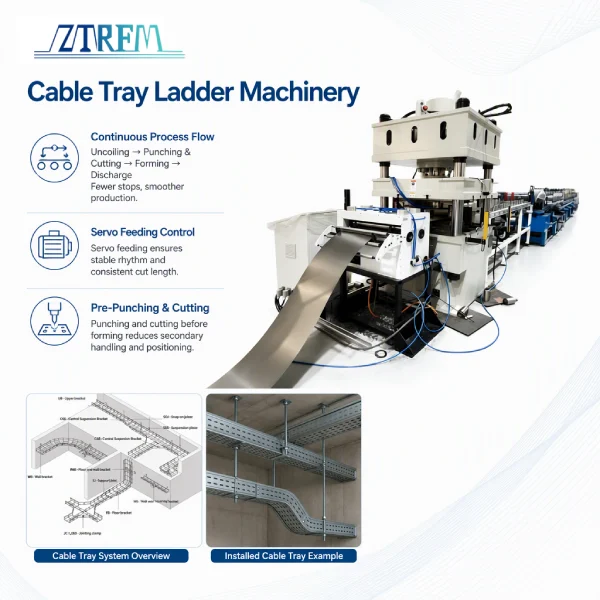
Cable tray manufacturers often face the same problem once order batches grow. Manual or semi automatic methods struggle to balance speed, dimensional consistency and labor input. Deadlines get tight, workers are stretched thin, and a spec change means stopping the line for adjustment. The real output of a cable tray ladder machinery line does not depend on how fast one single section operates. It depends on whether feeding, punching and cutting, forming and discharge work together smoothly.
Every manufacturer has a different order mix and labor condition, so the same cable tray production line setup will have a different focus. Get your production rhythm clear first, then talk about machine setup. The direction becomes clearer.
This type of cable tray production line mainly serves three production scenarios.
Cable tray batch factories: concentrated orders, continuous and stable output needed, tight delivery pressure.
Electrical equipment supporting workshops: production synchronized with equipment plans, high dimensional consistency required.
Building electrical material supply lines: many specs and mixed batches, need to adapt to different order changes.
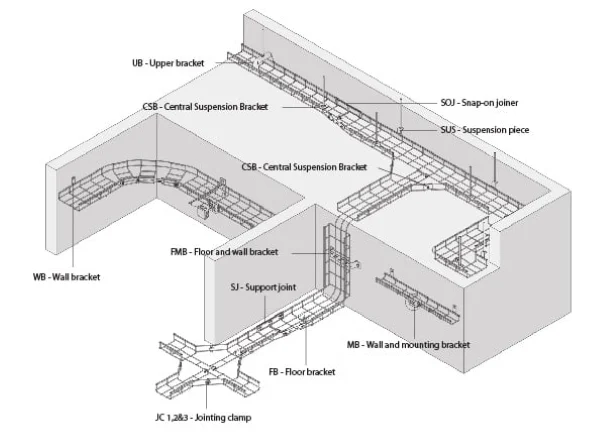
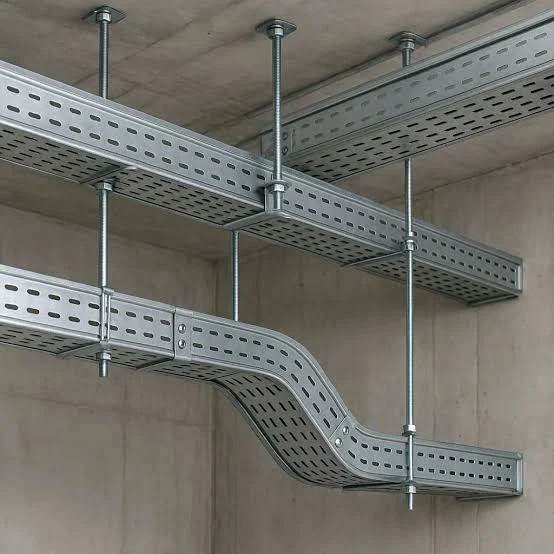
Continuous process flow reduces intermediate stops: on a cable tray manufacturing machine, the steel strip moves continuously through uncoiling, leveling, punching and cutting, conveying, forming and discharge, which reduces repeated handling between steps.
Servo feeding controls the feeding rhythm: the servo feeding unit pushes the strip forward to the set length and helps keep the feeding rhythm and cut length consistent. The exact accuracy depends on the setup and product requirements.
Punching and cutting before forming reduce secondary handling: punching and cutting finish before the strip enters the forming mainframe, which reduces secondary handling and secondary positioning after forming.
Line setup can be discussed around capacity needs: speed, feeding method, punching and cutting setup and automation level can be further confirmed based on actual production requirements.
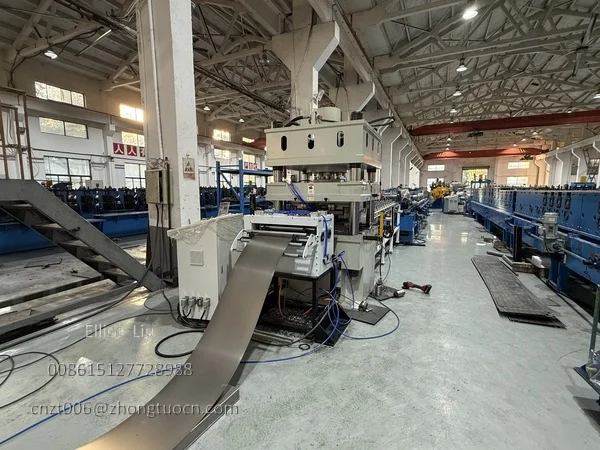
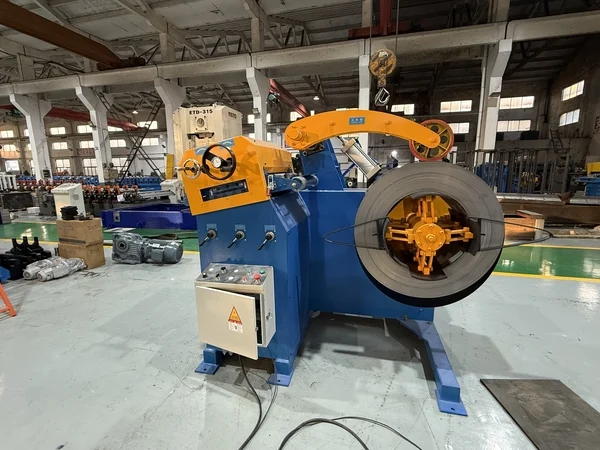
The following is a reference configuration for a cable tray manufacturing machine. Speed, feeding method, punching and cutting setup and automation level can be further discussed and adjusted based on actual capacity needs.
| Parameter | Reference Configuration |
|---|---|
| Machine footprint (L x H x W) | 35 x 2 x 2 m |
| Strip width | 150 to 850 mm |
| Strip thickness | 0.5 to 2.0 mm |
| Finished tray bottom width | 50 to 600 mm |
| Finished tray height | 50 to 100 mm |
| Finished tray length | 2000 to 6000 mm |
| Forming speed | 6 to 12 m/min |
| Decoiler load | 8 tons |
| Punch press capacity | 200 tons (Yangli brand) |
| Roller material | Cr12 |
| Main shaft diameter | 65 mm |
| Forming passes | 26 passes |
On a cable tray ladder machinery line, production speed is not a standalone figure. When punching is frequent and cutting happens often, the actual average output will be lower than the nominal speed of the forming section alone. The key to continuous production is not how high one number runs, but whether the rhythm between each process matches.
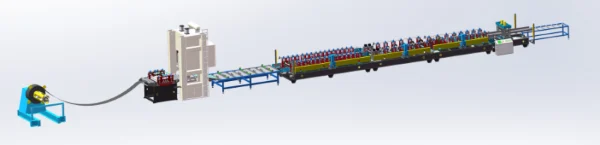
Feeding speed, punching pace, cutting timing and forming infeed need to coordinate. If feeding runs faster than punching, the strip piles up before the press. If cutting runs slower than forming, the forming mainframe has to wait for material. When any one section becomes a bottleneck, the actual output of the whole line drops.
Specific speed needs to be confirmed together with product length, hole density, material thickness and machine setup. You cannot judge whole line output from one speed number alone.
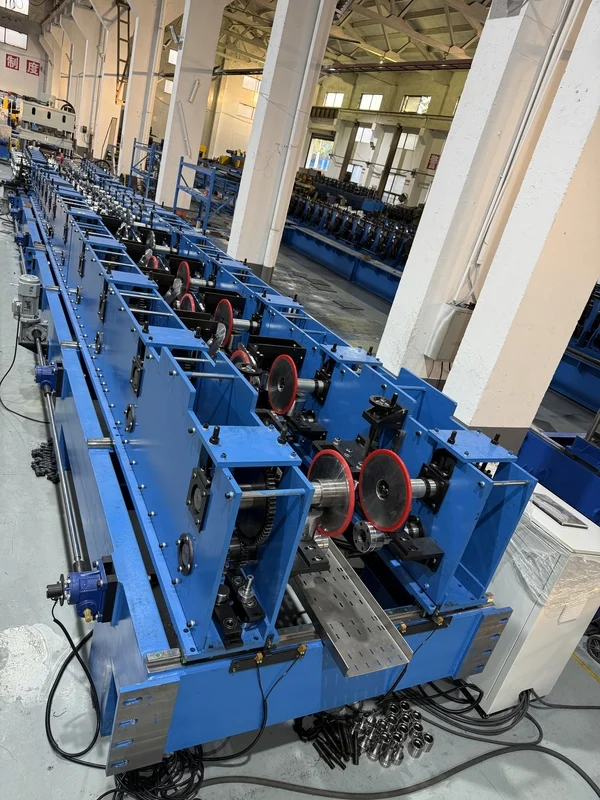
In the current production flow on this cable tray ladder machinery line, the strip goes through servo feeding into the press for punching and cutting, then through the conveying platform into the forming mainframe, and finally to discharge. Punching and cutting come before forming, so hole positions and cut length use the same feeding reference.
In traditional separate processing, punching and cutting often happen after forming or in a separate step. The workpiece needs secondary handling and secondary positioning, and deviation can build up between the hole reference and the forming reference. Moving punching and cutting before forming reduces intermediate transfer steps and makes it easier to keep hole spacing and length consistent in batch production.
The exact accuracy depends on machine setup, tooling condition and material lot. It needs to be confirmed against product drawings and the machine proposal.
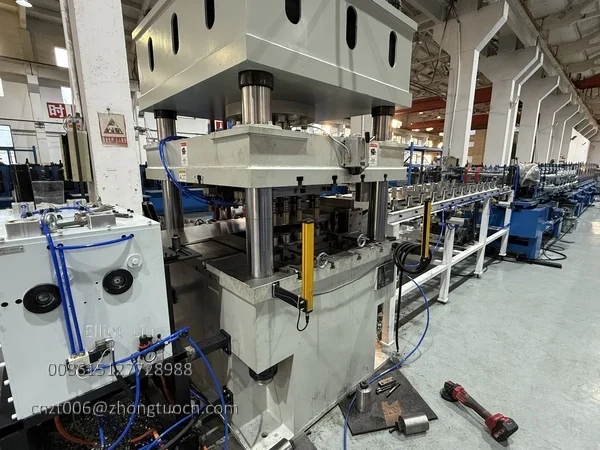
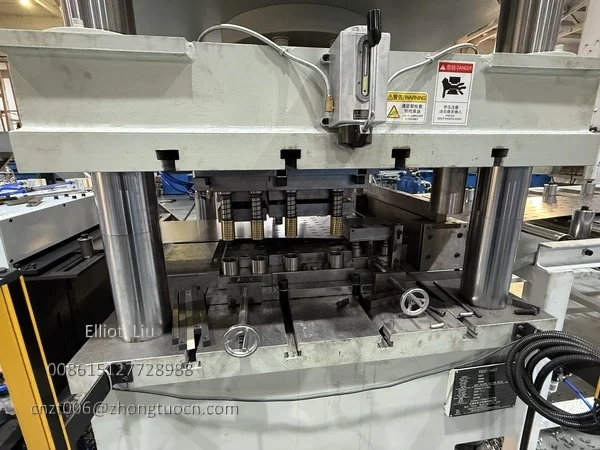
On a cable tray ladder machinery line, different feeding methods differ in drive clearance and start stop response. In continuous production, feeding slip, length deviation and positioning error all affect whether a batch of trays comes out at a consistent length.
The servo feeding unit pushes the strip to the set length and gives feedback on the feeding state. This helps reduce error buildup and supports stable cut length and hole positioning. For cable trays, which need repeatable length and hole spacing, feeding control directly affects how the finished trays connect and install at the job site.
The exact accuracy level depends on the current machine setup and customer product requirements. Different setups will show different accuracy results.
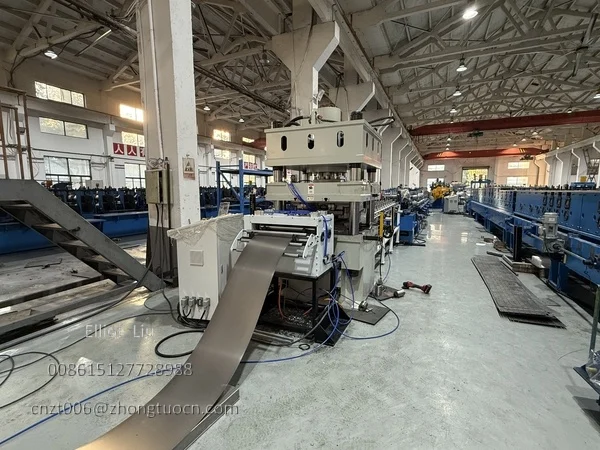
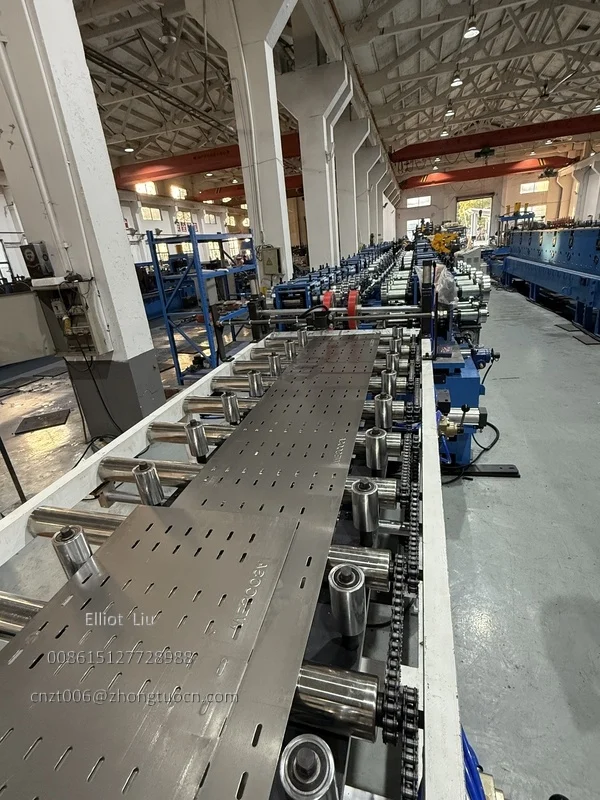
A cable tray ladder machinery line does not come with one fixed automation grade. It is a setup choice that matches the order structure. From methods with more manual involvement to methods with higher automation, the core difference lies in which steps involve people and how much.
For production with stable batches and a relatively concentrated spec range, a higher automation setup helps reduce repeated manual work. For many specs and small batches, the ease of profile change and adjustment matters just as much. A higher automation level does not automatically mean faster profile change. The key is whether the control system and the mechanical adjustment method work together.
Specific control functions, profile change method and the level of manual involvement need to be discussed and confirmed based on actual capacity needs.
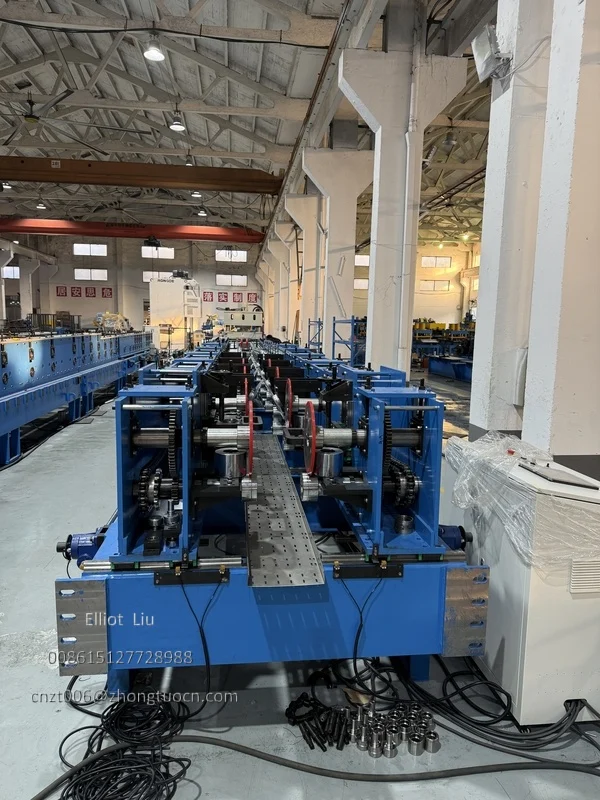
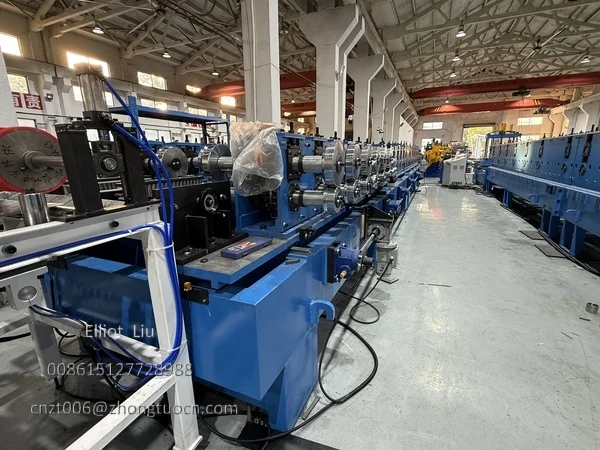
Production speed, punching and cutting method, feeding control and automation level all need to match your order structure, material specs and workshop conditions. When the setup fits, the production rhythm runs smoothly. When the setup is off, even impressive specs on paper will not help.
If you are evaluating a cable tray ladder machinery setup, send us your product specs, common materials, expected daily output and existing workshop conditions. We will help you confirm the matching setup for speed, feeding method, punching and cutting configuration and automation level based on your actual production requirements.
Contact: Elliot liu
Email: [email protected]
WhatsApp: 008615127728988
Contact Us For More Roll Forming Machine Detailed Information
You can contact us either through phone number 0086-15127728988 within our working hours, or send an email to [email protected], or send an inquiry form to us using "Inquiry Now" option. Our customer representatives will respond as soon as possible.