METAL ROLL FORMING MACHINE
Zhongtuo roll forming Systems is a "one-stop shop" for all your roll forming needs,enabling our customers to save time and money when buying roll forming machines,to help customers grow.

Zhongtuo roll forming Systems is a "one-stop shop" for all your roll forming needs,enabling our customers to save time and money when buying roll forming machines,to help customers grow.
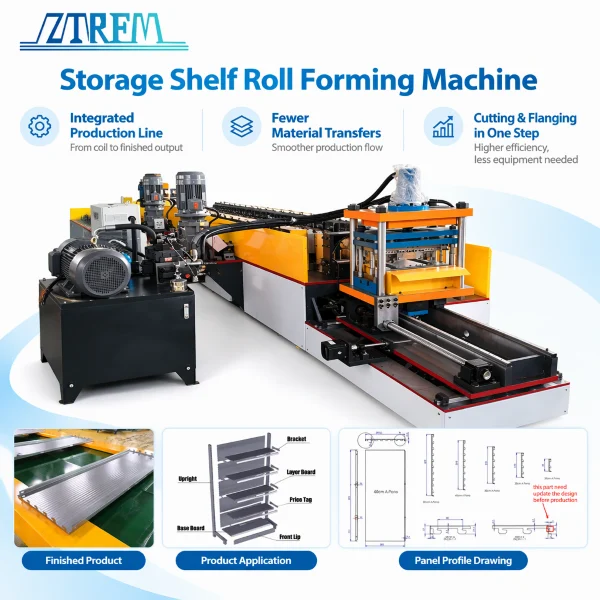
‹ › Metal back panels are key components used for rear closing and covering in storage systems. They are widely used in warehouse racks, supermarket display racks, and industrial mezzanine racks. To produce them efficiently and continuously, an integrated storage shelf roll forming machine is core equipment for any production workshop. Applications of Metal Shelf Back Panels…
Contact: Elliot liu
Email: [email protected]
WhatsApp: 008615127728988
Detailed Content
Metal back panels are key components used for rear closing and covering in storage systems. They are widely used in warehouse racks, supermarket display racks, and industrial mezzanine racks. To produce them efficiently and continuously, an integrated storage shelf roll forming machine is core equipment for any production workshop.
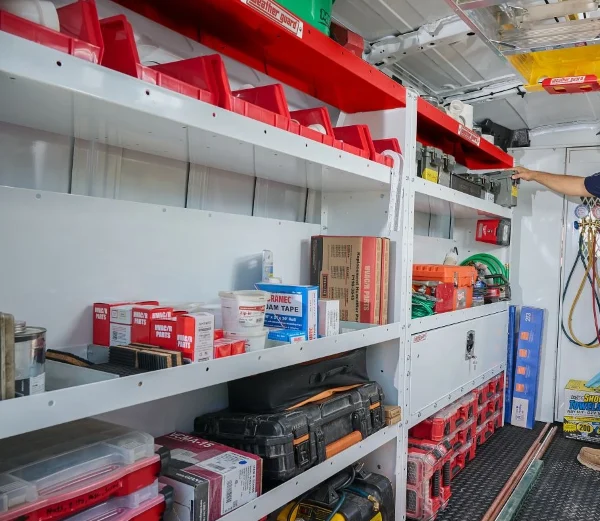
Metal back panels are important parts of various warehouse rack systems.
Storage racks: used in warehouses and logistics centers for rear closing and covering.
Supermarket display racks: provide a rear display background in retail spaces.
Industrial and mezzanine racks: meet specific assembly needs in complex storage systems.
These finished products are made from steel coils through continuous processing and go directly to assembly sites. A shelf back panel machine is the main equipment for producing these panels.
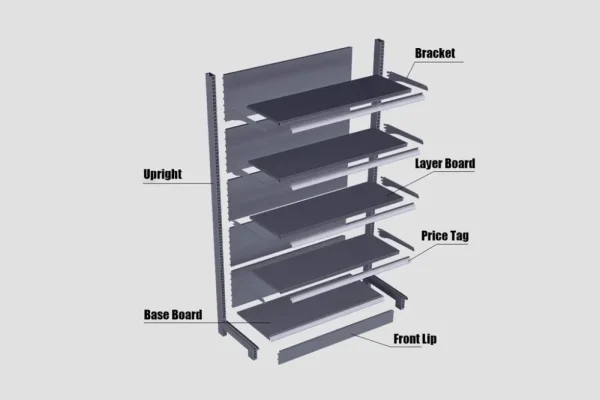
A complete back panel production line links multiple processing steps. It forms a continuous flow from coil loading to finished output.
Decoiling → Leveling → Feeding → Front End Punching → Continuous Roll Forming → Hydraulic Cutting and Flanging → Output
Decoiling and Leveling
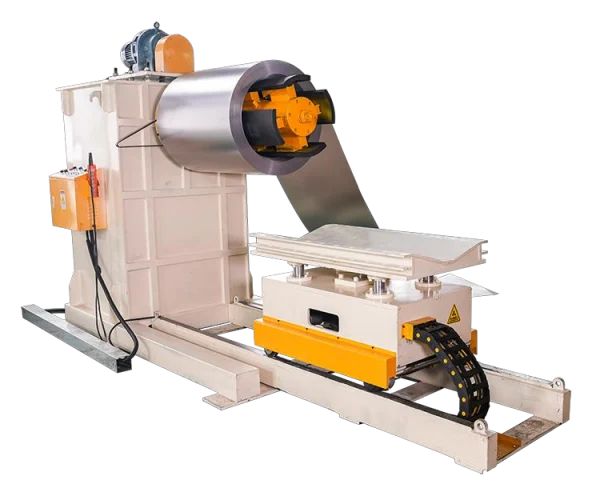
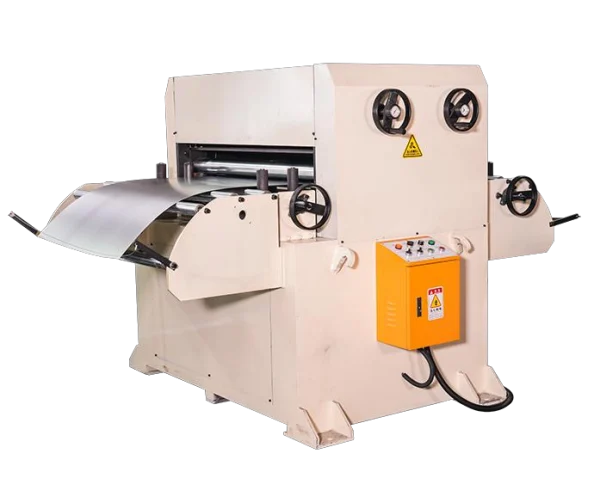
Production starts with coil loading. A 5 ton hydraulic expanding decoiler holds and opens the coil. The sheet then enters the leveling unit. The storage shelf roll forming machine uses a multi roll leveler to improve sheet flatness and reduce bending and stress from transport and storage. This provides a flatter base material for the forming step.
Feeding and Front End Punching
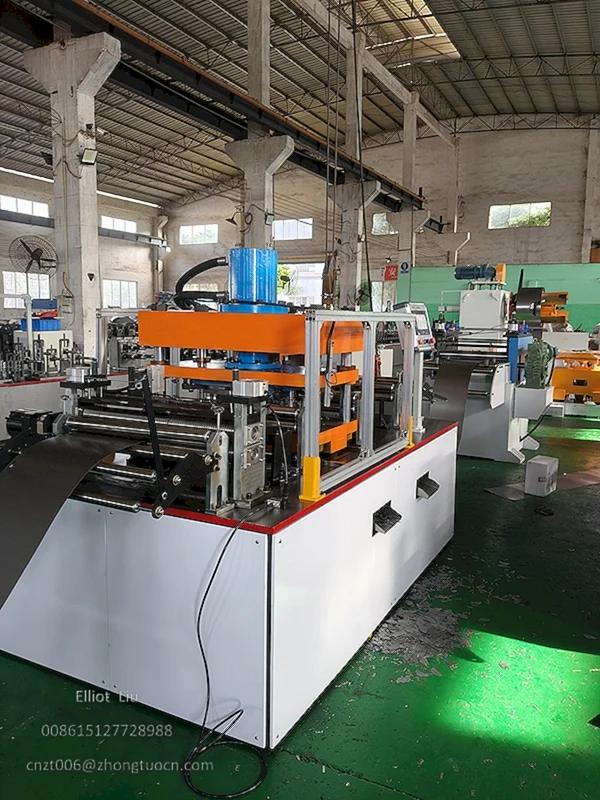
The leveled sheet feeds into the punching station. The equipment uses 3 sets of front end punching dies to process ear tabs on the panel. Servo feeding helps position the sheet accurately before each punching cycle.
Continuous Roll Forming
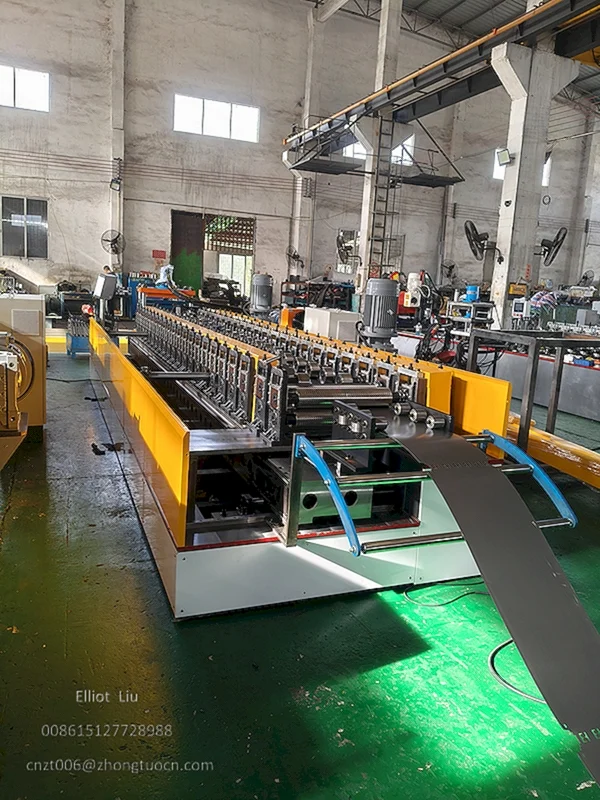
After punching, the sheet goes directly into the continuous roll forming unit. Multiple rows of rollers gradually press and bend the flat sheet into the specific profile needed for the rack back panel. The forming stands are arranged in sequence to shape the profile step by step.
Hydraulic Cutting, Flanging, and Output
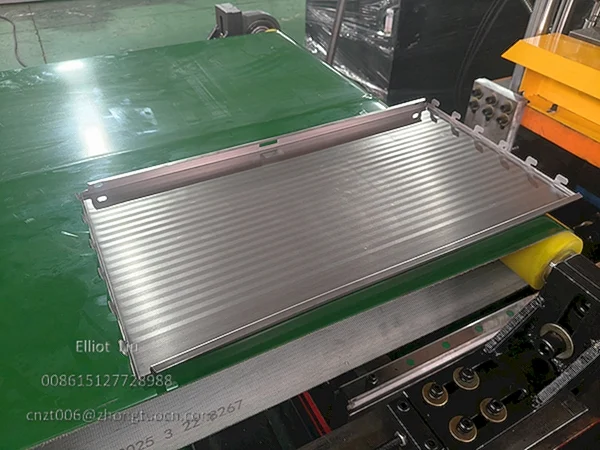
The formed sheet reaches the end of the line at the hydraulic cutting and flanging station. A shelf back panel machine uses a combined cutting and flanging die to cut the continuous sheet to length and finish the edge flange at the same time. The finished back panels with flanged edges then move out smoothly.
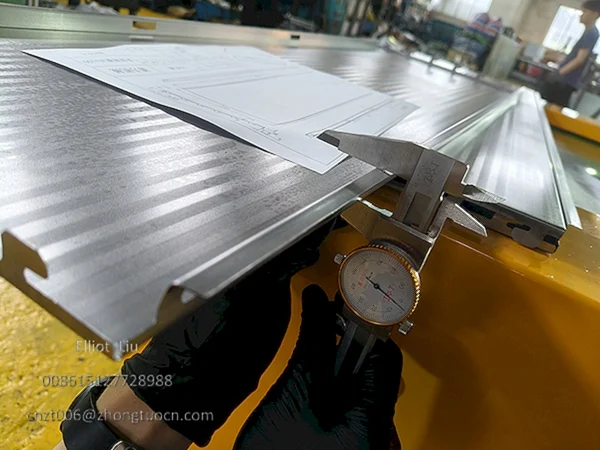
By connecting these steps on one line, the sheet goes from coil to finished panel without going offline. This reduces material transfer between separate machines.
The storage shelf roll forming machine delivers core value through smoother workflows, better material transfer management, and combined key processing actions.
Fewer material transfers between steps
Linking multiple steps on one line reduces sheet lifting and transfers between separate machines, which helps with material flow management on the floor. (Supporting setup: continuous line layout)
Combined cutting and flanging
The hydraulic cutting and flanging combined die finishes the edge flange while cutting, which helps reduce the need for separate flanging equipment. (Supporting setup: combined cutting and flanging die)
Smooth link from front feeding to forming
The hydraulic expanding decoiler and multi roll leveler provide good material preparation. The improved flatness offers a better base for the continuous roll forming step. (Supporting setup: 5 ton hydraulic expanding decoiler plus multi roll leveler)
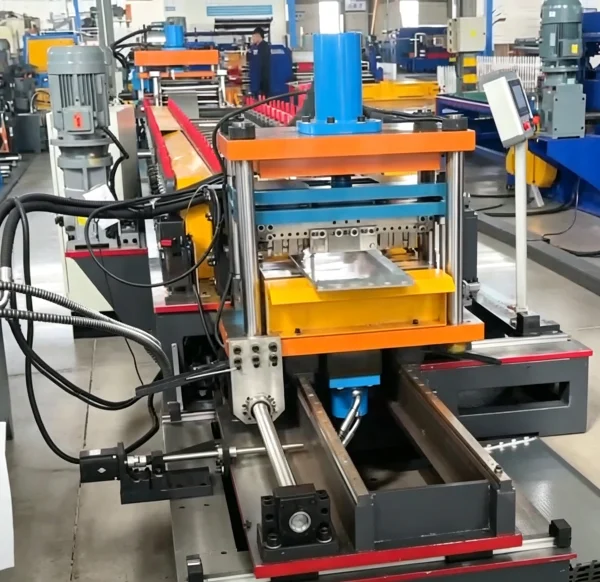
The table below shows the main parameters of one specific rack back panel line. A shelf back panel machine setup is customized based on your product drawings and production needs.
| Item | Specification |
|---|---|
| Raw material | Q235 steel coil |
| Material thickness | 0.4 to 0.8 mm |
| Coil inner diameter | 450 to 550 mm |
| Coil outer diameter | up to 1200 mm |
| Coil weight | 5 tons |
| Forming speed | 8 to 10 m/min (continuous run, cutting stop time not included) |
| Forming width | 99 to 499 mm |
| Punching setup | 3 sets of front end punching dies |
| Cutting | Hydraulic cutting and flanging (combined die) |
| Total power | 30 KW |
| Main motor | About 15 KW |
| Servo feeder | Huichuan servo motor 1.3 KW, feed speed 15 to 30 m/min |
| Control system | Mitsubishi PLC plus Yaskawa or Inovance frequency converter |
| Fault alarms | Material shortage, jams, emergency stop, counting, etc. |
[Image: Finished back panel and flange details]
If you plan to customize a back panel line, clarifying a few key points early helps make the final equipment fit your real production.
Drawing and hole pattern accuracy
The hole shape, size, spacing, and ear dimensions directly decide the punching die design. Make sure your drawing has clear sizes and tolerances. The more detailed the drawing, the closer the final punching result will be to your needs.
Future material and thickness range
Material type and thickness can affect the forming system and related equipment configuration. If your factory plans to take orders for thicker or different materials later, tell us during customization so we can evaluate your planned material range.
Site conditions and engineering check
Power supply, site layout, and lifting conditions depend on the final setup and your real site. Our engineers will check these with you during customization to make sure the line installs and runs smoothly.
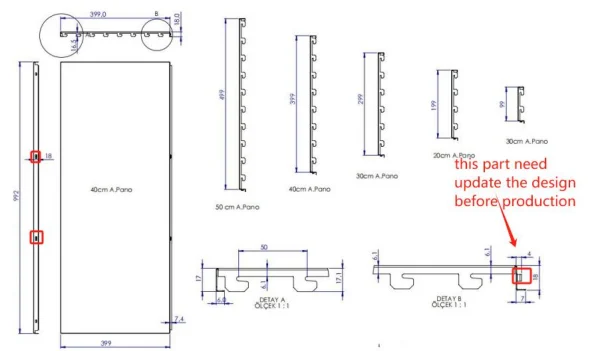
An integrated back panel line brings real convenience to your production. If you are planning a project, send us your hole drawings, material needs, and production requirements. We will evaluate your needs and offer a matching setup for your workshop. A storage shelf roll forming machine configured to your needs can help you build a practical plan.
Contact: Elliot liu
Email: [email protected]
WhatsApp: 008615127728988
Contact Us For More Roll Forming Machine Detailed Information
You can contact us either through phone number 0086-15127728988 within our working hours, or send an email to [email protected], or send an inquiry form to us using "Inquiry Now" option. Our customer representatives will respond as soon as possible.