METAL ROLL FORMING MACHINE
Zhongtuo roll forming Systems is a "one-stop shop" for all your roll forming needs,enabling our customers to save time and money when buying roll forming machines,to help customers grow.

Zhongtuo roll forming Systems is a "one-stop shop" for all your roll forming needs,enabling our customers to save time and money when buying roll forming machines,to help customers grow.
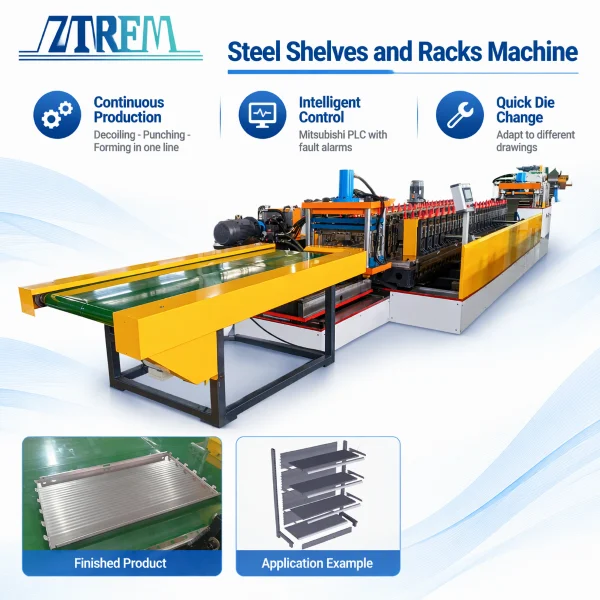
‹ › In warehouse rack production, back panel processing is a key part of the line. Different storage projects need different output and specs. Our steel shelves and racks machine is designed to run smoothly and in a coordinated way to match your specific production goals. Here is a look at what this equipment produces, how the…
Contact: Elliot liu
Email: [email protected]
WhatsApp: 008615127728988
Detailed Content
In warehouse rack production, back panel processing is a key part of the line. Different storage projects need different output and specs. Our steel shelves and racks machine is designed to run smoothly and in a coordinated way to match your specific production goals. Here is a look at what this equipment produces, how the speed parameters work, and how each step is coordinated.
Rack system back panels are metal sheets mounted on the rear side of a rack, providing rear support, shelf height adjustment, and structural reinforcement. Based on different rack system designs, panels need specific hole patterns, such as butterfly holes for shelf adjustment, and specific profile shapes, such as ribs and bent edges. A shelf back panel machine is configured to match the drawings provided by the customer.
In practice, these back panels are widely used in warehouse racks for storage, as well as in supermarket and display racks for product display and structural connection. Different customers provide different hole drawings and profile drawings. The production plan for this equipment is matched to the customer's specific drawing requirements.
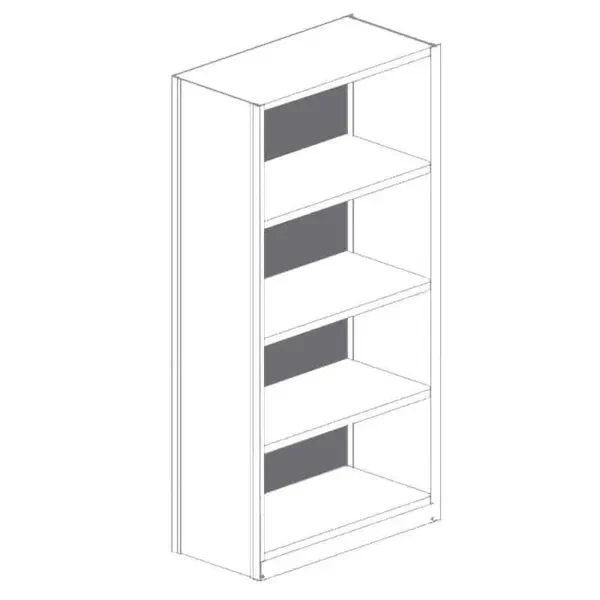
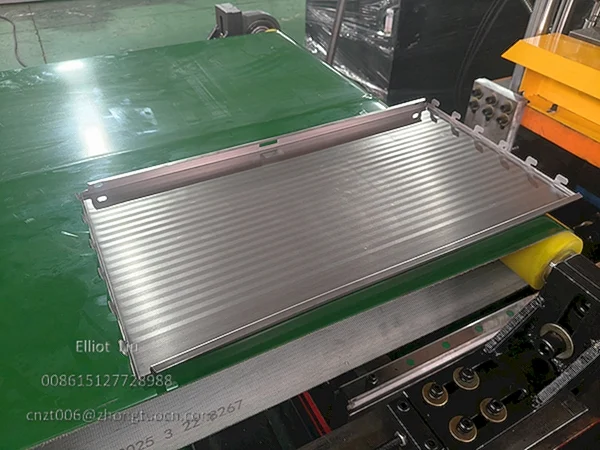
Back panel continuous processing goes through a series of tight steps.
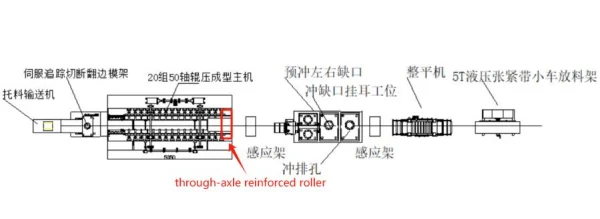
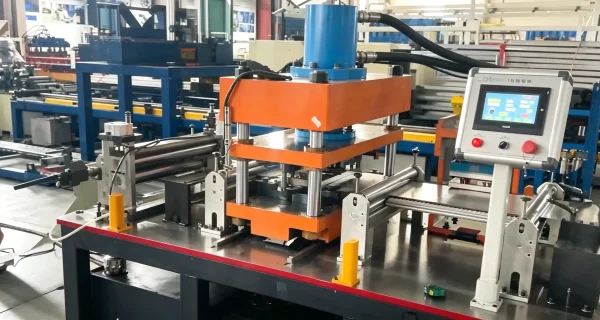
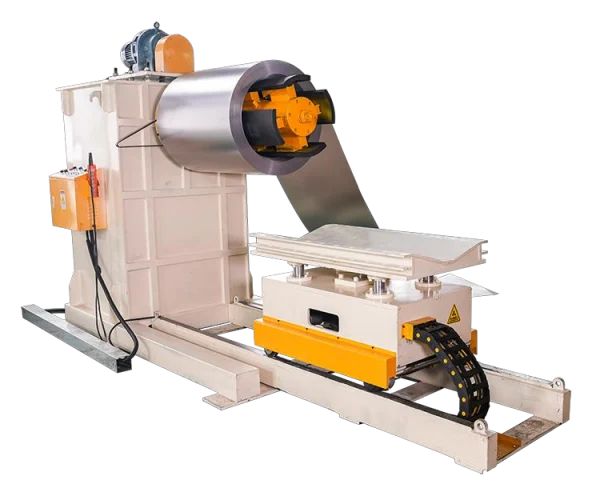
The steel coil first enters a 5 ton hydraulic expansion decoiler and opens. It then goes into a leveling unit to remove internal stress.Next, a servo feeder sends the sheet into the punching station at a set pace. After punching, the sheet goes directly into the roll forming unit. Finally, a hydraulic cutting system cuts it to length. The whole line is centrally scheduled by a Mitsubishi PLC to form a continuous production flow.
In the equipment parameter table, you will see two different speed values: forming speed 8 to 10 m/min and feeding speed 15 to 30 m/min.
Forming speed represents the continuous roll forming capacity of the main forming unit, with cutting stop time not included. Feeding speed is the running pace of the servo feeder. Although the servo feeder has a higher speed capability to position the sheet, the overall continuous output of the line is paced by the forming unit. A shelf panels machine relies on this precise feed control to position the sheet correctly before punching.
The reason they differ is that forming is a continuous physical deformation process, while punching and cutting need to match die actions. This pace difference means you cannot directly take the maximum forming speed as the final output for punched finished panels.
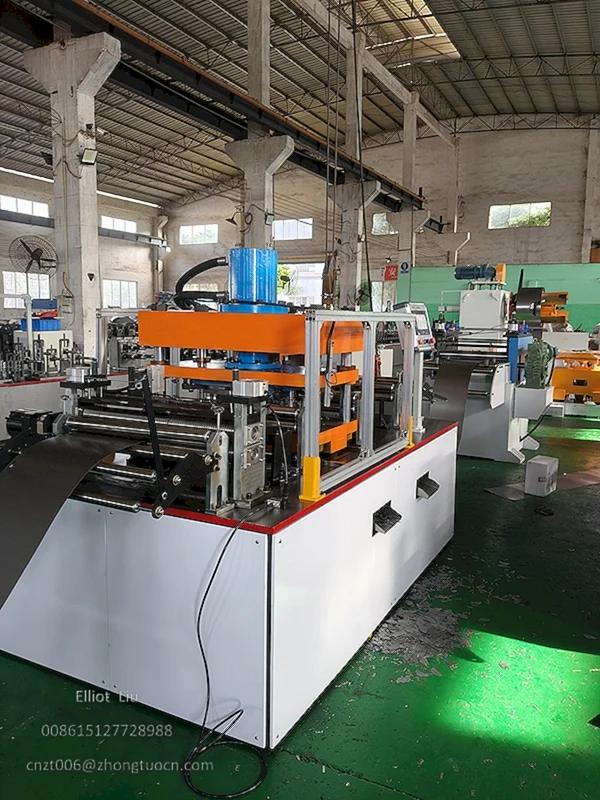
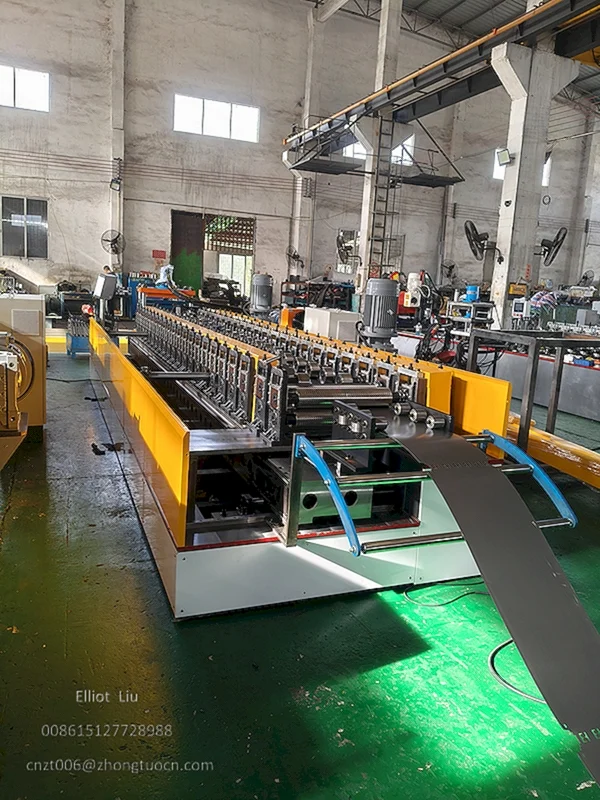
Our steel shelves and racks machine brings real value through process connection and custom configuration.
Continuous Steps Reduce Material Handling
Linking decoiler, punching, and forming in one line reduces moving half finished parts between machines.
Control System Coordinates Line Actions
The Mitsubishi PLC manages action sequences and includes fault alarms for operator monitoring.
Die Change Adapts to Different Drawings
Matching punching dies allow quick changes to adapt to new hole positions or widths.
Custom Configuration Fits Real Production
We build the setup to match your actual drawings and workshop conditions.
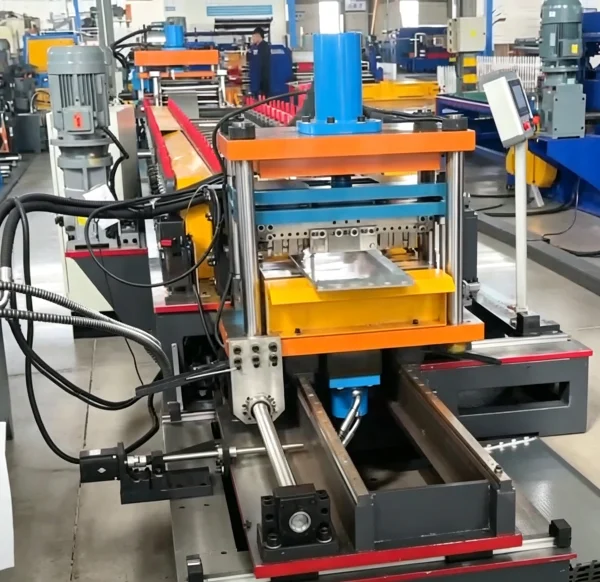
Although the equipment states a maximum forming speed, in actual production, effective output is limited by the pace match and material flow of specific steps.
The punching pace is one of the keys that affect line running speed. Different back panel hole drawings need different punching die plans. The current plan provides 3 sets of front punching dies and 8 sets of rear punching dies. How the dies are laid out and work with the punching action directly impacts the efficiency of the sheet passing through this step.
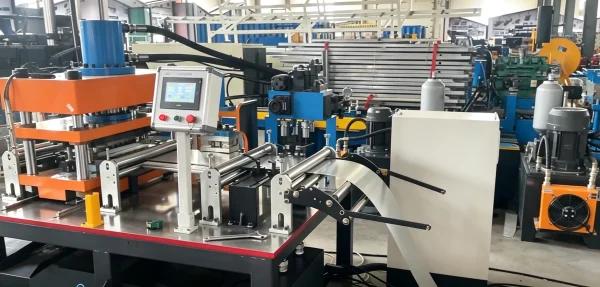
The theoretical maximum forming speed can only be reached when the equipment runs continuously. In actual production, the coil capacity of the 5 ton hydraulic expansion decoiler has a direct impact on this continuous operation. If the selected coil is too small or the inner diameter does not match, coil changes will interrupt the line. Each stop for coil change and leveling adds auxiliary time and reduces the effective running time.
| Item | Specification |
|---|---|
| Raw material | Q235 steel coil |
| Material thickness | 0.4 to 0.8 mm |
| Coil inner diameter | 450 to 550 mm |
| Coil outer diameter | up to 1200 mm |
| Coil weight | 5 tons |
| Forming speed | 8 to 10 m/min, continuous run, cutting stop time not included |
| Forming width | 99 to 499 mm |
| Punching setup | 3 sets of front punching dies and 8 sets of rear punching dies |
| Cutting | Hydraulic cutting |
| Total power | 30 KW |
| Main motor | About 15 KW |
| Servo feeder | Huichuan servo motor 1.3 KW, feed speed 15 to 30 m/min |
| Control system | Mitsubishi PLC plus Yaskawa or Inovance frequency converter, selected by plan |
| Fault alarms | Material shortage, jams, emergency stop, counting, etc. |
These parameters show the basic capacity of this setup for continuous forming and punching feed. Forming speed and feeding speed are separate parameters for different steps. The exact running match and final output must be confirmed against the actual plan.
[Image: Finished back panel or parameter label]
The actual running condition of a back panel production line cannot be judged only by the maximum forming speed of a single unit. It also needs to be understood together with the feeding pace, die setup, material flow, and the actual coordination of each step.
If you are planning a back panel project, please provide your product drawings, spec requirements, and expected output. We will evaluate and provide a matching equipment configuration plan for your actual needs. Our steel shelves and racks machine is built to fit your needs.
Contact Us For More Roll Forming Machine Detailed Information
You can contact us either through phone number 0086-15127728988 within our working hours, or send an email to [email protected], or send an inquiry form to us using "Inquiry Now" option. Our customer representatives will respond as soon as possible.