METAL ROLL FORMING MACHINE
Zhongtuo roll forming Systems is a "one-stop shop" for all your roll forming needs,enabling our customers to save time and money when buying roll forming machines,to help customers grow.

Zhongtuo roll forming Systems is a "one-stop shop" for all your roll forming needs,enabling our customers to save time and money when buying roll forming machines,to help customers grow.
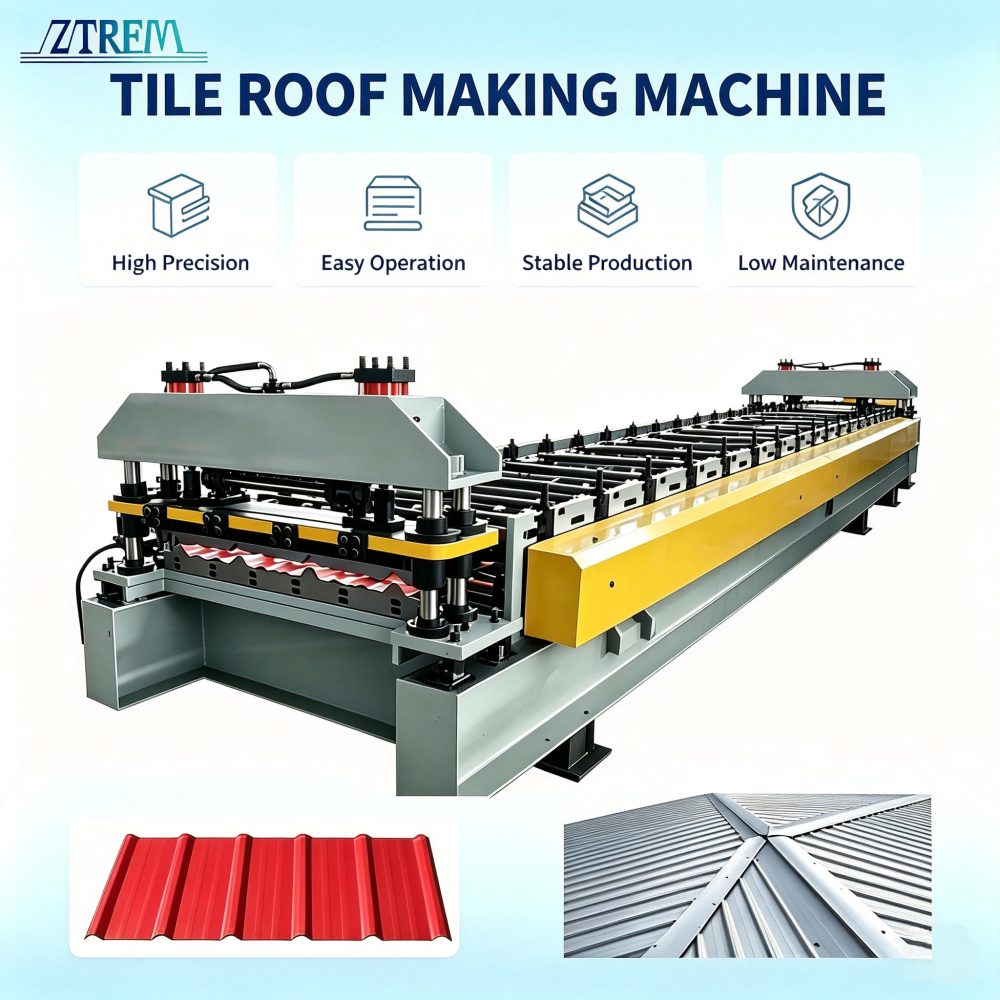
Steel coils go through several steps to become finished roof tiles: uncoiling, forming, cutting, and collecting. Many people think it is just simple pressing, but every step affects product quality. Slow production, inaccurate cutting, and surface scratches are common headaches. The tile roof making machine handles the whole process from uncoiling to collection, solving these daily problems…
Contact: Elliot liu
Email: [email protected]
WhatsApp: 008615127728988
Detailed Content
Steel coils go through several steps to become finished roof tiles: uncoiling, forming, cutting, and collecting. Many people think it is just simple pressing, but every step affects product quality. Slow production, inaccurate cutting, and surface scratches are common headaches. The tile roof making machine handles the whole process from uncoiling to collection, solving these daily problems with stable forming and precise cutting.
Let us look at five specific advantages of this machine.
These advantages cover the frame structure, roller technology, drive system, and cutting accuracy. Each one addresses a specific production issue.
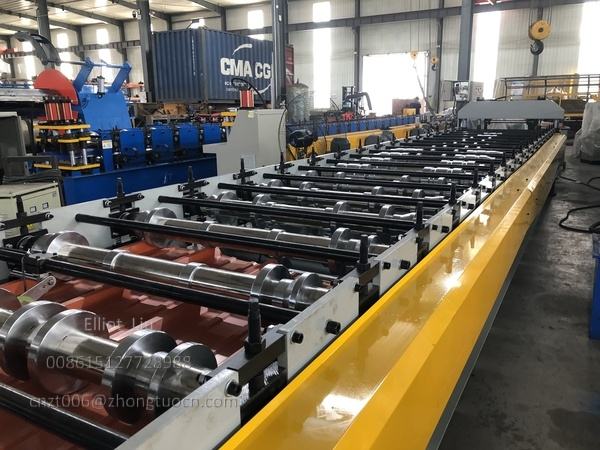
The frame uses 400 H beam steel with welded construction. The whole unit weighs 6.5 tons, so it stays stable at high speeds. You do not need to worry about panels warping or shifting.
The rollers use 45# steel with hard chrome plating. The surface is smooth and wear resistant, so coated materials like GI and PPGI do not get scratched.
The double chain drive handles heavier loads better, so you do not need to replace chains frequently.
The 20 roller stations use gradual forming. The material bends evenly, so hard materials are less likely to crack.
Cutting accuracy stays within ±1mm per 3 meters, so the panels fit together tightly without leaks at the joints.
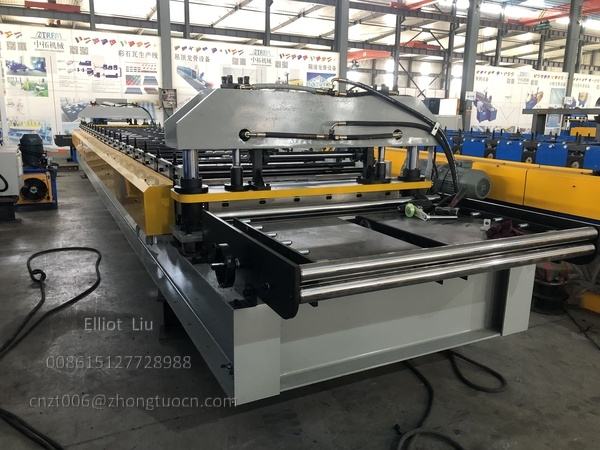
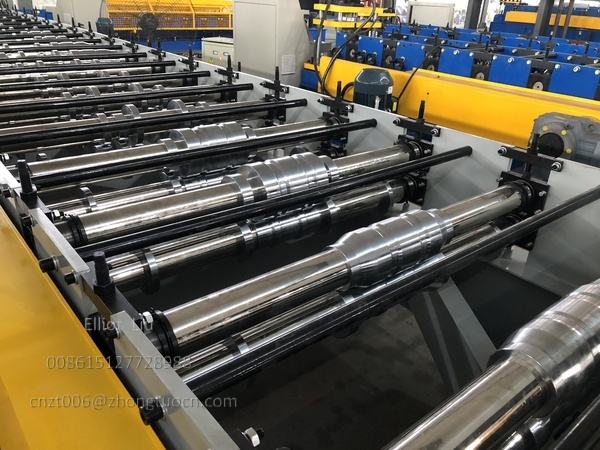
So how does a steel coil actually become finished roof tiles? The whole forming process is straightforward. The steel strip passes through 20 roller stations, with each roller bending the material just a little bit. Finally it becomes the desired profile. This method is called gradual forming. The material bends evenly, so it is less likely to crack.
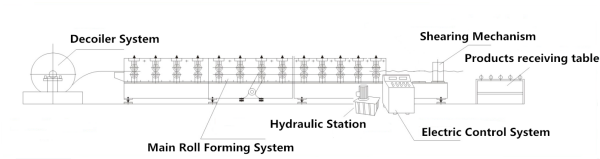
The coil sits on the decoiler, which handles up to 5 tons. Coils with inner diameters from 450 to 610mm work with this tile roof making machine. The machine pulls the strip through the entry table and into the main unit. The 20 roller stations gradually shape the flat strip into a roof profile. After forming, the machine cuts the panels to the set length, and the finished pieces drop onto the receiving tables. The whole process runs automatically. The operator only needs to set the length and quantity.
The frame uses 400 H beam steel with welded construction. The whole unit weighs 6.5 tons, so the tile roof making machine runs steady. The rollers stay in position during forming, so the finished panels keep consistent width and shape from start to finish. That is the complete process of making roof tiles from steel coils.
This machine's stable forming capability allows it to produce a wide range of products. Here are some common application areas.
Industrial plants and warehouses: roof covering and wall cladding
Residential housing: sloped roof systems
Agricultural greenhouses: simple roof structures
Large public buildings and sports arenas: metal roof systems
Commercial building facades: exterior wall panels
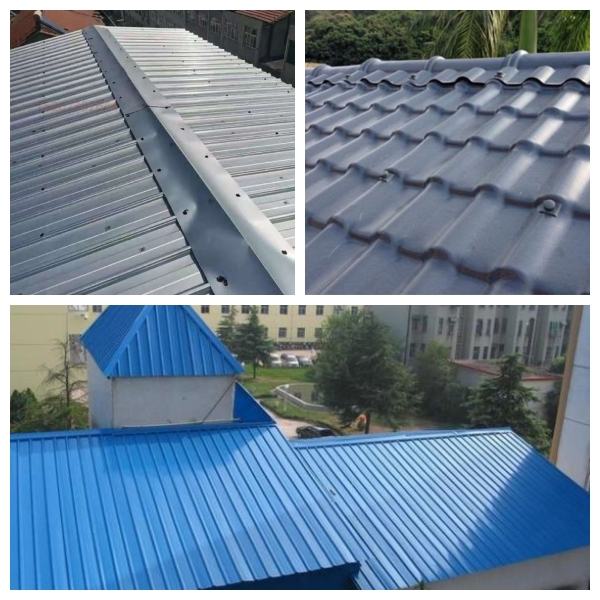
The application areas above rely on the tile roof making machine's core parameters. Here are the key specifications.
| Parameter | Value |
|---|---|
| Material Thickness | 0.16–0.55mm |
| Raw Material Width | 1000mm |
| Effective Width | 812mm |
| Working Speed | 0–20m/min |
| Processable Materials | GI PPGI PPGL G550 FULL HARD |
| Working Space | Approx. 20m×2.5m×1.2m |
| Main Forming Unit Size | Approx. 11500×1500×1500mm |
| Main Forming Unit Weight | 6.5 tons |
| Roller Material | 45# Steel with Hard Chrome Plating |
| Number of Rollers | 20 Stations |
| Shaft Material | 45# Steel, Quench Treated |
| Shaft Diameter | φ80mm |
| Drive Mode | Double Chain |
| Frame | 400 H Beam Steel Welded |
| Cutting Tolerance | ±1.0mm per 3m |
| Voltage | 380V 50Hz 3 Phase |
Now that we have covered the main specifications, let us talk about what to focus on when choosing a tile roof making machine. First, check the material thickness range. The 0.16 to 0.55mm range covers most common roofing sheet thicknesses on the market. Then look at the material types. The machine handles GI, PPGI, and PPGL coated steel sheets.
You should also measure your workshop space in advance. The whole line needs about 20 meters long, 2.5 meters wide, and 1.2 meters high. The main forming unit itself is about 11.5 meters long, so you need extra space at the front and back for coil loading and product collection.
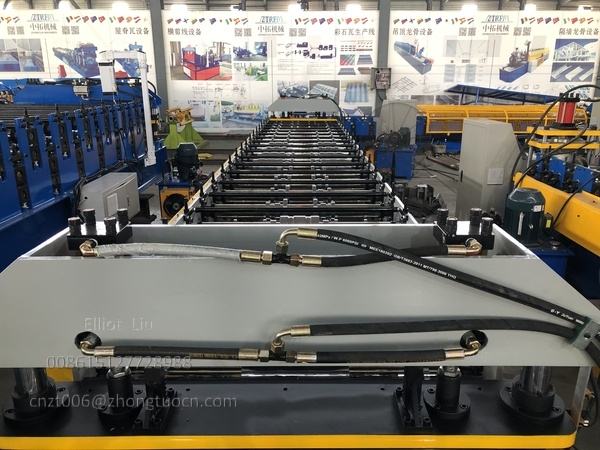
If your business also works with other types of metal panels, we have other machines in this series for different needs.
Wall panel roll forming machine
Glazed tile roll forming machine
Corrugated sheet roll forming machine
No matter which one you choose, our approach stays the same: we recommend the right configuration based on your actual needs. Roof tile production is not complicated. The key is choosing the right equipment and using it well. If you have specific material specifications or workshop dimensions, we can help you figure out which configuration works best.
Contact: Elliot liu
Email: [email protected]
WhatsApp: 008615127728988
Contact Us For More Roll Forming Machine Detailed Information
You can contact us either through phone number 0086-15127728988 within our working hours, or send an email to [email protected], or send an inquiry form to us using "Inquiry Now" option. Our customer representatives will respond as soon as possible.