We use cookies to ensure that we give you the best experience on our website.
Development vision: become a global one-stop supplier of cold roll forming machines and accessaries.
METAL ROLL FORMING MACHINE
Zhongtuo roll forming Systems is a "one-stop shop" for all your roll forming needs,enabling our customers to save time and money when buying roll forming machines,to help customers grow.
20 Roller Roof Tile Press Machine Delivers Reliable Metal Roof Tile Production
‹ › A metal roof tile production line only runs as smoothly as its weakest stage. Coil feeding interruptions, inconsistent forming, inaccurate cutting, or poor collection all stop the line. A roof tile press machine links these four stages into one continuous process. This article walks through each stage in order, from coil entry to finished tile…
Contact: Elliot liu Email: [email protected] WhatsApp: 008615127728988
Detailed Content
Roof Tile Press Machine
A metal roof tile production line only runs as smoothly as its weakest stage. Coil feeding interruptions, inconsistent forming, inaccurate cutting, or poor collection all stop the line. A roof tile press machine links these four stages into one continuous process. This article walks through each stage in order, from coil entry to finished tile output.
Complete Production Flow of a Roof Tile Press Machine
A roof tile press machine turns steel coil into finished tiles through four systems working together. The decoiler feeds the material. The main roll forming system shapes the flat strip into a roof tile profile. The cutting system shears the continuous strip to length. The collection system gathers finished tiles. Material goes in one end, finished tiles come out the other.
These four stages form a continuous production chain. Each stage depends on the others, and any bottleneck at any stage stops the entire line. When evaluating a roof tile press machine, the question is whether the four stages work together to match your material specifications and output requirements.
Complete line advantages
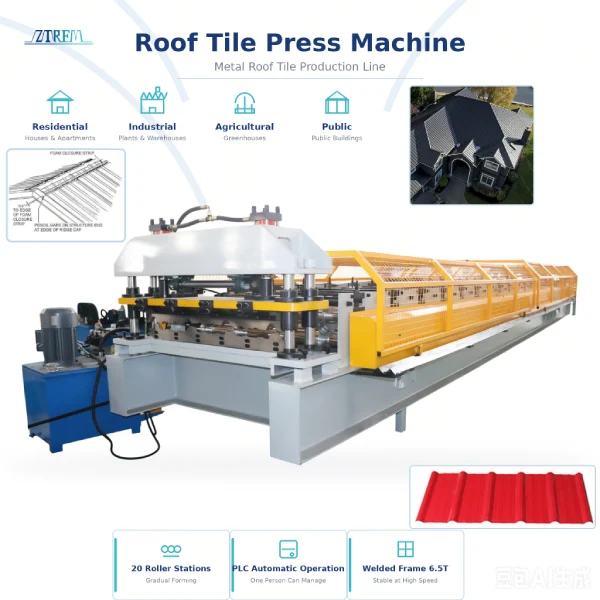
20 rollers for gradual forming
Welded frame weighing 6.5 tons
Double chain drive
PLC automatic operation
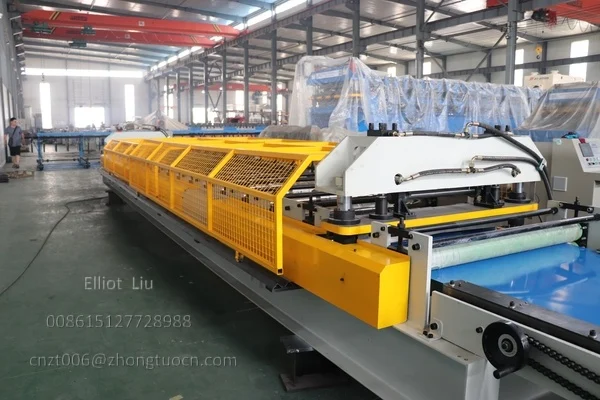
Roof Tile Press Machine - Overall Display
Coil Feeding – Where the Line Begins
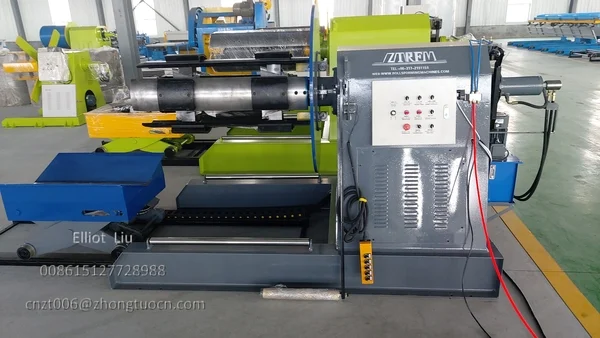
The decoiler is the starting point of the line. It holds the steel coil and feeds material forward continuously. The decoiler has a 5 ton capacity and accepts coils with inner diameters from 450 to 610mm.
The decoiler does a simple job, but its configuration determines how long the line can run without interruption. If coil changes are slow or difficult, the rest of the line waits regardless of how good the forming and cutting systems are. For operations that prioritize continuous production, the decoiler choice matters more than many realize.
Two decoiler options are available. The choice depends on coil change frequency and labor cost.
Manual decoiler (standard)
Two manual decoilers come as standard. You can alternate between them. The structure is simple and operation is straightforward. This option works well for production with low coil change frequency.
The operator prepares the next coil before the current one runs out and swaps it immediately when needed. Having two units allows a ready to use backup. One coil runs while the other stands ready. This reduces waiting time and suits operations where coil changes are infrequent.
If you change coils many times per day, manual operation becomes tedious. An automatic hydraulic decoiler with a loading cart and speed sensor is available as an option.
The loading cart moves the coil from the floor or rack directly to the decoiler position. The hydraulic system expands the segments to secure the coil. The speed sensor matches the decoiler speed to the main machine automatically. This option reduces changeover time and operator effort for operations with frequent coil changes. Atile roof making machine benefits from this configuration when running long production shifts.
Main Roll Forming – The Core That Shapes the Profile
The main roll forming system is the heart of the line. The profile shape, dimensional accuracy, and surface quality of metal roof tiles are all determined at this stage.
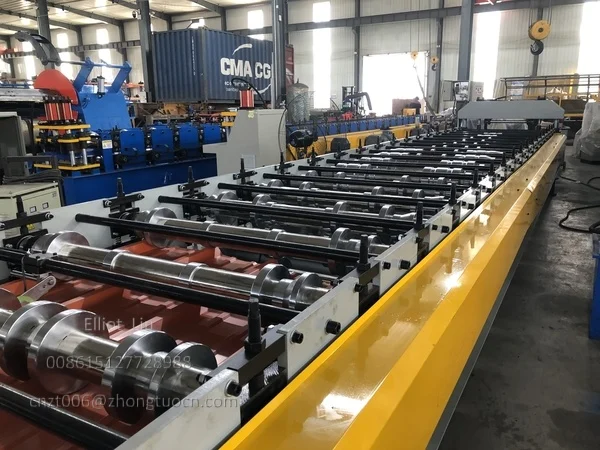
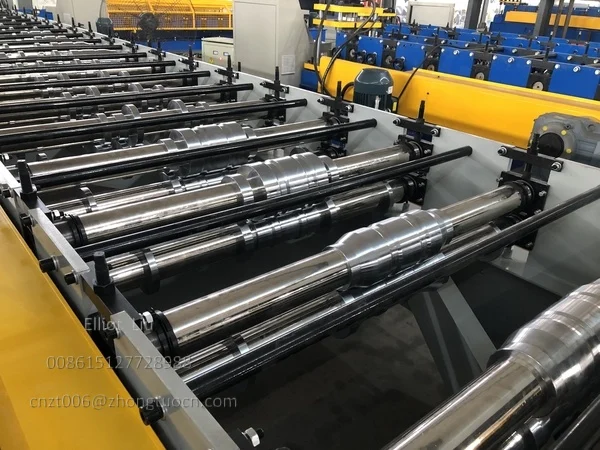
The steel strip enters the main roll forming machine from the feed side. It passes through 20 roller stations one by one. Each station bends the material slightly. By the time it exits the last station, the flat strip has become a finished tile profile. This process runs continuously at up to 20 meters per minute.
Gradual forming with 20 rollers
Each roller station handles a small portion of the total deformation. The material is not bent all at once. Instead, it changes shape gradually through the stations. For coated materials like GI, PPGI, and PPGL, this gradual approach helps maintain coating integrity.
Roof Tile Press Machine - Roller Wheel Forming
Roller material and surface treatment
The rollers use 45# steel with hard chrome plating. The 45# steel provides the strength and toughness needed for forming. The hard chrome layer makes the roller surface smooth and wear resistant. A smooth roller surface helps reduce the risk of scratches on coated sheets.
Rollers spacers adopt zinc treatment but not color paint
Rigid frame for stable forming
The main roll forming frame uses 400 H beam steel welded construction. The whole unit weighs 6.5 tons. Roller positions stay accurate during operation.
Shafts and drive system
The shafts use 45# steel with quench treatment and measure 80mm in diameter. The drive uses double chains. A roof tile press machine with this drive configuration handles continuous production reliably.
Roof Tile Press Machine - Frame Diagram
Cutting – Precise Length Control
The cutting system shears the continuous formed strip to the set length. Cutting accuracy determines whether finished tiles have the correct dimensions.
The formed strip comes out continuously and can reach significant length. The cutting system cuts it into individual tiles at the set length. If cutting accuracy is poor, tile lengths vary, installation becomes difficult, and joints may leak.
Hydraulic power and dual pillar frame
The cutting system uses hydraulic power for shearing force. Hydraulic drive provides strong, smooth cutting action. A dual pillar frame keeps the cutting mechanism stable during operation.
The blades use Cr12 quenched steel. The blades are thicker than standard blades.
Roof Tile Press Machine-Double pillar frame
PLC controlled length measurement
The cutting system uses PLC control with an encoder for length measurement. The encoder measures tile length in real time. When the strip reaches the set length, the PLC triggers the cutting action automatically. The operator only needs to set the length and quantity on the touchscreen. The machine handles measurement and cutting automatically. Cutting tolerance stays within ±1mm per 3 meters.
PLC controlled length measurement
Collection – Organizing Finished Tiles
The collection system receives cut tiles and organizes them. This final stage may seem simple, but how tiles are collected directly affects packaging and storage efficiency.
Standard receiving tables
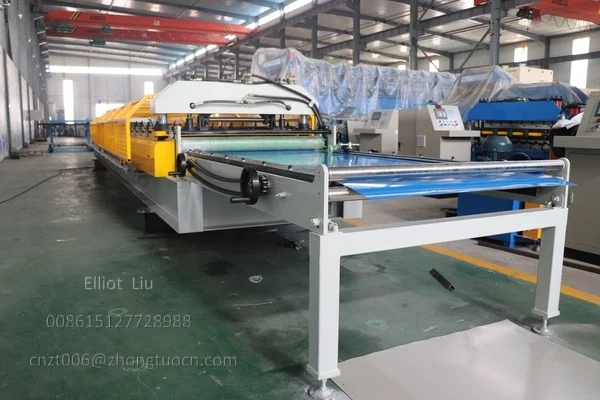
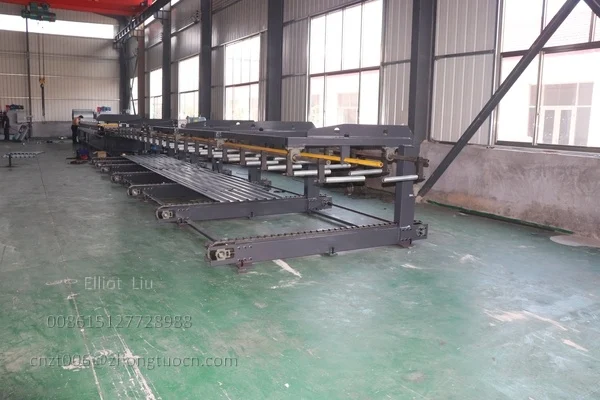
Standard receiving tables use welded steel construction with support rollers. Each table is 3 meters long. Two tables come as standard. Cut tiles drop from the cutting system onto the tables, where operators stack them manually.
The support rollers reduce friction between the tile and the table surface. The welded steel frame stays stable under long term use.
A 6 meter automatic stacker is available as an option. The stacker installs at the exit of the line and works with the cutting system.
The stacker supports the sheet before cutting. After cutting, the finished tile drops onto the stacking area. When the stack reaches the set height, the operator presses a button and the stack moves to the packing area. This option reduces manual handling for high output operations. A roof tile make machine paired with this stacker handles large volume orders more efficiently.
Production Considerations for Different Tile Orders
Different tile orders place different demands on the production line. Understanding these differences helps in selecting the right setup for specific production needs.
Coil and Material Requirements
Each production run starts with coil feeding and material compatibility. The machine accepts material thickness from 0.16 to 0.55mm and raw material width up to 1000mm. Processable materials include GI, PPGI, and PPGL. Confirming material conditions against machine parameters before production helps avoid feeding issues. A tiles making machine metal roof requires careful material matching to achieve consistent results.
Forming and Cutting Requirements
The tile profile takes shape through the main roll forming system with 20 rollers. The working speed reaches up to 20m/min. After forming, the cutting system shears the strip to length with tolerance at ±1mm per 3 meters. Production planning should account for these parameters to ensure consistent output.
Collection and Handling Requirements
The choice between standard receiving tables and an optional automatic stacker depends on output volume and labor availability. Standard tables require manual stacking. The automatic stacker reduces manual handling for higher output operations.
A roof tile press machine produces tiles used across many building sectors:
Industrial plants and warehouses: roof covering
Residential housing: sloped roofing
Agricultural greenhouses: simple roof structures
Large public buildings: metal roofing systems
Commercial building facades: exterior wall panels
Different applications have different requirements for tile profile, material thickness, and surface quality.
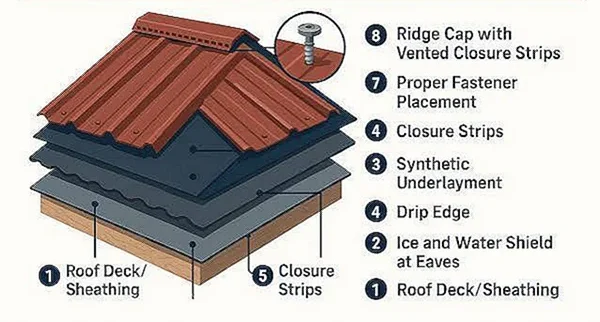
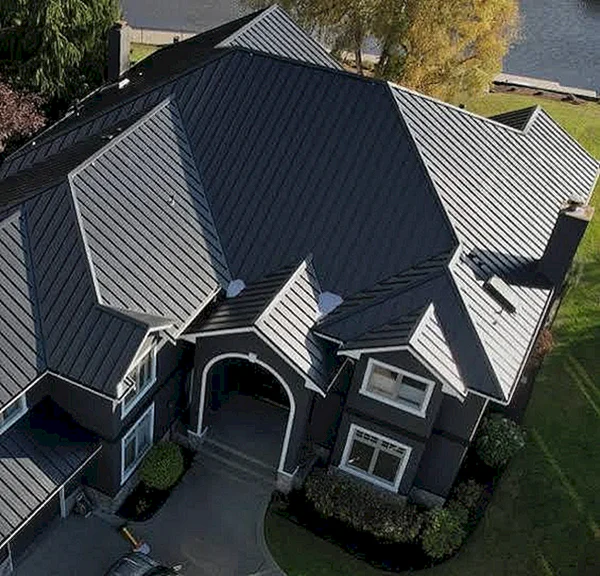
Roof Tile Press Machine - Roof Tile Installation DiagramRoof Tile Press Machine - The finished products are applied to villas
Metal roof tile production depends on four connected stages. Coil feeding brings material in. Roll forming shapes the profile. Cutting controls finished length. Collection organizes output. Each stage affects the others, and all four must work together for stable, consistent production. For specific material or output requirements, these four stages determine how the line performs.
Contact: Elliot liu Email: [email protected] WhatsApp: 008615127728988
Contact Us For More Roll Forming Machine Detailed Information You can contact us either through phone number 0086-15127728988 within our working hours, or send an email to [email protected], or send an inquiry form to us using "Inquiry Now" option. Our customer representatives will respond as soon as possible.
💡 Please fill in the information below and we will call or email you later. Thank you!