METAL ROLL FORMING MACHINE
Zhongtuo roll forming Systems is a "one-stop shop" for all your roll forming needs,enabling our customers to save time and money when buying roll forming machines,to help customers grow.

Zhongtuo roll forming Systems is a "one-stop shop" for all your roll forming needs,enabling our customers to save time and money when buying roll forming machines,to help customers grow.
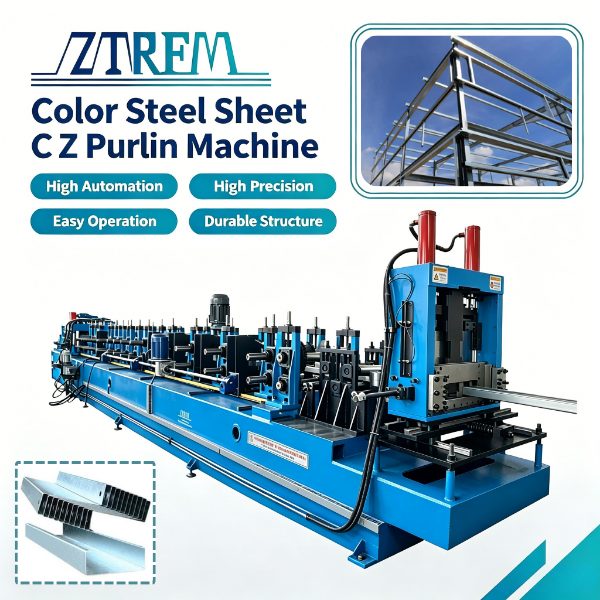
The color steel sheet c z purlin machine features a 5 ton hydraulic decoiler and four station punching system with Cr12mov dies. It solves coil feeding instability and mold wear for steel structures and solar mounting.
Contact: Elliot liu
Email: [email protected]
WhatsApp: 008615127728988
Detailed Content
Unstable coil feeding and fast mold wear are two serious problems in C/Z purlin forming. Many manufacturers face higher costs because of these issues. Is there a way to fix them? Yes.
Thecolor steel sheet c z purlin machineuses a 5 ton hydraulic decoiler and a four station punching system to solve these problems at the source. It keeps production smooth and stable. Let us look at how we address these two major issues.
Cold forming runs continuously at room temperature. Rollers bend the steel strip into the target shape step by step. Each roller stand completes part of the deformation.The material undergoes work hardening during cold forming. Yield strength increases while toughness stays good. Finished products hold stable dimensions and good straightness.
This process does not need heating. Energy use is lower than hot rolling. The surface does not develop oxide scale. Galvanized coatings and paint layers stay intact.
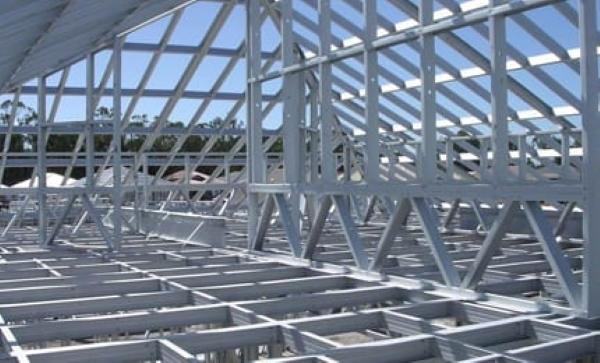
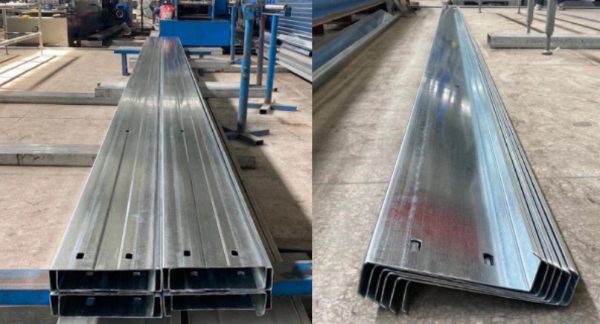
This machine produces channels that work in many scenarios.
The table below lists the main specifications.
| Parameter | Value |
|---|---|
| Materials processed | Galvanized coil / low carbon steel coil |
| Material yield strength | Q195 / Q235 / Q345 / Q355 |
| Material thickness range | 1.0 to 3.0 mm |
| C purlin width range | 80 to 300 mm |
| Z purlin width range | 120 to 300 mm |
| Flange height range | 30 to 100 mm |
| Lip length range | 10 to 20 mm |
| Power supply | 380V 50Hz 3 phase (customizable) |
| Hydraulic station power | 11 kW |
| Decoiler loading capacity | 5 tons maximum |
| Compatible coil inner diameter | 450 to 550 mm |
| Punching stations | 4 sets (3 punching + 1 pre shearing) |
| Punching die material | Cr12mov with quenching treatment |
| Complete line dimensions | about 22m x 2.0m x 2.0m |
| Complete line weight | about 15 tons |
| Length tolerance | 3000mm plus or minus 1.0mm |
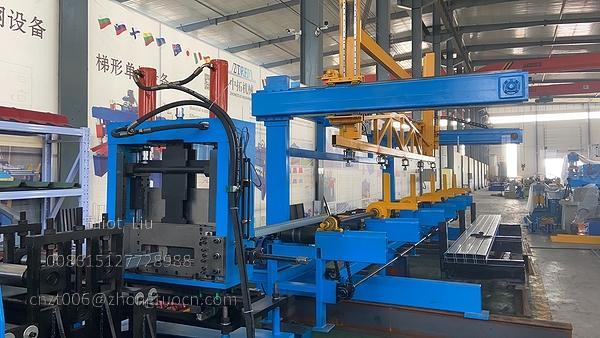
Decoiler - feeding - leveling - punching - forming - cutting - receiving table
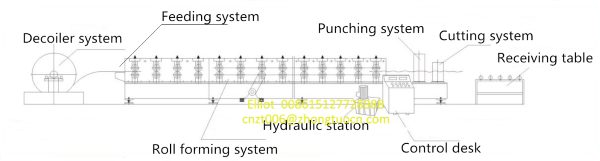
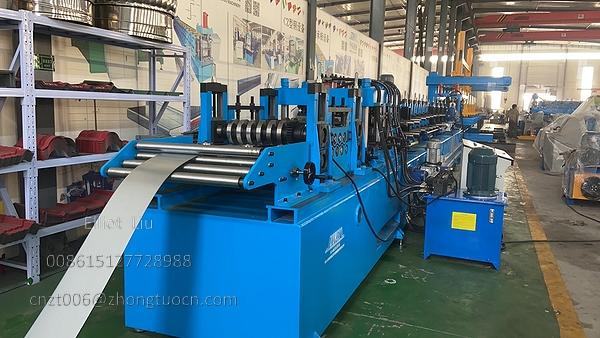
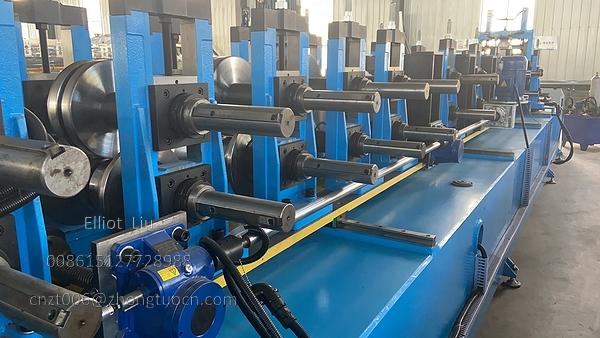
This is the standard production sequence. The decoiler unrolls the coil. The strip goes through leveling to remove stress and then enters the punching station for hole making. The strip moves to the main forming machine. Rollers gradually bend it into a C or Z section. After forming, the hydraulic system cuts the profile to length. The receiving table stacks finished products automatically.
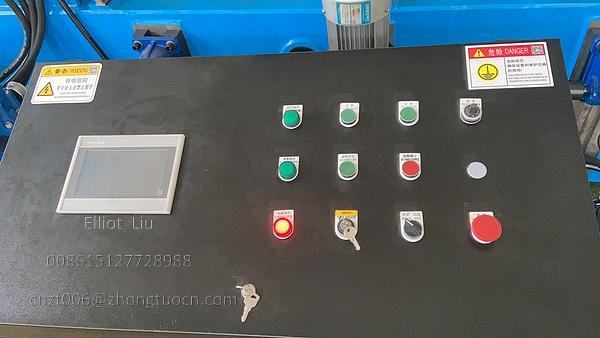
Speed sensors and the PLC coordinate all stations. The strip stays under constant tension throughout the whole process. Each module can be adjusted or reconfigured based on customer needs.
Let us look at two key parts of the workflow.
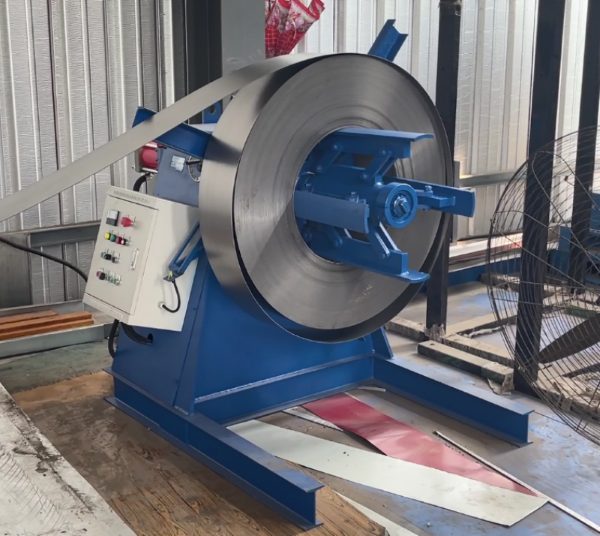
Have you experienced unstable coil feeding speed. If the decoiler runs too fast, the strip piles up and gets scratched. If it runs too slow, the main machine pulls the strip and causes deformation. The decoiler uses hydraulic expansion to hold the coil. Hydraulic systems drive segments outward to lock the coil from the inside. Expansion force spreads evenly, so the coil stays secure during rotation.
An electric motor drives active decoiling. A speed sensor monitors strip slack and sends signals to the control system. The system adjusts motor speed automatically to match the main machine. The decoiler handles up to 5 tons. It accepts coils with inner diameter from 450 to 550 mm. Most standard coils fit directly.
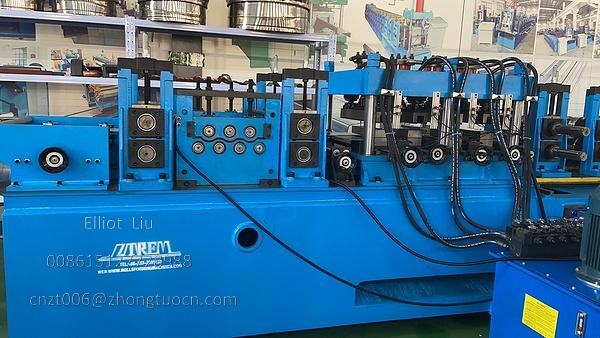
Inaccurate purlin hole positions cause big problems on site. If bolts don't fit, workers must enlarge holes with oxyfuel torches. That costs time and money. The punching system makes holes after leveling and before forming. The strip is flat during punching. The PLC controls hole positions precisely.
The system has four stations total. Three stations handle punching. One station handles pre shearing before forming. It cuts off uneven sections at the coil head. All four stations work at the same time. Punching and pre shearing happen in one feed cycle. No separate stops are needed.
Do you worry about dies going blunt quickly. The dies use Cr12mov steel. Quenching treatment increases hardness and wear resistance. They stay sharp after long use. Hole edges come out smooth without burrs. One set of dies lasts longer.
A fully equipped machine brings multiple benefits to your factory.
The decoiler automatic speed control reduces material waste. The strip moves under constant tension without piling or stretching. Material utilization improves. Hydraulic expansion makes coil loading fast and shortens changeover time.
The punching system completes all holes in one pass. No secondary processing is needed. Labor costs go down. Four stations work simultaneously for a compact production pace.
Cr12mov quenched dies last longer. One set of dies serves more production runs. Replacement frequency drops. Spare part costs decrease. Smooth hole edges eliminate deburring, saving a few seconds on each purlin.
Consider these factors when choosing equipment.
What coil weight do you typically use. The decoiler handles 5 tons, which suits most standard coils. If your coils are heavier, we can adjust the configuration.
How many punching stations do you need. The standard setup has four stations, three for punching and one for pre shearing. We can add more if required.
What purlin sizes do you produce. The standard range covers C purlin from 80 to 300 mm and Z purlin from 120 to 300 mm. Sizes outside this range can be custom designed from your drawings.
What is your workshop power condition. The standard configuration is 380V 50Hz 3 phase. We can customize to your local voltage. We can recommend the best solution based on your specific needs.
Contact us for a detailed quotation and technical documentation.
Contact: Elliot liu
Email: [email protected]
WhatsApp: 008615127728988
Contact Us For More Roll Forming Machine Detailed Information
You can contact us either through phone number 0086-15127728988 within our working hours, or send an email to [email protected], or send an inquiry form to us using "Inquiry Now" option. Our customer representatives will respond as soon as possible.