METAL ROLL FORMING MACHINE
Zhongtuo roll forming Systems is a "one-stop shop" for all your roll forming needs,enabling our customers to save time and money when buying roll forming machines,to help customers grow.

Zhongtuo roll forming Systems is a "one-stop shop" for all your roll forming needs,enabling our customers to save time and money when buying roll forming machines,to help customers grow.
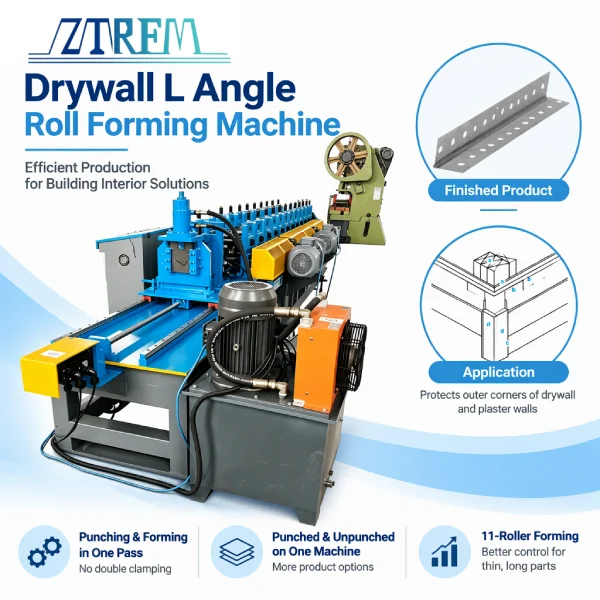
‹ › Buying a line starts with the profile, not the machine. A Drywall L Angle Roll Forming line is shaped by the section you plan to run. Fix that section, and roll design, roller count, punching position and cutting method all have something to work with. Leave it open, and no parameter sheet will…
Contact: Elliot liu
Email: [email protected]
WhatsApp: 008615127728988
Detailed Content
Buying a line starts with the profile, not the machine. A Drywall L Angle Roll Forming line is shaped by the section you plan to run. Fix that section, and roll design, roller count, punching position and cutting method all have something to work with. Leave it open, and no parameter sheet will help you compare.
All three show up in daily production, not only in a spec sheet.
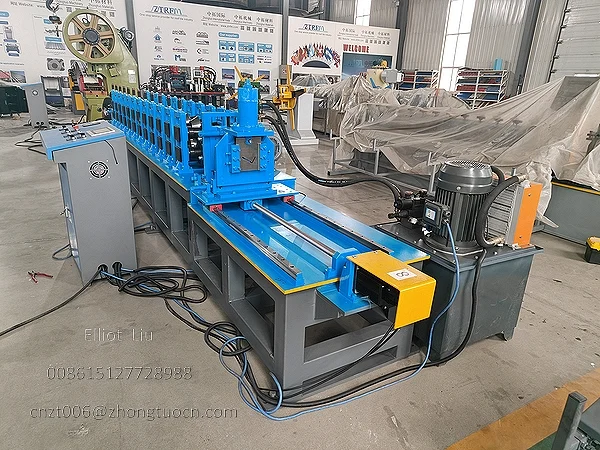
Most buyers line up three parameter sheets and compare them. The sheet is the result, not the start. What decides the shape of the machine is the drawing you send.
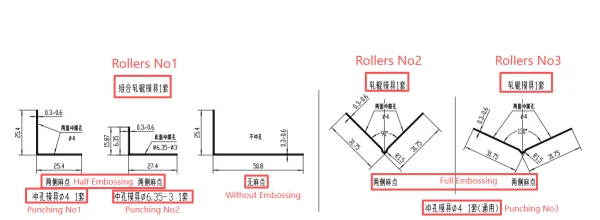
Roll design starts from the section, and that is the same across roll forming work. Wing width, nose shape and opening angle are the three features that shape the tooling, and how the forming load gets divided follows the section rather than a fixed pattern. On this line the punches and the cutting blade are built to one profile, and a new section brings new tooling with it.
A drawing sent before a price is quoted saves more time than a list of questions about whether the machine can do it.
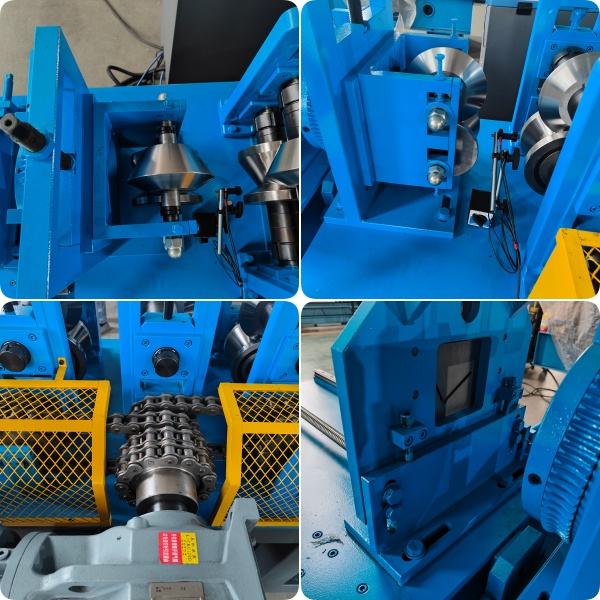
Thin strip is harder, not easier. The thinner the strip, the less each pass can take, and the balance between buckling and springback gets tighter. This Drywall L Angle Roll Forming line runs a range that spans light and heavier products, and the two ends need different load splitting. Spreading total deformation over 11 rollers is how that balance is kept.
What matters is where your product sits inside the range, not one figure on a sheet.
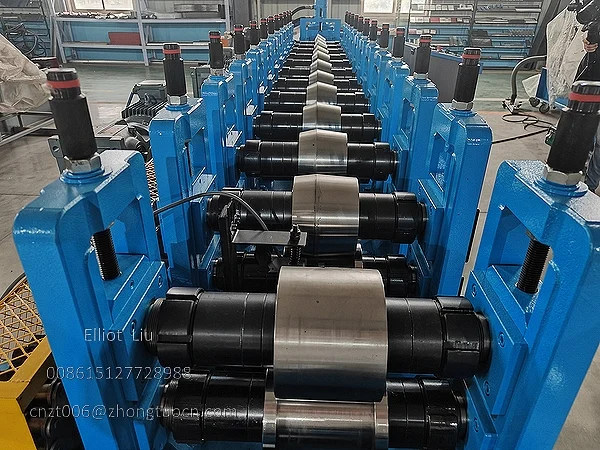
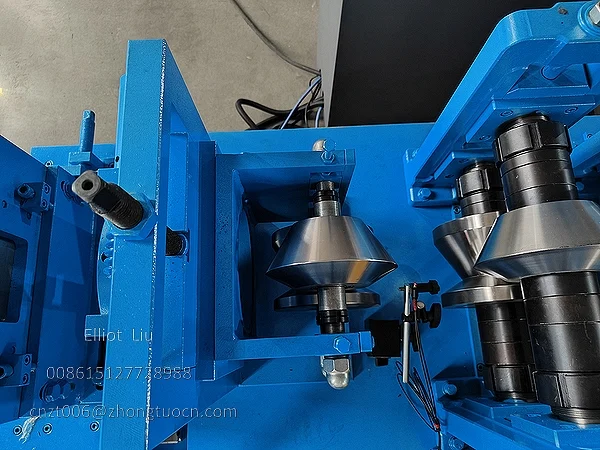
Hole shape, hole pitch and open area each do a different job, and they should not be folded into one question about die count.
Holes are made on flat strip, so an angle bead machine punches before it forms. On a flat surface the die sees a cleaner load. How close the holes land depends on die condition, coil batch and speed match, and trial samples show the real result.
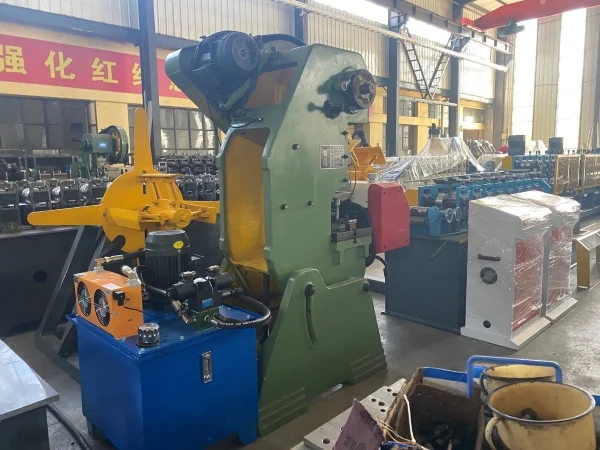
Length looks small, but two things ride on it. Each bar in a batch has to sit inside the band, so packing does not mix long and short. The end face depends on blade condition, and on whether the profile shifts at the cut.
A Drywall L Angle Roll Forming line holds length with an encoder and PLC control, and the cutting length tolerance is ±1.5 mm over 3 m.
Running two or three sizes is workable on this Drywall L Angle Roll Forming line. Changeover touches three places: punch dies, forming rollers and cutting blades. A different section may need its own blade or an adjustment plan.
The cost of multi size work lands on dies and rollers. More sizes means more dies held in stock and more downtime at changeover. Work out the order volume behind each size before you commit to a count.
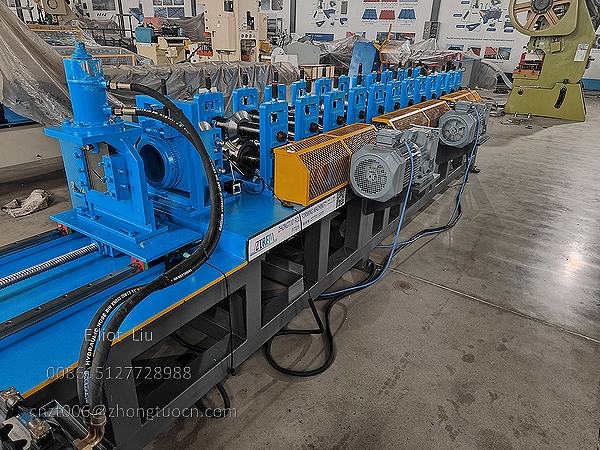
The Drywall L Angle Roll Forming line is built as one sequence, from coil to a punched L bead.
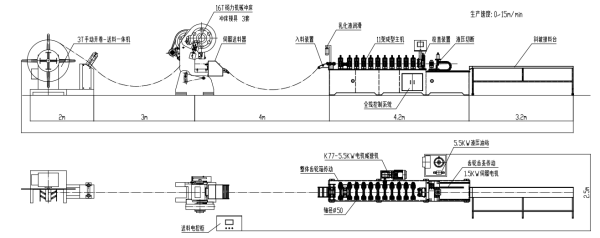
Decoiler → Entry alignment and embossing → Punching → Forming → Hydraulic cutting → Run out table
At the front, a manual decoiler holds the coil and feeds strip into the entry section, with a motorized feeder on the decoiler. The entry section aligns and guides the strip. Where embossing rolls are fitted, one set presses a full pattern and one a half pattern.
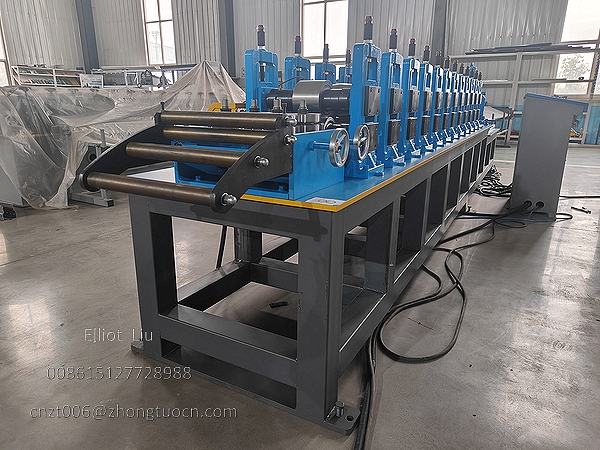
At the back, forming passes bend the flat strip to 90 degrees in steps, hydraulic cutting takes the bar to length, and the run out table catches it without damaging the end.
Punching sits before forming because holes need a flat surface, and forming needs the hole pattern already in place.
| Item | Value |
|---|---|
| Material | Galvanized steel strip |
| Thickness range | 0.3 to 0.6 mm |
| Max strip width | 300 mm |
| Forming rollers | 11 |
| Roller material | Cr12MoV |
| Shaft material | 45# steel, tempered, 50 mm |
| Drive | Gear box |
| Main motor | 5.5 kW |
| Forming speed | 0 to 15 m per minute with punching, 0 to 40 without |
| Punching | Mechanical press, 0 to 50 strokes per minute, 130 mm stroke |
| Punch die sets | 3 |
| Embossing | 2 roll sets, one full and one half, optional |
| Cutting | Hydraulic, Cr12MoV blade |
| Cutting length tolerance | ±1.5 mm over 3 m |
| Control | PLC with encoder measuring, touch screen plus buttons |
| Decoiler | Manual, 3000 kg load, coil ID 450 to 550 mm, motorized feeder |
| Total weight | About 3.5 t, main body 3.0 t |
| Working space of the line | About 18000 x 1000 x 1500 mm |
| Voltage | 480 V 60 Hz 3 phase |
These values belong to one setup built around a specific product. Thickness, roller count, die sets, speed setting and voltage move with the target profile and destination, so they differ between orders of the same Drywall L Angle Roll Forming line type.
You decide how to check the machine before shipment. Three ways are available: a video test of finished parts, a video call while the line runs, or a trial at our plant with your own coil. You pick the one you need and set how far the check goes.
We work to whichever way you choose.
Send your target section drawing and we will price the Drywall L Angle Roll Forming setup that matches it.

Contact Us For More Roll Forming Machine Detailed Information
You can contact us either through phone number 0086-15127728988 within our working hours, or send an email to [email protected], or send an inquiry form to us using "Inquiry Now" option. Our customer representatives will respond as soon as possible.