METAL ROLL FORMING MACHINE
Zhongtuo roll forming Systems is a "one-stop shop" for all your roll forming needs,enabling our customers to save time and money when buying roll forming machines,to help customers grow.

Zhongtuo roll forming Systems is a "one-stop shop" for all your roll forming needs,enabling our customers to save time and money when buying roll forming machines,to help customers grow.
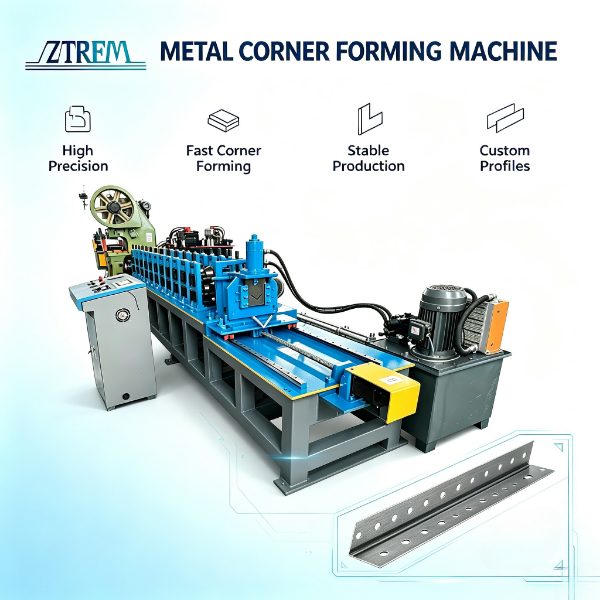
‹ › Buying a metal corner forming machine is a big decision. You have probably already looked at quotes from several suppliers, and the spec sheets are full of numbers that do not always match. Can it really handle your material thickness? Why is the speed so different with punching? What configuration actually fits your products?…
Contact: Elliot liu
Email: [email protected]
WhatsApp: 008615127728988
Detailed Content
Buying a metal corner forming machine is a big decision. You have probably already looked at quotes from several suppliers, and the spec sheets are full of numbers that do not always match. Can it really handle your material thickness? Why is the speed so different with punching? What configuration actually fits your products? This guide walks through the answers, from what the machine produces and its key advantages, to how to read the specs and what to confirm before you order. The goal is simple: help you build a solid evaluation framework before you even talk to suppliers.
A metal corner forming machine is a complete cold roll forming line that turns steel coil into L shaped metal corner bead or angle profiles. The system integrates decoiling, punching, roll forming, and hydraulic cutting into one continuous process. Coil goes in, finished profiles come out, all in one pass.
The finished products are L shaped corner beads (corner bead or angle bead). These are used in several fields:
Drywall and plasterboard systems
Metal cladding and wall panel systems
Electrical and switchgear manufacturing
Racking and storage equipment
Modular and prefabricated construction
The logic here is straightforward. When construction, electrical, or warehousing businesses need large quantities of corner bead, buying from outside suppliers often means high costs and unstable delivery times. Making your own profiles becomes a smart alternative. That is exactly the value this equipment brings.
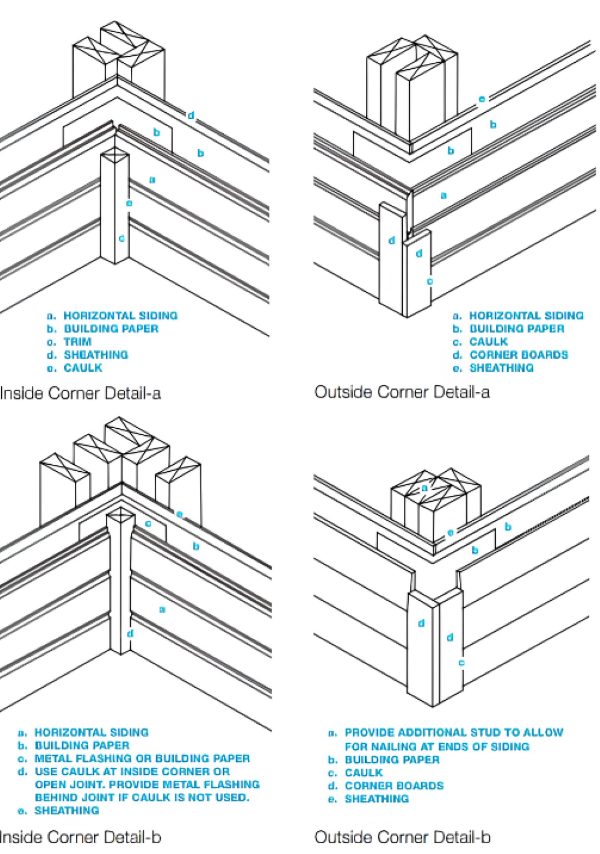
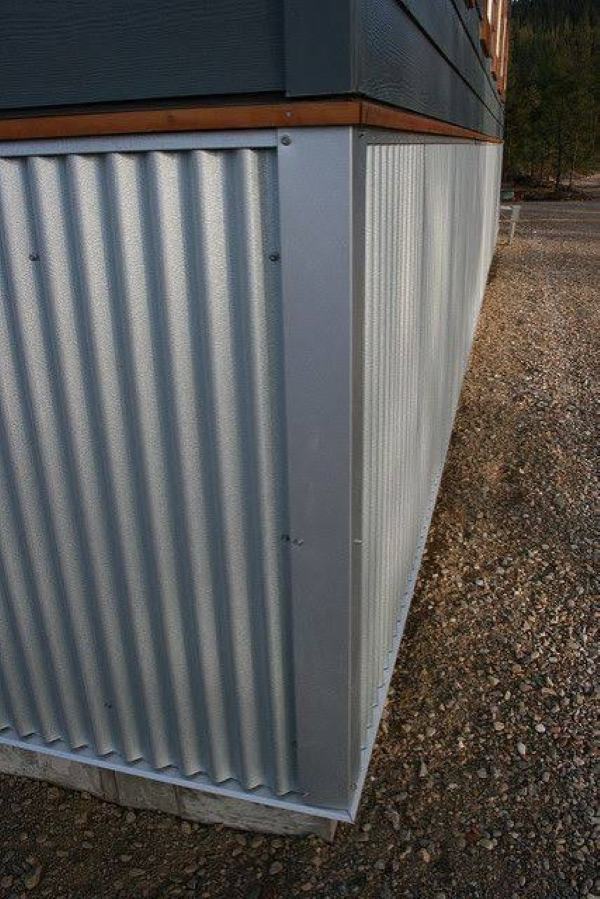
The following points focus on what the machine itself offers, not the finished profile.
Integrated continuous production
The equipment combines decoiling, punching, forming, and cutting in one line. Coil goes in and finished parts come out without moving material between separate machines. That cuts out handling time and reduces material loss between steps.
Inline punching capability
Punching happens at the same time as forming. Products that need holes come out fully finished in one pass. You do not need a separate punching operation afterward.
High speed continuous forming
Roll forming is a continuous high speed process. The strip passes through a series of roller stations, each bending the material a little more until it reaches the final L shape. Compared to stop start methods like press braking, the output per hour is much higher.
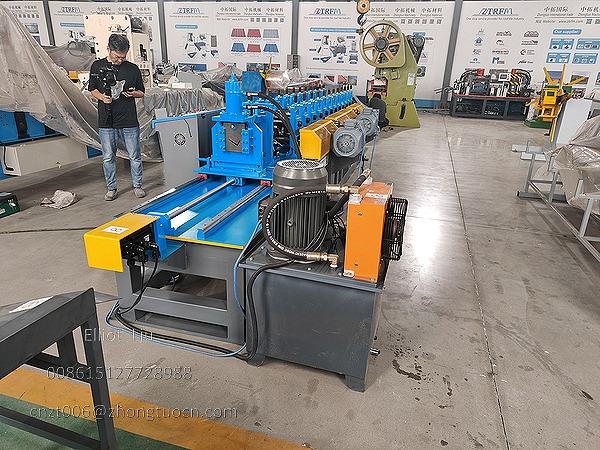
Less reliance on manual labor
The whole line runs automatically from decoiling to cutting. Compared to a fragmented production setup with separate steps, this line needs fewer operators.
Consistent quality
Roll forming uses fixed roller tooling, so every piece comes out with the same dimensions. That cuts down scrap rates and reduces variation between batches.
High material utilization
The continuous forming process works directly from coil stock, with almost no waste. Compared to cutting and welding methods, this saves material cost.
Flexible profile changeover
The same main machine can run multiple profile sizes by swapping out the punching, forming, and shearing tool sets. That means you do not need several machines to handle small batch, multi profile orders.
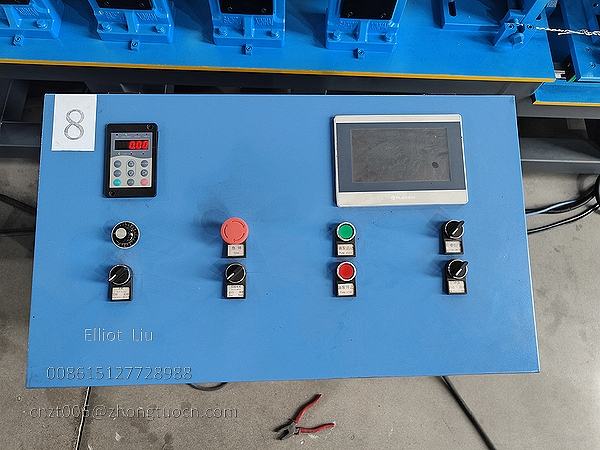
Knowing the production steps helps you decide whether a particular machine configuration fits your needs. The full line has five main stations:
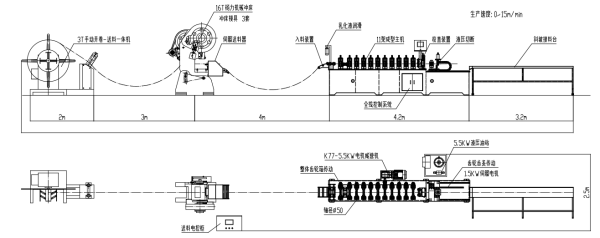
1. Decoiling
The steel coil sits on the decoiler. A manual decoiler is passive and the roll forming system pulls the strip forward. A motor feeder version pushes the strip actively, which gives smoother feeding.
2. Punching
The strip passes through a punch press that makes holes at set positions. This station is optional. For products that need holes, it runs. For products without holes, you can skip it and the whole line runs faster.
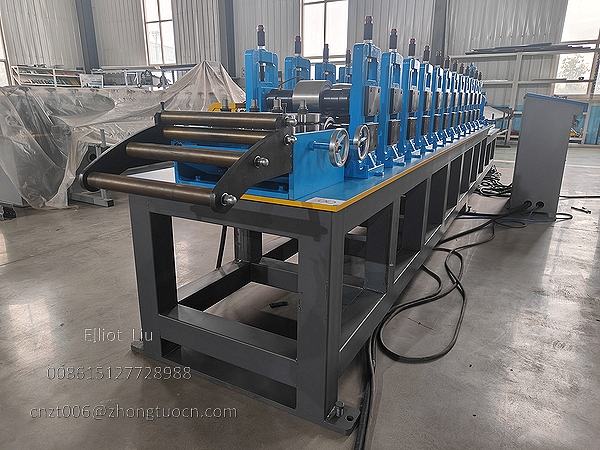
3. Roll forming
The strip goes through a series of roller stations. Each station bends the material a little further until it becomes an L shaped cross section. The number of roller stations determines how smoothly the angle is formed.
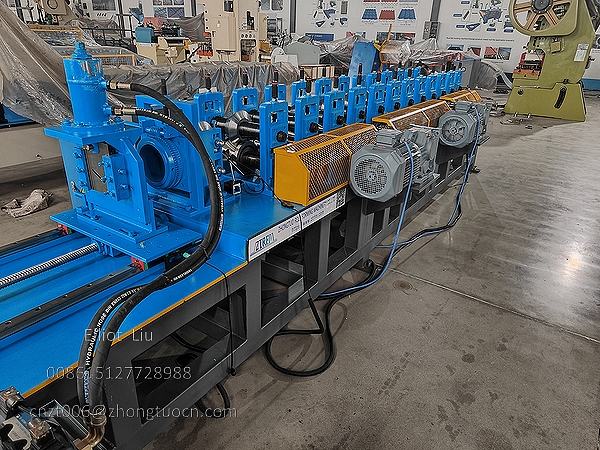
4. Hydraulic cutting
The machine cuts the formed profile to the required length automatically. Hydraulic power gives enough force for a clean, square cut.
5. Products receiving
Finished profiles drop onto a receiving table for collection.
Why does this matter to you? Because you need to know whether you need the punching function, how often you cut, and whether each station matches your production requirements.
Different machine types vary mainly in material thickness capacity, forming speed, and automation level. You choose based on your product specs.
By decoiling method
Manual decoiler: passive feeding, pulled by the forming system. Lower cost, good for small runs and low frequency production.
Motor feeder decoiler: active feeding, smoother strip control. Better for continuous high volume runs.
By punching configuration
Without punching: forming and cutting only, higher speed. Good for profiles without holes.
With punching: forming and punching happen together. Speed is lower but you skip a secondary punching step. Good for corner bead profiles that need holes.
By number of forming stations
Fewer stations: suited for simple sections and thinner material. Shorter machine, lower cost.
More stations: suited for complex sections, thicker material, or tighter tolerances. The angle is formed more gradually, giving better dimensional stability.
By cutting method
Hydraulic shear: high cutting force, good for thicker material, clean cut.
Mechanical shear: better for thinner material, faster cycling.
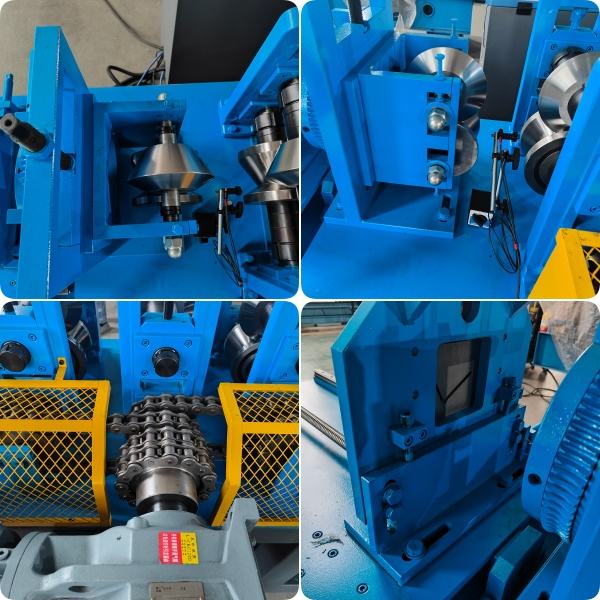
Specs determine whether the machine can actually make your product. Lower price is not always better. Matching is what counts.
The following figures come from the equipment quote:
| Spec Category | Parameter | Reference Value | Why It Matters |
|---|---|---|---|
| Material range | Thickness capacity | 0.3–0.6 mm | This decides the thickest and thinnest material you can run. Outside this range, the machine cannot do the job. |
| Material range | Material type | Galvanized steel | Different materials have different hardness, which affects roller life and forming force. |
| Product range | Max coil width | 300 mm | This sets the maximum profile width you can produce. |
| Product range | Decoiler capacity | 3000 kg | Heavier coil capacity means fewer coil changes and longer continuous running time. |
| Production capacity | Forming speed with punching | 0–15 m/min | This is the output ceiling when punching is active. Punching is the bottleneck. |
| Production capacity | Forming speed without punching | 0–40 m/min | This is the output ceiling without punching. |
| Machine configuration | Number of roller stations | 11 rollers | More stations give better forming precision but the machine gets longer and costs more. |
| Machine configuration | Roller material | Cr12MoV | This determines roller service life and finished surface quality. |
| Machine configuration | Shaft diameter | φ50 mm | This sets the machine's rigidity limit. |
| Machine configuration | Main machine size | 4500×800×1400 mm | This tells you the floor space you need, so you can plan your workshop layout. |
| Machine configuration | Main machine weight | 3.0 tons | This affects foundation requirements and lifting needs during installation. |
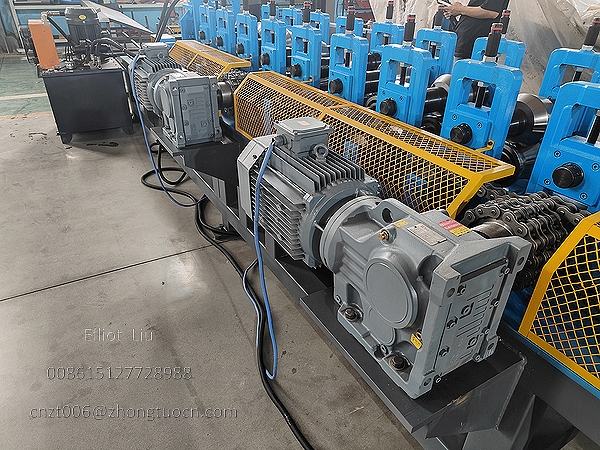
| Automation | Decoiler feeding | With motor feeder | Active feeding is smoother and reduces the risk of strip tearing or slipping. |
| Automation | Punch press type | Mechanical | This determines punching capacity and cycling frequency. |
| Customization | Profile changeover | 5 different corner profiles | The same main machine can run multiple profiles with different tooling sets. |
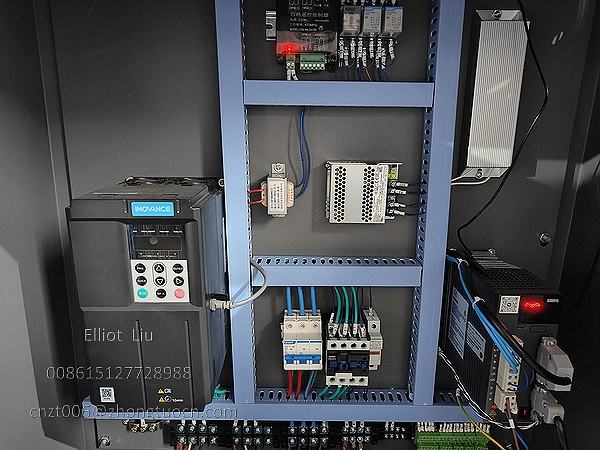
| Power | Voltage / frequency | 480V 60Hz 3Phase | For export machines, this must match the target market's grid. |
Some configurations also include a corner punching machine integrated into the line, which runs at a lower speed due to the punching cycle.
Material thickness and type
Check that the machine's thickness range covers your product. This reference machine runs 0.3–0.6mm galvanized steel. This is the most basic matching condition.
Profile size and width
Check that the coil width limit meets your finished profile width. This reference machine goes up to 300mm.
Output requirements
Work backward from your daily target to see what speed you really need. Higher speed gives more output but costs more. Remember to consider the speed difference between punching and non punching modes.
Whether you need punching
If you need inline punching, check whether the punching speed can keep up with the forming speed. This reference shows 15m/min with punching versus 40m/min without.
Automation level
Manual decoiler versus motor feeder. The motor feeder costs more but runs smoother. Choose based on your batch size and how often you run the line.
Floor space and power
Check your workshop size against the machine footprint. The reference main machine is 4500×800×1400mm, so allow at least 8 meters in length. Also check voltage, frequency, and total power. This reference is 480V 60Hz 3Phase.
Tooling and changeover
If you plan to run multiple profiles, ask about changeover time and tooling cost. This reference machine can run 5 different corner profiles with different tool sets.
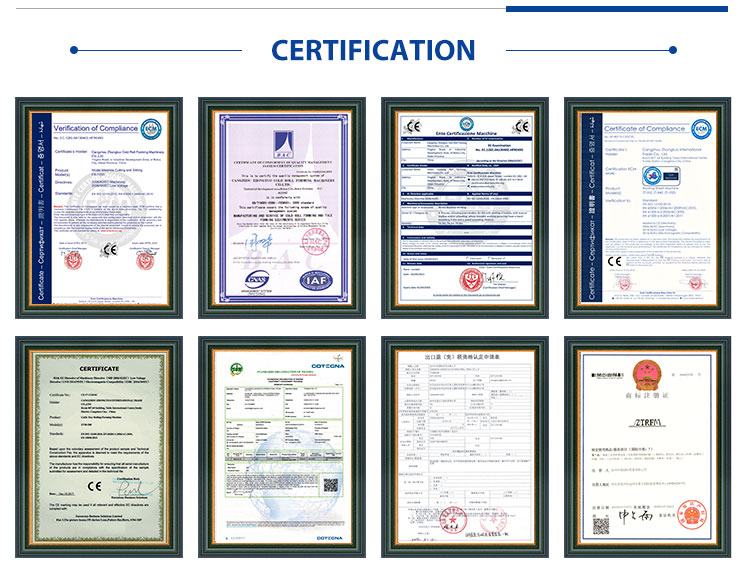
Certifications and compliance
Ask the supplier what certifications they hold for your target market. For Europe you may need CE, for North America you may need UL or CSA.
Check their manufacturing capability
Does the supplier have their own factory and production equipment, or are they a trading company? A factory backed supplier usually has better quality control and delivery reliability.
Assess their technical communication
Can they explain specs clearly and answer technical questions? If communication is difficult before the sale, after sales support will likely be even harder.
Look at customization ability
Can they tailor the machine to your material thickness and profile requirements? Standard models do not always cover every need.
Review quality certifications
ISO 9001, CE, and similar certifications are a basic starting point. Certification alone does not guarantee quality, but its absence suggests gaps in their management systems.
Ask about after sales support
Warranty terms, spare parts lead time, and technical response speed. A machine is a long term asset, and support directly affects its useful life.
Request reference cases
Ask the supplier for examples of similar machines they have delivered.
Price versus value
The lowest price is rarely the best deal. Core component materials directly affect machine life and finished surface quality.
Q: What thickness can this machine handle?
A: This reference machine handles 0.3–0.6mm galvanized steel. Different machines have different ranges, so always confirm your material thickness with the supplier.
Q: Why is the speed so different with punching versus without?
A: Punching is the bottleneck. With punching active, the feed speed drops to 15m/min. Without punching, it can run at 40m/min. If your product does not need holes, you can choose a configuration without punching and get higher output.
Q: How many profiles can one machine produce?
A: The same main machine can run multiple different corner profiles by changing the punching, forming, and cutting tool sets.
Q: How much floor space do I need?
A: The reference machine has a main unit size of 4500×800×1400mm. Allow at least 8 meters in length to accommodate the decoiler and receiving table.
Q: What voltage does the machine need?
A: This reference runs on 480V 60Hz 3Phase. Export machines must match the grid standard of the destination country.
Q: What is Cr12MoV and why does it matter?
A: It is a high wear cold work tool steel used for rollers and blades. It directly affects machine service life and the finished surface quality.
This guide walked you through what a metal corner forming machine does, the advantages it brings to your production line, the key specs to check, and what to look for in a supplier. You now have a clear framework to evaluate options and ask the right questions before making a purchase.
Contact: Elliot liu
Email: [email protected]
WhatsApp: 008615127728988
Contact Us For More Roll Forming Machine Detailed Information
You can contact us either through phone number 0086-15127728988 within our working hours, or send an email to [email protected], or send an inquiry form to us using "Inquiry Now" option. Our customer representatives will respond as soon as possible.