METAL ROLL FORMING MACHINE
Zhongtuo roll forming Systems is a "one-stop shop" for all your roll forming needs,enabling our customers to save time and money when buying roll forming machines,to help customers grow.

Zhongtuo roll forming Systems is a "one-stop shop" for all your roll forming needs,enabling our customers to save time and money when buying roll forming machines,to help customers grow.
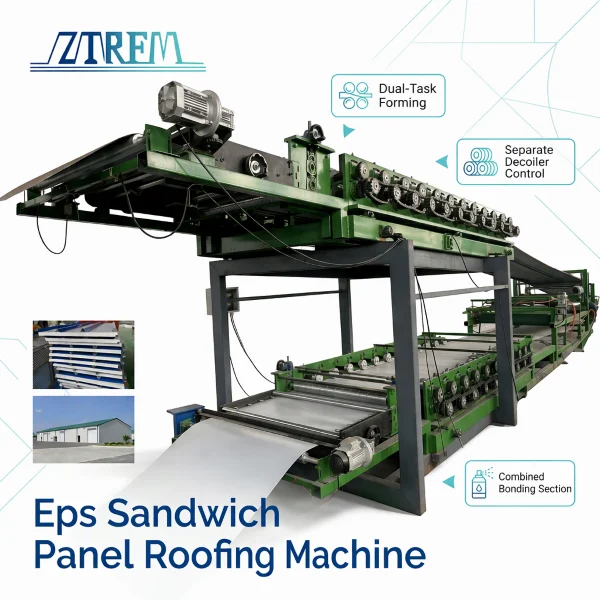
‹ › Buyers often compare an EPS sandwich panel roofing machine using configuration sheets collected from trade shows or other suppliers. The problem is that an EPS roofing panel line is not a fixed package. How many roof panel profiles you plan to produce, whether you also make wall panels, whether you use EPS or rock wool…
Contact: Elliot liu
Email: [email protected]
WhatsApp: 008615127728988
Detailed Content
Buyers often compare an EPS sandwich panel roofing machine using configuration sheets collected from trade shows or other suppliers. The problem is that an EPS roofing panel line is not a fixed package. How many roof panel profiles you plan to produce, whether you also make wall panels, whether you use EPS or rock wool cores, your panel width and thickness range, and how your order batch is spread all affect what needs checking in decoiling, forming, composite work, cutting, collecting, and full line organization. Write your product mix down first, and the equipment configuration has a basis for comparison.
The line is built around your product plan, not around one fixed sheet. That is why the same machine type can look different from one factory to the next.
An EPS sandwich panel machine produces insulated roof panels made from top and bottom color coated steel sheets bonded to an EPS core.
Panel type: sandwich panels for building roofs
Applications: roof enclosures for industrial plants, warehouses, logistics buildings, and general commercial buildings
This line also covers wall panels for exterior wall enclosures as part of the same product mix. Cold rooms and clean rooms are common industry uses for sandwich panels. Whether they fit a specific project depends on panel thickness, profile, and joint method.
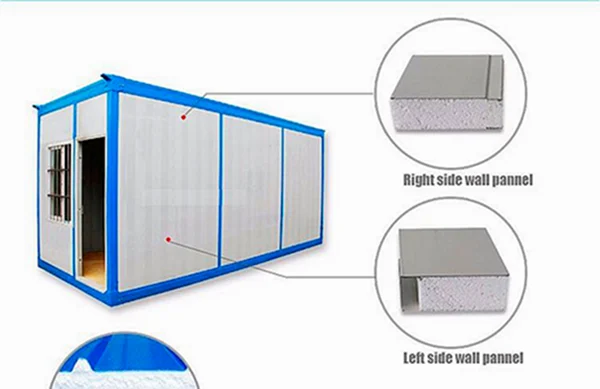
This line supports mixed roof and wall panel orders in four practical areas.
Clear forming task separation: One single layer forming machine runs the bottom sheet and one double layer machine runs the top sheet, with 12+12+17 stations, so the two forming tasks are easy to identify.
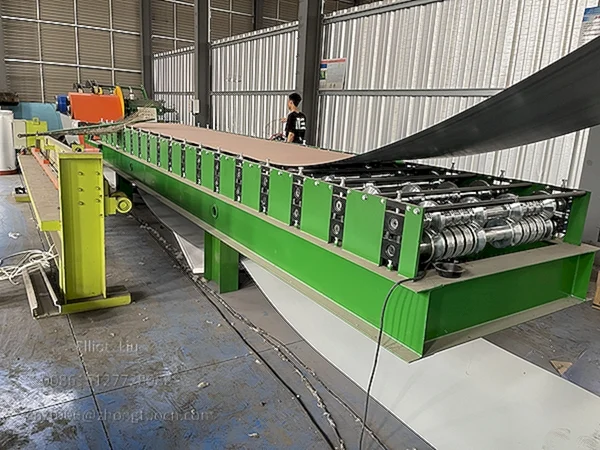
Separate coil feeding: Three manual 5 ton decoilers are set as one for bottom and two for top, so you can check coil supply for each sheet separately.
Combined bonding section: The composite machine brings glue spraying or dripping, infrared heating, and pressing together, with two glue systems and one heating system.
Batch cutting settings: A Delta PLC and touch screen with two control stations set cut length and quantity on the flying saw for different orders.
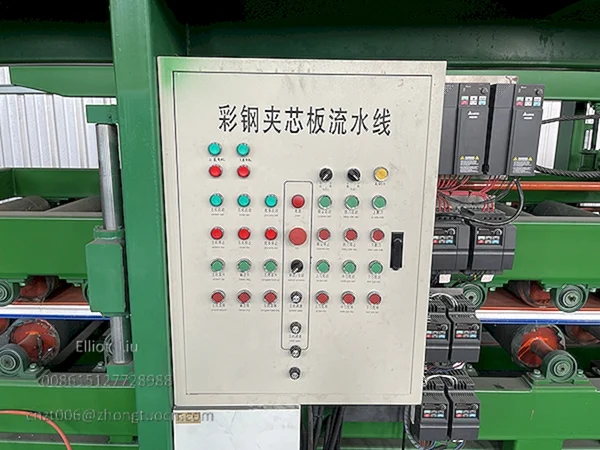
More roof profiles means more forming work. Each profile has its own cross section, so more profiles require more roller sets and more station coverage. On this eps sandwich panel roofing machine, the 12+12+17 station setup is tied to the target profile list because each profile needs matching rollers and stations. A longer profile list directly expands the forming section scope.
Wall panels follow the same rule. When roof and wall profiles share one line, the forming section has to allocate rollers and stations across both types, so the profile list is the first input to forming configuration.
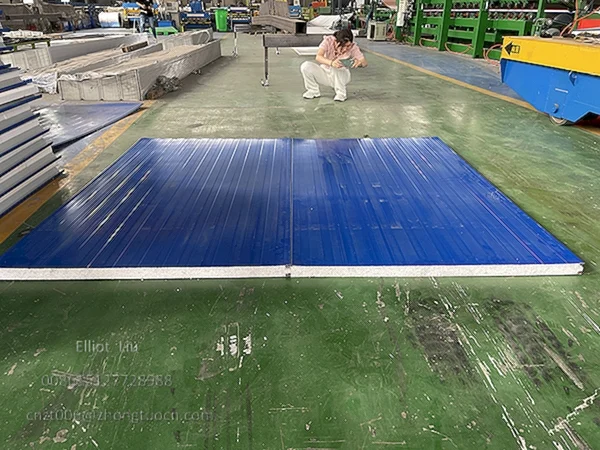
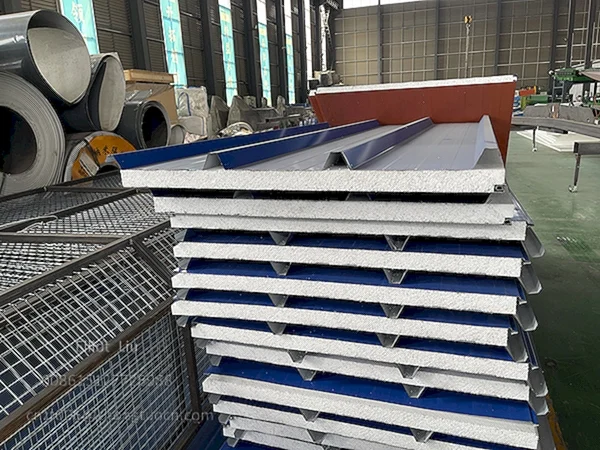
EPS and rock wool need different composite settings. EPS is lighter and compresses more easily, while rock wool is heavier and needs different handling. The composite machine brings glue spraying or dripping, infrared heating, and pressing together, with two glue systems and one heating system.
This setup lets the machine run two process profiles: one for EPS and one for rock wool. When a customer runs both cores, the two glue systems and the heating section support the different glue and heating needs. Core type sets composite scope: a single core line uses one profile, while a dual core line needs separate glue circuits and heating settings.
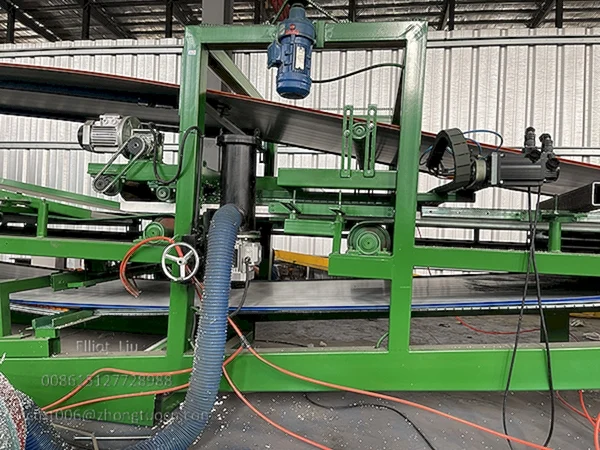
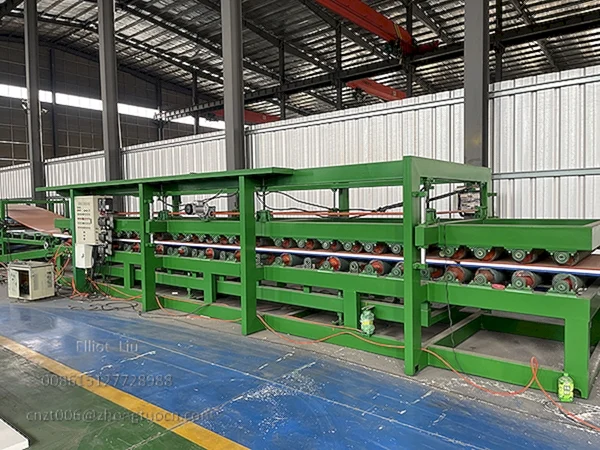
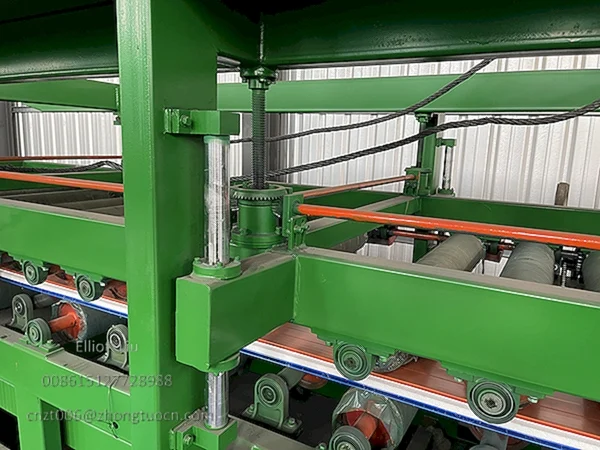
Width and thickness drive forming and composite settings. Wider panels change roller coverage and station spacing. Thicker panels affect composite gap, heating time, and pressing pressure. This machine covers 1000mm and 1200mm widths and 50 to 250mm thickness, and those dimensions set the forming and composite envelope.
Order batch spread decides how often settings change. A batch on one size keeps the line on one setting longer, while mixed sizes increase changeover frequency. Cutting and collecting follow the mix: different profiles have different section height and stiffness, so the flying saw and collecting tables are arranged to handle each profile. The batch pattern ties width, thickness, and profile changes into a production schedule.
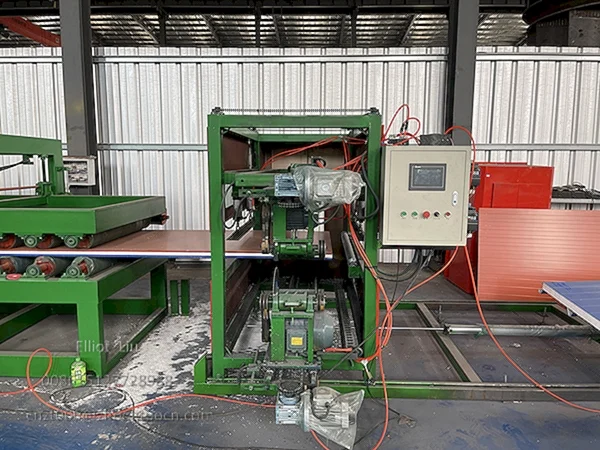
One quotation is one custom line setup, and one machine is one custom build. Speed, voltage, footprint, and panel profile can be adjusted to customer requirements. Exact scope and requirements need discussion with our professional staff. The table below lists the main line configuration and technical parameters.
| Machine part | Parameter | Value |
|---|---|---|
| Whole line | Core materials | EPS, rock wool |
| Panel applications | Roof panels, wall panels | |
| Total power | 32kW | |
| Working voltage | 380V 50Hz 3P, customizable | |
| Line speed | about 0 to 6 m/min | |
| Product width | 1000mm, 1200mm | |
| Product thickness | 50 to 250mm | |
| Reference annual output | 600,000 square meters, based on annual working days, daily working hours, and products | |
| Working dimensions | 45m x 4m x 7m | |
| Machine weight | About 10 tons | |
| Packing | 3 x 40GP | |
| Decoiler | Quantity | 3 sets |
| Capacity per unit | 5 tons | |
| Type | Manual | |
| Use | 1 for bottom sheet, 2 for top sheet | |
| Forming machine | Configuration | 1 set single layer plus 1 set double layer |
| Forming stations | 12+12+17 stations | |
| Composite machine | Function | Glue spray or drip, infrared heating, pressing |
| Driving stations | 55 stations | |
| Rubber driving roller diameter | 180mm | |
| Glue system | Quantity | 2 sets |
| Heating system | Quantity | 1 set |
| Control system | Brand | Delta PLC plus touch screen |
| Control station quantity | 2 sets | |
| Cutting system | Type | Flying saw |
| Function | Set cut length and quantity | |
| Collecting table | Quantity | 2 sets |
| Type | Manual | |
| Length | 3m |
The annual output is an estimate. Actual production depends on operating hours, running speed, product specifications, and effective production time. The eps sandwich panel machine is customized to your product mix and order structure. Site installation conditions, power, and layout are confirmed by engineering staff based on the final equipment setup and actual site conditions.
Before you ask for a quote, prepare these product mix details so the configuration check moves faster:
Roof and wall panel profile drawings, including the panel cross sections and joint or overlap details
Core type and the EPS to rock wool ratio, plus glue type
Panel width and thickness range
Order quantity or expected output for each product type
Production shifts and working hours
Factory dimensions, layout conditions, and project power requirements are supplementary information for later engineering communication. Engineering staff confirm them based on the final equipment setup and actual site conditions.
Product mix decides which configurations need checking, not a direct price comparison from one configuration sheet. Our company builds complete roof and wall panel lines, and our technical team can check decoiling, forming, composite work, cutting, and collecting arrangements against your profile drawings, core ratio, panel sizes, and order batch. If you are evaluating an EPS sandwich panel roofing machine, send your profiles, core ratio, panel sizes, and order batch. Our staff will provide a targeted line configuration proposal and quote.
Contact Us For More Roll Forming Machine Detailed Information
You can contact us either through phone number 0086-15127728988 within our working hours, or send an email to [email protected], or send an inquiry form to us using "Inquiry Now" option. Our customer representatives will respond as soon as possible.